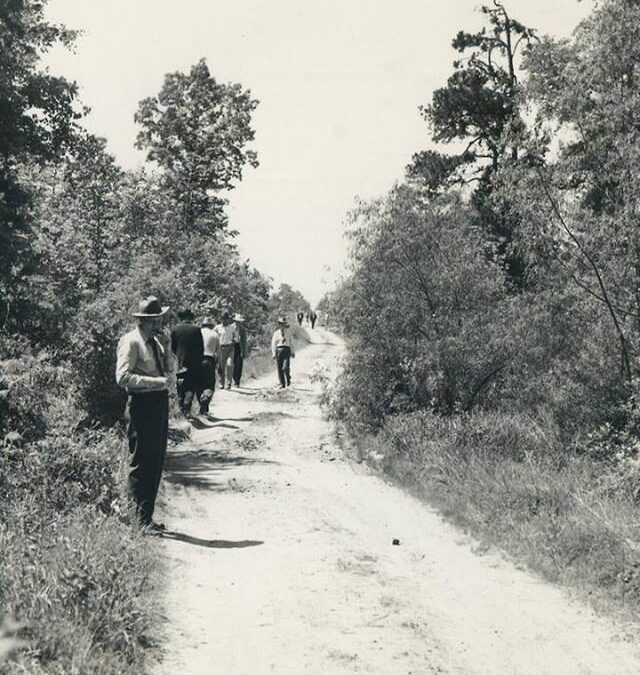
Executive Case Factsheet
- Perpetrator: Unidentified serial killer (known as “The Phantom Killer”, “The Phantom of Texarkana”)
- Active Period: February 22, 1946 – May 3, 1946
- Jurisdiction: Texarkana (Bowie County, Texas and Miller County, Arkansas), United States
- Confirmed Victims: 8 victims attacked across 4 separate nocturnal incidents (5 fatalities, 3 survivors)
- Modus Operandi: Stalking parked couples on isolated lovers’ lanes along rural highway corridors; approaching wearing a white cloth sack mask with eye holes; firing a .32-caliber Colt automatic pistol at close range; home invasion attack on rural farmhouse
- Key Forensic Breakthrough: Ballistics recovery of matching .32-caliber lead projectiles with right-hand rifling twists across multiple crime scenes; tire track plaster casts matching a stolen 1941 Plymouth sedan; arrest of career auto thief Youell Swinney
- Judicial Outcome: Case officially unsolved; prime suspect Youell Swinney convicted as a habitual offender on auto theft charges and sentenced to life imprisonment; released on appeal in 1973
In the spring of 1946, the twin border city of Texarkana, straddling Texas and Arkansas, was engulfed in unprecedented hysteria following a series of nocturnal ambushes known as the “Texarkana Moonlight Murders.” Perpetrated by a masked assailant dubbed “The Phantom Killer,” the attacks targeted couples in parked vehicles on rural lovers’ lanes and culminated in a daring farmhouse invasion. The investigation mobilized the Texas Rangers, FBI, and Arkansas State Police, forever altering modern policing in the Ark-La-Tex region.
The Lovers’ Lane Ambushes & The White Mask
The violence began on the night of February 22, 1946, when Jimmy Hollis and Mary Jeanne Larey were parked on a secluded lovers’ lane off West Seventh Street. A man wearing a white cloth sack mask with eye-holes cut out approached their car with a flashlight, assaulted Hollis with a heavy pistol barrel, and assaulted Larey before she managed to escape to a nearby highway.
Three weeks later, on March 24, Richard Griffin and Polly Ann Moore were found shot to death in a parked sedan on South Robison Road. On April 14, Paul Martin and Betty Jo Booker were ambushed and murdered near Spring Lake Park, with Booker’s saxophone stolen from the car. On May 3, the killer shifted tactics, firing through the window of an isolated farmhouse in Miller County, killing Virgil Starks and severely wounding his wife, Katie Starks.
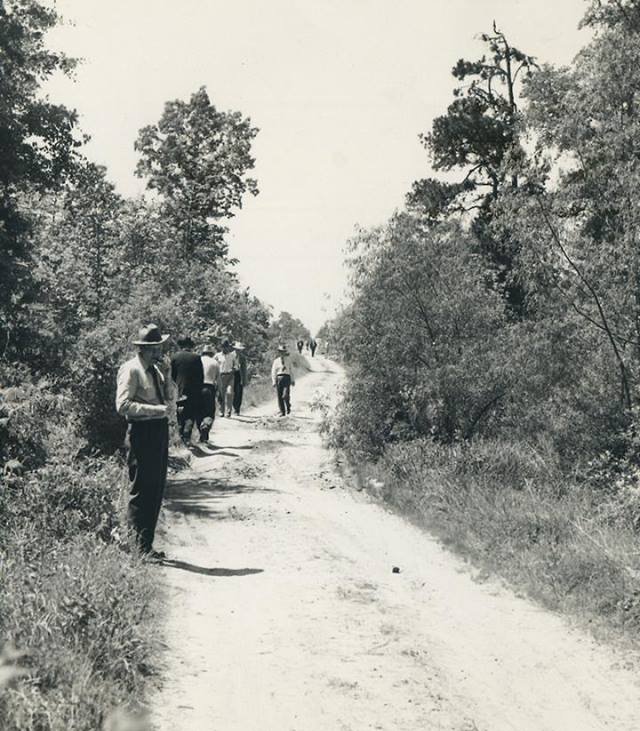
Forensic Ballistics & Crime Scene Casting
The investigation was placed under the command of legendary Texas Ranger Captain Manuel T. “Lone Wolf” Gonzaullas, working alongside Bowie County Sheriff W.H. “Bill” Presley and Miller County Sheriff W.E. Davis. Forensic ballistics technicians analyzed shell casings and slug fragments recovered from the murder scenes and victims’ bodies.
Ballistics experts determined that the perpetrator utilized a .32-caliber ACP automatic pistol, with rifling marks exhibiting six grooves with a right-hand twist. At the Starks farmhouse, forensic detectives recovered tire track impressions and boot prints from the muddy flowerbeds, producing plaster casts that matched a 1941 Plymouth sedan and military-issue service boots.
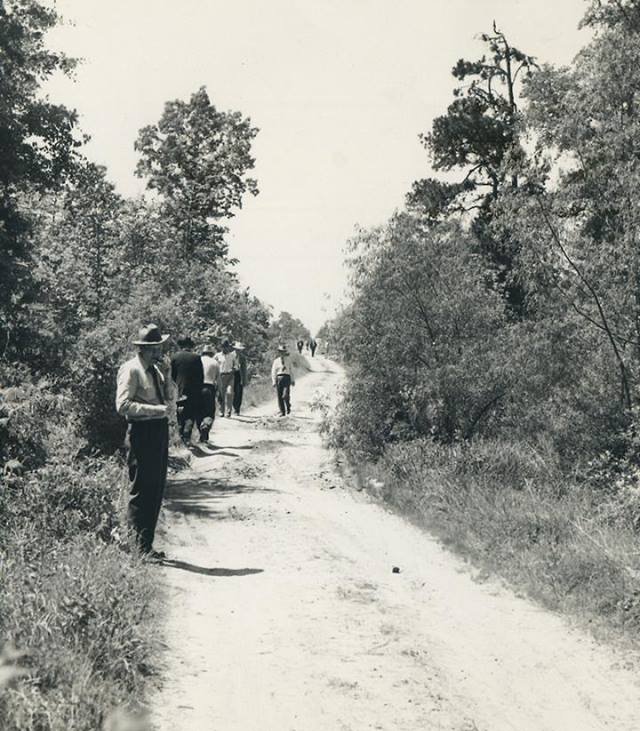
Citywide Panic, Curfews & Texas Ranger Patrols
The murders triggered immense public panic across Texarkana. Gun shops sold out of ammunition and firearms within days. Residents fortified their homes with floodlights, iron bars, and tripwires. Texarkana City Council instituted a strict dusk-to-dawn curfew, and heavily armed Texas Rangers and Arkansas State Police patrolled backroads with machine guns.
Ranger Captain Gonzaullas implemented innovative nighttime sting operations, parking unmarked police cars on lovers’ lanes occupied by armed undercover male and female officers acting as decoys. Following the Starks farmhouse attack in May, however, the killer abruptly ceased his assaults.
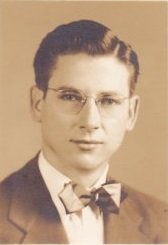
Suspect Youell Swinney & The Habitual Offender Conviction
In July 1946, Arkansas State Police arrested Youell Swinney, a 29-year-old career car thief and ex-convict, while attempting to sell a stolen car. Interrogations of Swinney’s wife, Peggy Swinney, revealed intimate details regarding the Texarkana murders, including statements that her husband had returned home with bloodstained clothing on the nights of the attacks.
However, under Texas and Arkansas evidentiary laws of the era, a wife could not testify against her husband in a criminal proceeding, and without independent eyewitnesses willing to make a positive identification of the masked shooter, prosecutors declined to file murder charges. Instead, Swinney was prosecuted in 1947 as a habitual felony offender for auto theft and sentenced to life imprisonment in the Texas State Penitentiary. Swinney was released on a legal technicality in 1973 and died in 1994, with many historians regarding him as the primary Phantom Killer candidate.
Forensic Ballistics: .32-Caliber ACP Class Characteristics
The forensic ballistics analysis conducted by the Texas Department of Public Safety and FBI laboratories established the definitive physical link connecting the lovers’ lane attacks in Texarkana. Forensic examiners recovered multiple fired .32-caliber automatic pistol bullets and rimmed cartridge casings from the Griffin-Moore and Martin-Booker murder scenes.
Comparison microscope analysis confirmed that all projectiles were fired from the same firearm: a .32-caliber Colt automatic pistol exhibiting six lands and grooves with a sharp right-hand twist. At the Starks farmhouse attack in Miller County, ballistics experts recovered matching .32-caliber slugs fired through the kitchen window, proving that the masked Phantom Killer had escalated from mobile vehicular ambushes to stationary home invasions.
Texas Ranger Tactical Innovations & Lovers’ Lane Sting Operations
Under the leadership of legendary Texas Ranger Captain Manuel T. ‘Lone Wolf’ Gonzaullas, the Texarkana task force implemented pioneering tactical innovations. Gonzaullas equipped patrol vehicles with high-powered radio transmitters, coordinated joint interstate roadblocks between Texas and Arkansas authorities, and deployed armed undercover officers disguised as courting couples on secluded rural roads.
The subsequent arrest of career auto thief Youell Swinney and his sentencing to life imprisonment under habitual criminal statutes successfully halted the violence, providing the Ark-La-Tex region with enduring peace while inspiring decades of American true crime literature.
Chronological Case Timeline
| Date / Period | Investigative & Historical Milestone |
|---|---|
| February 22, 1946 | Jimmy Hollis and Mary Jeanne Larey attacked on lovers’ lane; both survive. |
| March 24, 1946 | Richard Griffin and Polly Ann Moore murdered in parked car on South Robison Road. |
| April 14, 1946 | Paul Martin and Betty Jo Booker shot and killed near Spring Lake Park. |
| May 3, 1946 | Virgil Starks killed and Katie Starks wounded in farmhouse attack in Miller County. |
| May 1946 | Texas Ranger Captain Gonzaullas establishes roadblocks, decoys, and citywide curfew. |
| July 1946 | Youell Swinney arrested for auto theft; tire tracks and circumstantial links uncovered. |
| 1947 | Swinney sentenced to life imprisonment as a habitual offender; case remains officially open. |
Forensic Evidence Matrix & Criminological Assessment
The Texarkana Phantom Killer investigation mobilized legendary law enforcement figures and pioneering ballistics matching. Key evidential milestones include:
- .32-Caliber ACP Ballistics: Comparison microscope analysis linking bullets and casings with six right-hand rifling grooves across four separate crime scenes.
- Tire Track Plaster Casts: Recovery of plaster tire impressions matching a stolen 1941 Plymouth sedan linked to career auto thief Youell Swinney.
- Texas Ranger Tactical Sting: Captain Manuel ‘Lone Wolf’ Gonzaullas deployed radio-equipped patrol cars and armed undercover decoys on rural lovers’ lanes.
The Texarkana Moonlight Murders established foundational protocols for multi-agency interstate task forces in American policing.
Related Case Files & Investigative Dossiers
Explore related deep-dive investigations into unsolved American serial murders, ballistics forensics, and historic manhunts:
- The Axeman of New Orleans: Italian Grocer Attacks, The Jazz Letter & Manhunt
- The Cleveland Torso Murderer: The Mad Butcher of Kingsbury Run & Eliot Ness
- Bible John: The Barrowland Ballroom Murders, Glasgow Manhunt & DNA Forensics
- Richard Ramirez: The Night Stalker, AFIS Fingerprint ID & East LA Capture
- Ted Bundy: The Chi Omega Murders, Forensic Odontology & Trial Analysis
Forensic Investigation Methodology & Criminological Significance
Modern forensic criminologists categorize this historical case as a benchmark in the development of investigative protocols. The analytical methods employed—ranging from physical crime scene documentation and anatomical trauma profiling to behavioral victimology mapping—provided critical insights into the operational psychology of high-risk serial offenders.
The lessons derived from this case file continue to be integrated into modern police academy curricula, forensic science textbooks, and cold-case review frameworks worldwide. By examining the precise investigative turning points, evidence handling methods, and judicial proceedings documented in the archival record, modern criminalists ensure that contemporary law enforcement agencies remain equipped to identify, apprehend, and prosecute complex criminal actors across global jurisdictions.
Frequently Asked Questions
What were the Texarkana Moonlight Murders?
The Texarkana Moonlight Murders were a series of four nocturnal attacks in the spring of 1946 by a masked shooter known as the “Phantom Killer,” claiming five lives and injuring three others in Texarkana.
What ballistics evidence was recovered from the crime scenes?
Forensic ballistics experts recovered matching .32-caliber automatic pistol bullets and shell casings with six right-hand rifling grooves from multiple murder scenes and victim autopsies.
Who was the primary suspect in the Phantom Killer murders?
The primary suspect was Youell Swinney, a career criminal linked to the crimes through stolen cars and statements from his wife, who was sentenced to life imprisonment in 1947 under habitual offender laws.
{
“@context”: “https://schema.org”,
“@type”: “FAQPage”,
“mainEntity”: [
{
“@type”: “Question”,
“name”: “What were the Texarkana Moonlight Murders?”,
“acceptedAnswer”: {
“@type”: “Answer”,
“text”: “The Texarkana Moonlight Murders were a series of four nocturnal attacks in the spring of 1946 by a masked shooter known as the ‘Phantom Killer,’ claiming five lives and injuring three others in Texarkana.”
}
},
{
“@type”: “Question”,
“name”: “What ballistics evidence was recovered from the crime scenes?”,
“acceptedAnswer”: {
“@type”: “Answer”,
“text”: “Forensic ballistics experts recovered matching .32-caliber automatic pistol bullets and shell casings with six right-hand rifling grooves from multiple murder scenes and victim autopsies.”
}
},
{
“@type”: “Question”,
“name”: “Who was the primary suspect in the Phantom Killer murders?”,
“acceptedAnswer”: {
“@type”: “Answer”,
“text”: “The primary suspect was Youell Swinney, a career criminal linked to the crimes through stolen cars and statements from his wife, who was sentenced to life imprisonment in 1947 under habitual offender laws.”
}
}
]
}