Case File Dossier: George Penca (2011)
- Victim: George Penca (Age 30) — Resident of Hawthorne, California
- Date of Disappearance: Friday, June 17, 2011 (~2:40 PM PST)
- Location: Upper Yosemite Fall Trail / Columbia Rock, Yosemite National Park, CA
- Physical Description: 5’10”, 240 lbs, black hair, blue eyes, athletic build
- Attire & Gear: Dark blue t-shirt, gray track sweatpants with white side stripes, black hiking boots, lightweight daypack with water bottle
- Primary Investigating Agencies: National Park Service ISB, Mariposa County Sheriff’s Office, YOSAR
- Current Status: Active Unsolved Missing Person Cold Case
- Investigation Desk: National Park Disappearances
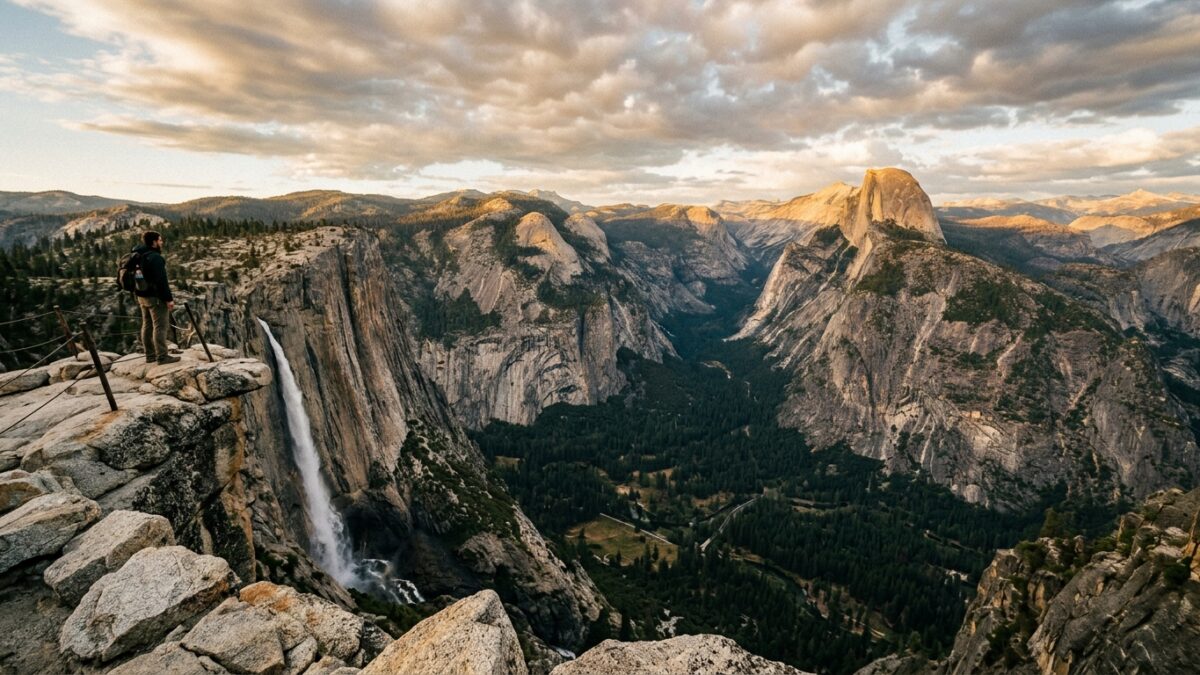
On the sunny afternoon of June 17, 2011, 30-year-old George Penca was hiking with a group of approximately twenty fellow church congregation members to the summit of Upper Yosemite Fall in Yosemite National Park. After reaching the spectacular overlook atop the 2,425-foot waterfall and beginning their descent back toward Yosemite Valley, the group separated into small clusters along the granite switchbacks. At approximately 2:40 PM, George paused slightly behind his companions to admire the panorama. He was never seen or heard from again.
The Upper Yosemite Fall Trail is one of the most heavily traversed hiking arteries in North America, utilized by hundreds of visitors every day during the peak summer season. Flanked by vertical granite precipices and defined by an unmistakable stone staircase cut directly into the canyon wall, the complete disappearance of a 240-pound adult male within minutes of his companions represents one of the most baffling missing-person mysteries in modern national park history. Despite an intensive multi-day search involving technical climbers rappelling sheer cliffs, canine tracking teams, and aerial thermal imaging, no trace of George Penca has ever been uncovered.
The Ascent to Upper Yosemite Fall Overlook
George Penca traveled to Yosemite National Park from Hawthorne in Southern California as part of an organized church retreat. George was physically robust, enthusiastic about outdoor activities, and in excellent overall health. He carried a small hydration daypack with water, a cell phone, and basic personal items.
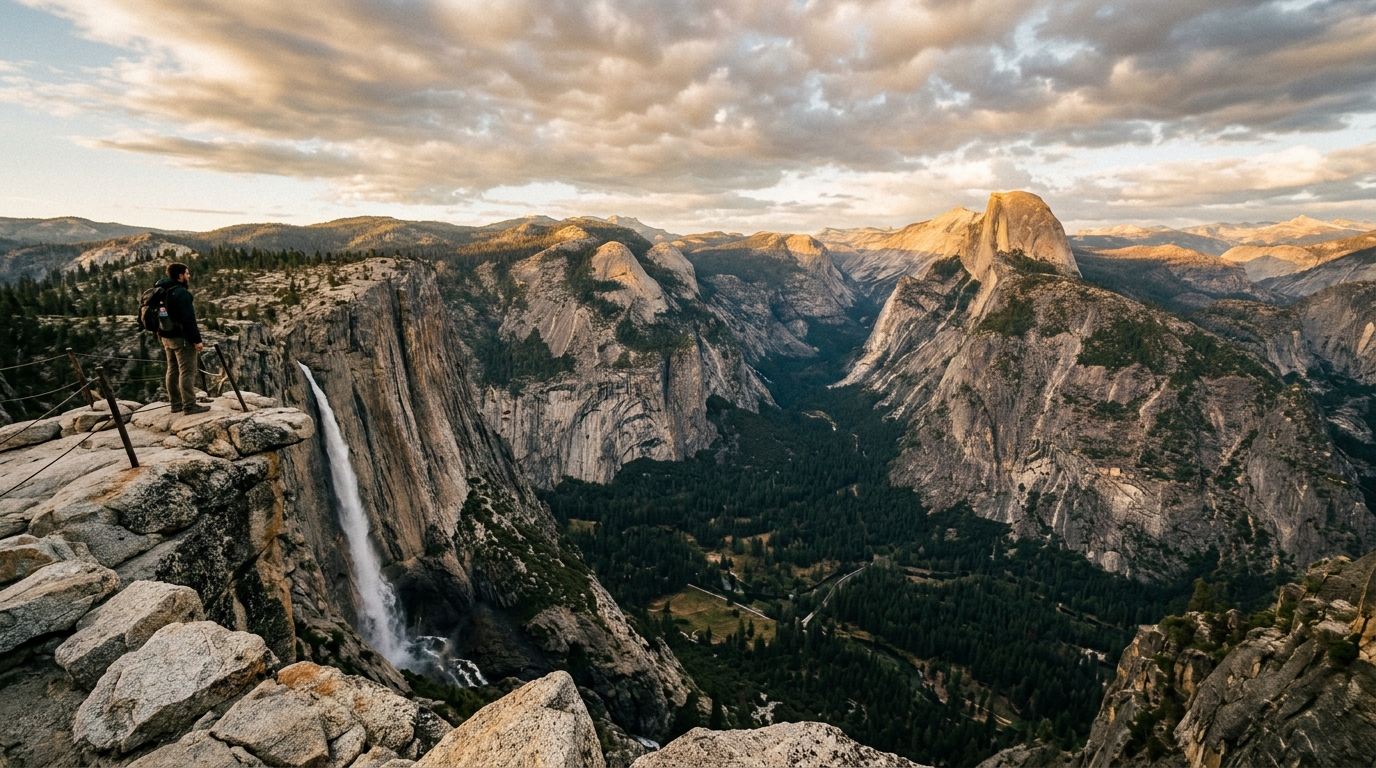
The hike to the summit of Upper Yosemite Fall is notoriously demanding, ascending roughly 2,700 vertical feet over 3.6 miles of steep granite switchbacks, exposed cliff faces, and loose talus slopes. The church group reached the summit rim in high spirits around 1:30 PM, spent an hour eating lunch and marveling at the sweeping views of Half Dome, Clark Range, and Yosemite Valley, and initiated their descent at approximately 2:30 PM.
Witness statements gathered by National Park Service investigators confirmed that George was hiking near the trailing section of the group, engaged in conversation with friends. Near a distinctive rocky plateau above Columbia Rock, George paused to rest and take a final look across the valley floor. When the forward members of the church group reached the trailhead at Camp 4 around 5:00 PM, George was missing. After waiting over an hour and checking the surrounding shuttle stops and parking areas, group leaders reported his disappearance to Yosemite Park Dispatch.
The Intensive Search by YOSAR & Search Dogs
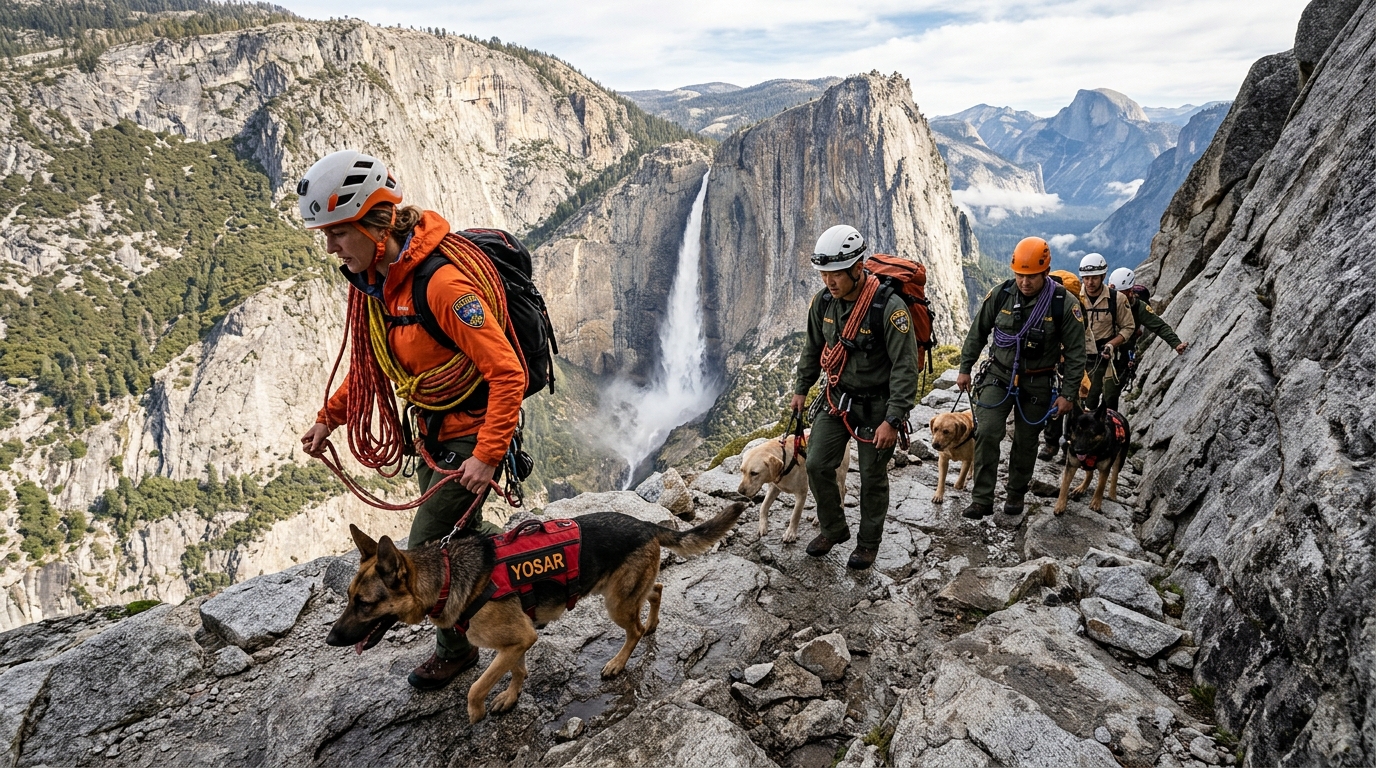
Yosemite Search and Rescue (YOSAR)—widely recognized as one of the premier technical search and rescue units in the world—immediately initiated a high-priority emergency operation:
- Technical Cliff Rappelling: Elite YOSAR mountaineers executed high-angle technical rappels down the thousand-foot vertical granite cliffs flanking Upper Yosemite Fall, searching every recessed ledge, chimney, and fracture zone.
- Ground & K-9 Sweeps: Specialized search-and-rescue canine units traversed the upper trails toward Eagle Peak, North Dome, and Yosemite Creek. While search dogs exhibited brief interest near the trail summit, they were unable to establish a scent track leading off-trail.
- Aviation Infrared Reconnaissance: California Highway Patrol and military helicopters equipped with FLIR thermal imaging cameras conducted night sweeps of the granite faces and adjacent pine canopies.
- Base Talus Inspections: Ground teams meticulously combed the vast boulder fields and talus slopes at the base of the cliffs below Columbia Rock.
The search continued for over seven grueling days, involving more than 100 search personnel, dog teams, and rangers. No backpack, clothing scraps, hydration bottle, or physical trace of any kind was ever found.
Forensic Hypotheses & Investigative Evaluation
Park investigators and forensic search specialists evaluated several potential scenarios:
1. Catastrophic Fall into a Concealed Talus Void
The cliffs flanking Upper Yosemite Fall drop thousands of feet into jumbled talus fields composed of house-sized granite boulders. Proponents of this theory suggest George may have lost his footing near an unmaintained viewpoint, fallen down the precipice, and become wedged deep within a subterranean rock void beneath the talus. However, technical searchers rappelled the entire fall line and searched the base without finding fabric fibers, shoe prints, or scent markers.
2. Disorientation into the North Dome Wilderness
Another possibility is that George took a wrong turn at an upper junction, heading northeast toward the remote North Dome and Lehamite Creek drainage instead of descending the valley trail. Yet search teams covered all radiating trails and backcountry corridors with zero evidence of passage.
3. Parallels with Stacey Arras (1981)
George Penca’s case shares extraordinary similarities with the 1981 vanishing of Stacey Arras at Sunrise High Sierra Camp, located just twelve miles east in Yosemite’s high country. Both cases involved healthy individuals vanishing in broad daylight within yards of a companion group on open granite terrain, leaving no trace for search dogs.
Current Status & Official Cold Case Tip Reporting
The disappearance of George Penca remains an active, open cold case. Anyone possessing information is urged to contact law enforcement:
Topography of the Upper Yosemite Fall Trail & Granite Switchbacks
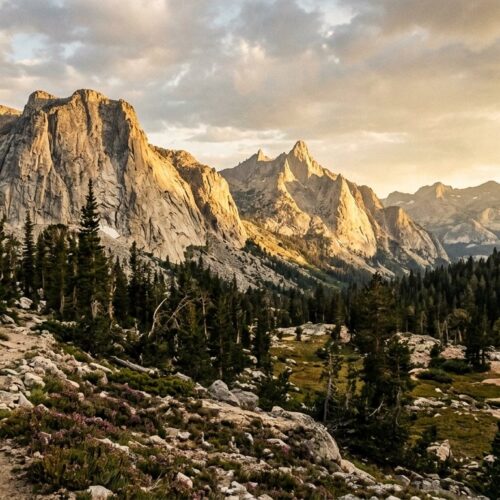
The Upper Yosemite Fall Trail is world-renowned for its dramatic verticality, ascending 2,700 feet over 3.6 miles of relentless switchbacks blasted directly into the sheer granite face of the Yosemite Valley canyon wall. The trail is heavily engineered with stone staircases, guardrails at key precipices, and unmistakable rock pathways.
On a midsummer afternoon in June, the trail is bustling with hundreds of hikers from around the world. At the point where George Penca was last seen—above the iconic vantage point of Columbia Rock—the trail provides sweeping views of the valley floor, Half Dome, and Sentinel Rock. The sheer volume of pedestrian traffic makes a sudden, unobserved disappearance extraordinarily difficult to reconcile with conventional search models.
YOSAR High-Angle Technical Search Protocols
Yosemite Search and Rescue (YOSAR) is globally regarded as the gold standard in technical mountain rescue operations. Following the report of George’s disappearance, YOSAR implemented an aggressive, multi-tiered tactical response utilizing elite mountaineering personnel:
- Vertical Cliff Rappels: Technical rescue specialists rigged rope systems along the canyon rim, conducting high-angle rappels down thousand-foot vertical precipices flanking the waterfall gorge. Rescuers inspected every inaccessible ledge, chimney, and fracture zone where a falling body could lodge.
- Talus Void Inspections: At the base of the cliffs, ground searchers navigated massive talus fields composed of granite boulders the size of houses. Searchers utilized fiber-optic search cameras and acoustic listening devices to inspect deep subterranean voids beneath the boulders.
- Infrared Aviation Sweeps: California Highway Patrol helicopters equipped with Forward Looking Infrared (FLIR) thermal sensors flew nighttime grid patterns over the granite walls, capable of detecting the thermal signature of a human body against the cooling rock face.
Despite seven days of continuous search operations involving over 100 searchers, search dogs, and aircraft, no trace of George’s clothing, footwear, hydration pack, or personal effects was ever detected.
Forensic Hypotheses & Behavioral Analysis
Investigators evaluated whether George could have become disoriented and walked uphill toward the vast backcountry expanse of Eagle Peak, North Dome, or the Lehamite Creek drainage. However, canine tracking teams deployed along all upper trail junctions found no indication that George continued along these paths. The complete absence of physical clues on one of Yosemite’s most popular trails leaves the disappearance of George Penca an enduring high-country mystery.
Comparative Analysis: High-Elevation Vanishings in Yosemite
The total absence of physical trace in George Penca’s case has led forensic researchers to benchmark his disappearance against other famous high-elevation Yosemite cold cases. When examining the geographical coordinates of Yosemite Valley, the sheer verticality of the terrain creates acoustic and visual shadows where an individual can become separated from a group in seconds.
Unlike dense forest environments where search dogs can readily track scent molecules trapped in moist duff, sun-baked granite slabs above 5,000 feet elevation present extreme challenges for canine tracking. Midday solar radiation and thermal updrafts along the canyon walls rapidly dissipate volatile scent compounds, leaving search dogs unable to establish a continuous trajectory.
Modern Cold Case Reviews & Investigative Directives
The National Park Service Investigative Services Branch (ISB), in partnership with the Mariposa County Sheriff’s Office, continues to conduct periodic reviews of the George Penca case file. Cold case investigators periodically re-interview witnesses, analyze satellite and high-resolution aerial imagery taken during subsequent summer seasons, and cross-reference unidentified human remains across California.
Park rangers remind all visitors embarking on the Upper Yosemite Fall Trail to remain on the paved path, travel in close pairs, carry adequate hydration, and never allow companions to fall behind during the demanding descent.
Information on George Penca’s Disappearance
Please contact the official Yosemite investigative bureau:
- Yosemite National Park Dispatch: (209) 379-1992
- NPS ISB Tip Line: Call/Text 888-653-0009 | Email:
[email protected] - Mariposa County Sheriff’s Office: (209) 966-3615
- True Crime Stories Tip Desk: Submit a confidential lead online.