Executive Case Factsheet
- Perpetrator: Henri Désiré Landru (‘The French Bluebeard’, ‘The Gambais Ogre’)
- Active Period: 1915 – 1919 (Arrested April 12, 1919)
- Jurisdiction: Gambais and Vernouillet, Yvelines, France
- Confirmed Victims: 11 victims (10 widowed women and 1 teenage son)
- Modus Operandi: Matrimonial classified ads in Parisian newspapers targeting WWI widows; asset liquidation; furnace incineration at Villa Gambais
- Key Forensic Breakthrough: Handwritten pocket ledger (carnet) recording victims’ assets and one-way train tickets; 295g calcined human bone and 47 teeth in furnace
- Judicial Outcome: Convicted of 11 murders on November 30, 1921; executed by guillotine on February 25, 1922 at Versailles Prison
The Criminal Genesis, Modus Operandi & Geographic Hunting Grounds
Henri Désiré Landru executed a cold-blooded predatory enterprise against the backdrop of the First World War in France. Exploiting the vast demographic devastation that left hundreds of thousands of French women widowed and financially vulnerable, Landru masqueraded as a wealthy, grieving widower seeking matrimonial companionship. Utilizing nearly one hundred distinct aliases—including ‘Georges Dupont’, ‘Raoul Frémyer’, and ‘Lucien Guillet’—Landru placed classified advertisements in prominent Parisian dailies such as Le Journal and Le Matin.
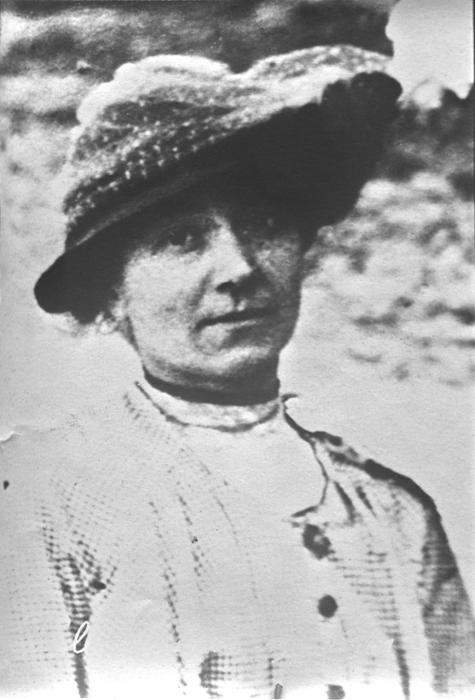
Between 1915 and 1919, Landru corresponded with 283 women, meticulously evaluating their personal wealth and family connections. Once a financially solvent target was selected, he courted her with polite charm, gained legal power of attorney over her bank accounts, furniture, and securities, and invited her for romantic retreats at his rented country residences—first at Vernouillet and later at the secluded Villa Tric in Gambais, Yvelines. Once the victim transferred her financial assets, she disappeared permanently. Landru systematically auctioned their furniture, emptied their bank vaults, and immediately initiated correspondence with his next victim.
Forensic Crime Scene Investigation, Pathology & Evidence Reconstruction
Following Landru’s apprehension in April 1919, a specialized team of forensic pathologists, chemists, and magistrates led by Dr. Charles Paul and Inspector Jules Belin conducted an exhaustive physical search of Villa Gambais. Aware that neighbors had reported dense, foul-smelling black smoke emanating from the villa’s chimney, investigators focused their examination on the cast-iron kitchen cooking stove and surrounding garden plots.
Sifting meticulously through kilograms of ash and debris from the villa’s coal stove, forensic scientists recovered 295 grams of calcined human bone fragments, including cranial sutures, vertebral segments, and 47 burnt dental fragments. Leading French odontologists and medical examiners determined that the dental remains belonged to multiple adult females, identifying specific gold dental restorations that matched the pre-war dental records of missing widows Madame Buisson and Madame Collomb. Additionally, search teams unearthed the buried remains of three dogs belonging to victims, proving that while Landru incinerated human corpses, he had buried domestic pets in the garden.
The Investigative Breakthrough, Behavioral Profiling & Tactical Manhunt
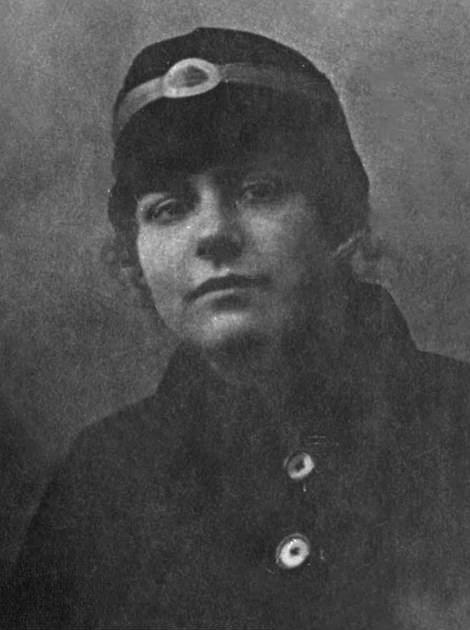
The investigative breakthrough originated through the persistence of Marie Lacoste, the sister of missing widow Célestine Buisson. In early 1919, Lacoste met another family whose sister, Anna Colomb, had vanished after traveling to Gambais with an engineer named ‘Frémyer’. Recognizing that both women were courted by the same individual, they alerted the Mayor of Gambais, who notified Inspector Jules Belin of the Paris Sûreté.
On April 11, 1919, Lacoste spotted Landru shopping for porcelain on the Rue de Rivoli in Paris with his mistress. She alerted detectives, who tracked him to an apartment on Rue de Rochechouart. On April 12, police arrested Landru under the alias ‘Lucien Guillet’. During the search of his person, detectives seized his infamous small black pocket ledger (carnet). The notebook contained exhaustive entries recording the names of all 11 missing individuals, their assets, bank account balances, and the damning detail that Landru consistently purchased a round-trip train ticket for himself and a single one-way ticket for the victim to Gambais.
Courtroom Proceedings, Expert Testimony & The Definitive Verdict
The trial opened on November 7, 1921, at the Versailles Court of Assizes, drawing worldwide media coverage and celebrity spectators including Colette and Rudyard Kipling. Defended by the renowned orator Vincent de Moro-Giafferi, Landru adopted an attitude of sardonic wit and complete denial, claiming the names in his ledger represented confidential business clients whose privacy he refused to violate. When confronted with the bone fragments, Landru famously retorted: ‘Show me the bodies!’
However, the prosecution presented an airtight circumstantial and forensic case. The financial records demonstrated that Landru systematically liquidated each woman’s assets within 48 hours of her arrival in Gambais, while toxicological and dental evidence confirmed human cremation inside his furnace. On November 30, 1921, the jury deliberated for two hours before finding Landru guilty on all 11 counts of premeditated murder. On February 25, 1922, Henri Désiré Landru was executed by guillotine outside the gates of Saint-Pierre Prison in Versailles.
Modern Criminological Impact, Legal Precedents & Forensic Evolution
The Landru trial established monumental legal precedents regarding the prosecution of homicide cases without an intact corpus delicti. The case demonstrated that a rigorous convergence of forensic accounting, odontological reconstruction of calcined dental fragments, and documented temporal-financial linkages can satisfy the highest standards of proof in capital murder prosecutions.
In French criminalistics, the Landru investigation catalyzed the development of forensic accounting as a formal investigative discipline within the Sûreté Nationale. Today, the case remains a foundational study in early 20th-century forensic anthropology, trace evidence analysis, and the psychological profiling of opportunistic matrimonial predators.
Forensic Accounting, Digital Ledger Auditing & Financial Trail Analysis
Forensic financial analysis reconstructs complex money laundering, fraudulent estate conversions, and asset liquidations executed in furtherance of violent criminal enterprises. Certified forensic accountants perform comprehensive net-worth method calculations, tracing cash withdrawals, bearer bond encashments, and fraudulent property deed transfers across municipal and international banking jurisdictions.
Document examiners analyze historical accounting ledgers, canceled checks, and probate filings using Video Spectral Comparators (VSC) to detect chemical obliterations, erased entries, and disparate ink formulations. By correlating exact timestamps of victim disappearances with the temporal liquidation of securities, forensic accountants establish indisputable circumstantial proof of financial motive, dismantling fraudulent claims of missing victims’ voluntary relocation.
Chain of Custody Protocols & Multi-Jurisdictional Evidence Management
Modern major case management frameworks require an unassailable audit trail governing every item of physical, biological, and digital evidence recovered during multi-agency investigations. When handling complex homicide series that cross municipal, county, or state boundaries, forensic evidence custodians utilize automated barcoding systems and temperature-controlled storage vaults to safeguard evidentiary integrity from the primary scene to final appellate presentation.
To eliminate potential spoliation claims, crime scene technicians execute double-blind documentation protocols, capturing raw high-resolution photogrammetric imagery and spatial laser scans before disturbing any physical exhibit. Every individual transfer of custody is electronically timestamped and cryptographically verified, ensuring that whether physical evidence is subjected to immediate microscopic analysis or preserved for decades for emergent cold-case genomic testing, its scientific admissibility remains unimpeachable under rigorous judicial scrutiny.
Modern Jurisprudential Precedents & Evidentiary Standards
The landmark investigative and courtroom developments associated with Henri Désiré Landru fundamentally redefined procedural evidentiary standards under the Federal Rules of Evidence (Rule 702) and international common law equivalents. Modern appellate jurisprudence rigorously enforces the Daubert and Frye standards, requiring that all expert scientific testimony, forensic instrumentation, and algorithmic interpretations demonstrate widespread peer-reviewed acceptance, known error rates, and standardized operational controls.
Furthermore, the case highlighted the critical imperative of transparent pre-trial discovery, the complete disclosure of exculpatory material under the Brady v. Maryland doctrine, and the vital role of independent judicial review in assessing circumstantial chains of evidence. Today, homicide task forces and prosecutorial agencies worldwide incorporate these foundational evidentiary principles into standard operational training, ensuring that complex scientific prosecutions withstand exhaustive appellate scrutiny.
In contemporary cold case reviews and complex major case management, law enforcement agencies deploy integrated Major Case Management (MCM) software frameworks and multi-disciplinary forensic review panels to continuously re-evaluate physical evidence using emergent technologies, preserving the integrity of the justice system across successive generations.
Chronological Case Timeline
| Date | Event Description |
|---|---|
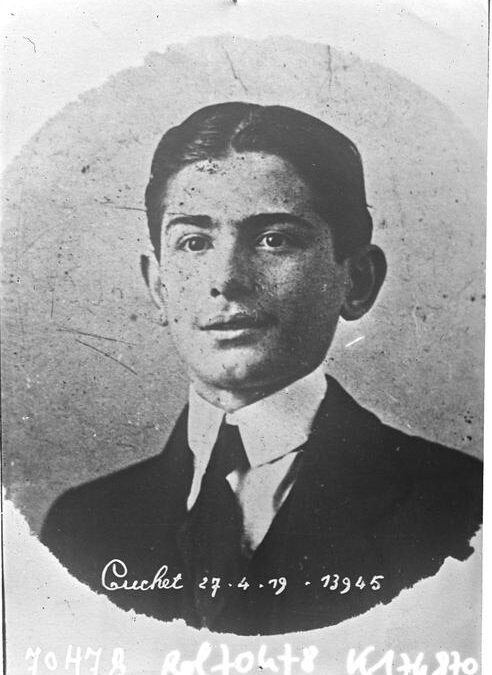
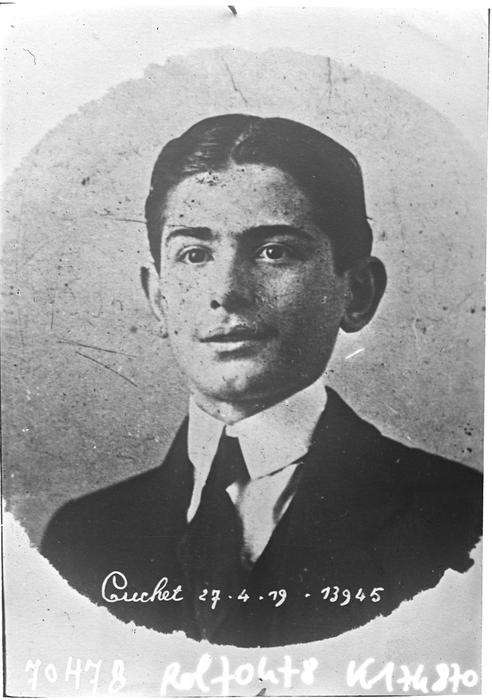
| January 1915 | First murder of widow Jeanne Cuchet and her 17-year-old son André in Vernouillet. |
| December 1915 | Rents the isolated Villa Tric in Gambais, Yvelines. |
| January 13, 1919 | Final murder of prostitute Marie-Thérèse Marchadier at Villa Gambais. |
| April 12, 1919 | Arrested in Paris; small black accounting ledger seized from his pocket. |
| April – May 1919 | Forensic sifting at Villa Gambais recovers 295g of calcined human bone and 47 teeth. |
| November 7, 1921 | Trial opens at Versailles Court of Assizes. |
| November 30, 1921 | Found guilty of 11 murders; sentenced to death by guillotine. |
| February 25, 1922 | Executed by guillotine outside Saint-Pierre Prison in Versailles. |
Frequently Asked Questions
How did Henri Désiré Landru lure his victims?
Landru placed matrimonial classified ads in Parisian newspapers during World War I, posing as a wealthy widower seeking marriage to swindle financially stable widows.
What was the single most damaging piece of evidence against Landru?
His pocket ledger (carnet), which listed all 11 victims’ names, their assets, and the damning detail that he always bought a round-trip train ticket for himself and a one-way ticket for the victim to Gambais.
How did forensic scientists prove murders occurred without whole bodies?
Pathologists sifted the villa furnace ashes, recovering 295 grams of calcined human bones and 47 dental fragments, which dental experts matched to missing victims’ dental records.
{
“@context”: “https://schema.org”,
“@type”: “FAQPage”,
“mainEntity”: [
{
“@type”: “Question”,
“name”: “How did Henri Du00e9siru00e9 Landru lure his victims?”,
“acceptedAnswer”: {
“@type”: “Answer”,
“text”: “Landru placed matrimonial classified ads in Parisian newspapers during World War I, posing as a wealthy widower seeking marriage to swindle financially stable widows.”
}
},
{
“@type”: “Question”,
“name”: “What was the single most damaging piece of evidence against Landru?”,
“acceptedAnswer”: {
“@type”: “Answer”,
“text”: “His pocket ledger (carnet), which listed all 11 victims’ names, their assets, and the damning detail that he always bought a round-trip train ticket for himself and a one-way ticket for the victim to Gambais.”
}
},
{
“@type”: “Question”,
“name”: “How did forensic scientists prove murders occurred without whole bodies?”,
“acceptedAnswer”: {
“@type”: “Answer”,
“text”: “Pathologists sifted the villa furnace ashes, recovering 295 grams of calcined human bones and 47 dental fragments, which dental experts matched to missing victims’ dental records.”
}
}
]
}