
INVESTIGATIVE CASE DOSSIER: THE ISABELLA STEWART GARDNER MUSEUM HEIST
- Target Institution: Isabella Stewart Gardner Museum, 25 Evans Way, The Fens, Boston, Massachusetts
- Date & Time of Heist: March 18, 1990 (1:24 AM – 2:45 AM EST; Saint Patrick’s Day Weekend)
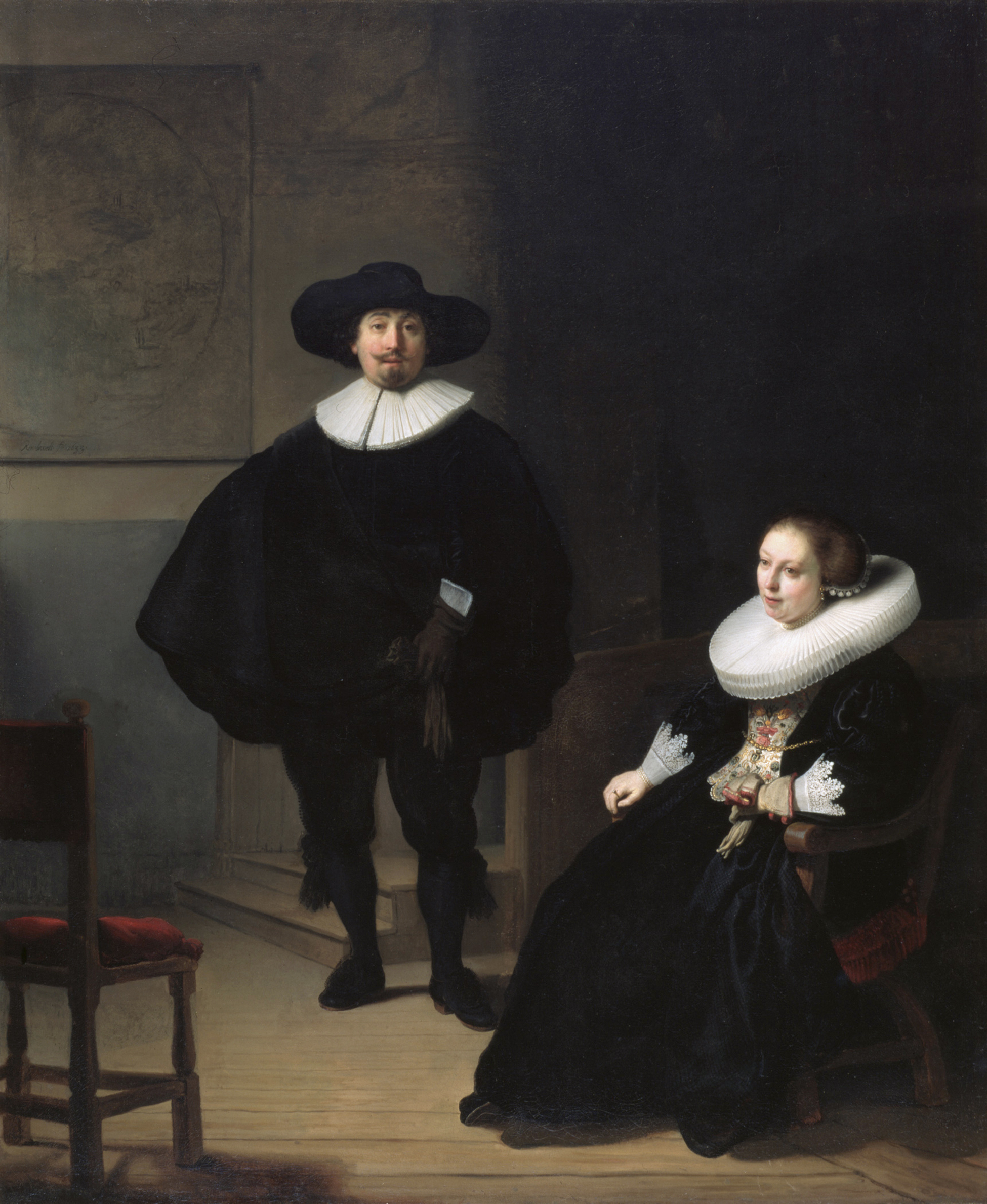
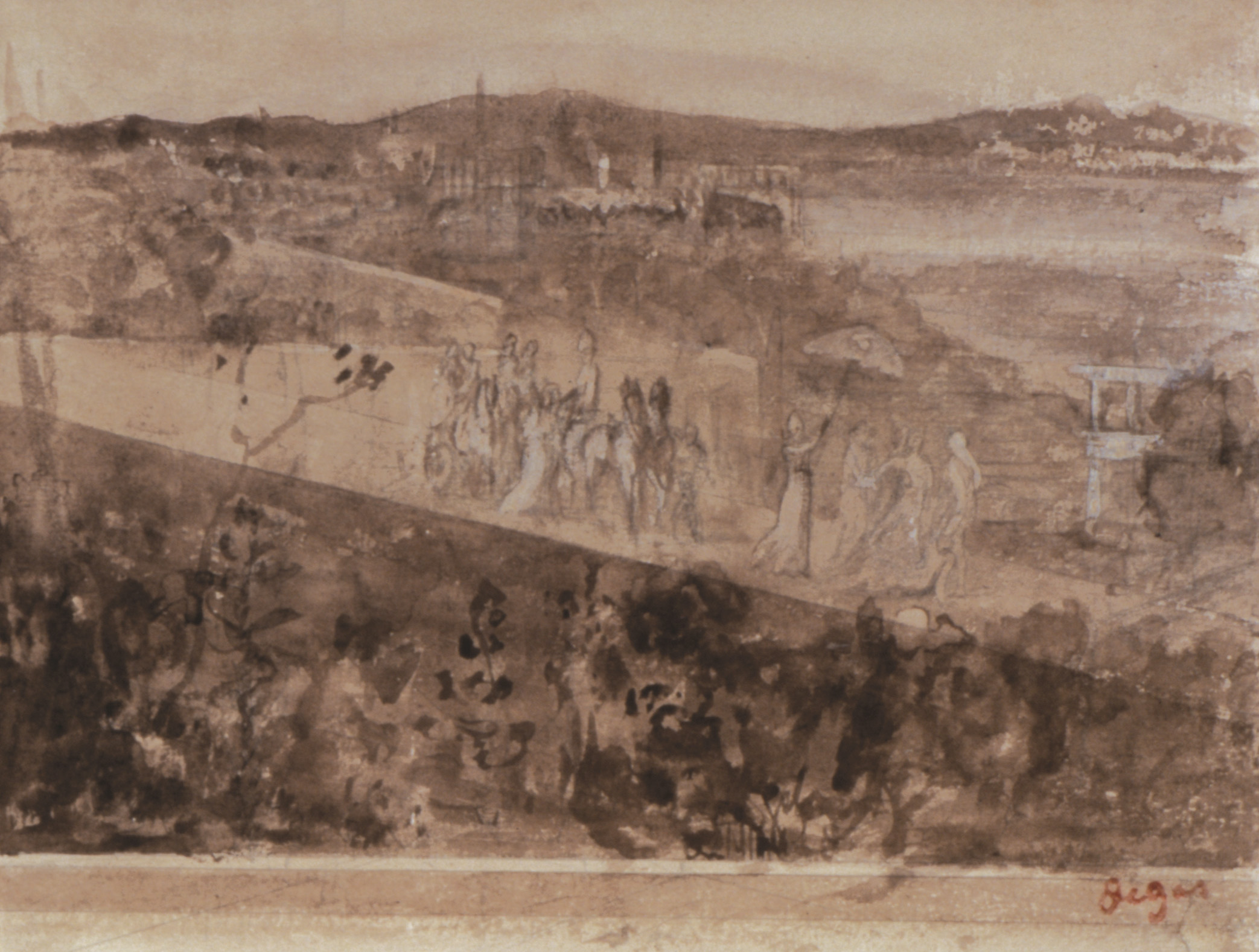
- Stolen Masterpieces: 13 irreplaceable artworks including Johannes Vermeer’s The Concert, Rembrandt’s The Storm on the Sea of Galilee (his only known seascape) and A Lady and Gentleman in Black, and sketches by Edgar Degas and Édouard Manet
- Estimated Current Valuation: In excess of $500 Million (The largest property theft in world history)
- Active Reward: $10 Million offered by the Museum Board of Trustees for information leading directly to recovery in good condition
- Lead Investigating Agency: Federal Bureau of Investigation (FBI Boston Field Office / Art Crime Team)
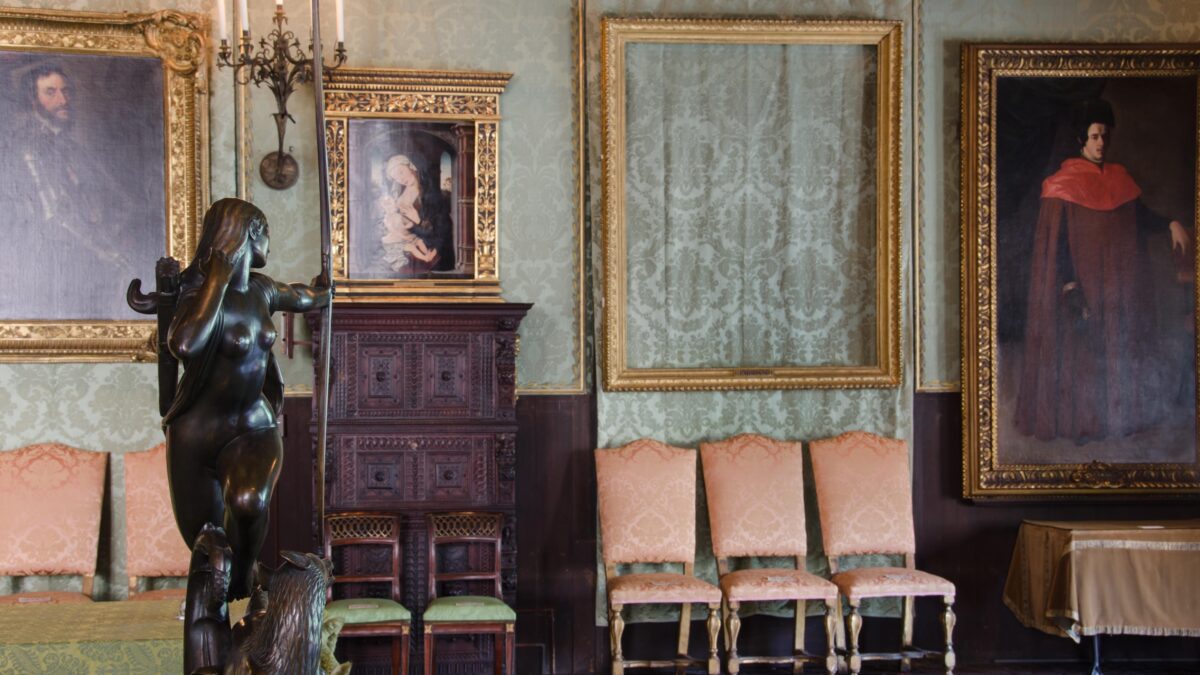
- Status: Active global recovery operation; empty gilt frames remain hanging in the galleries as symbols of hope
In the early morning hours of March 18, 1990, as the city of Boston celebrated Saint Patrick’s Day weekend, two men disguised in Boston Police uniforms buzzed the security entrance of the renowned Isabella Stewart Gardner Museum. Claiming to be responding to a disturbance call, the impostors gained entry, overpowered and duct-taped the two night watchmen in the basement, and spent eighty-one minutes systematically slashing and removing thirteen priceless masterpieces from their frames. With a current estimated market valuation exceeding $500 million, the Gardner Museum Heist remains the largest unsolved property crime in human history, driving an international multi-decade investigation spearheaded by the FBI’s Art Crime Team.
The 81-Minute Midnight Infiltration (March 18, 1990)
The Isabella Stewart Gardner Museum, established in 1903 in Boston’s historic Fenway neighborhood, was designed as a 15th-century Venetian palazzo housing one of the world’s most exquisite private art collections. Under the strict terms of Isabella Stewart Gardner’s will, the artworks were required to remain in their exact original exhibition locations without modification.
At 1:24 AM on Sunday, March 18, two men dressed in authentic Boston Police patrol uniforms drove a red hatchback to the museum’s Palace Road security door. When they pressed the intercom, 23-year-old night watchman Rick Abath looked through the security camera monitor. The men stated they were investigating a disturbance on the grounds. Violating strict museum security protocols, Abath buzzed the electronic security door open.
Once inside the security foyer, the fake officers instructed Abath to step away from the security desk, claiming there was a warrant for his arrest. When the second watchman arrived, both guards were handcuffed, wrapped from head to foot in duct tape, and tied to pipes in separate rooms of the museum’s dark basement. The thieves had complete, unhindered access to four floors of irreplaceable world treasures.
The Stolen Masterpieces: Slashing 13 World Treasures
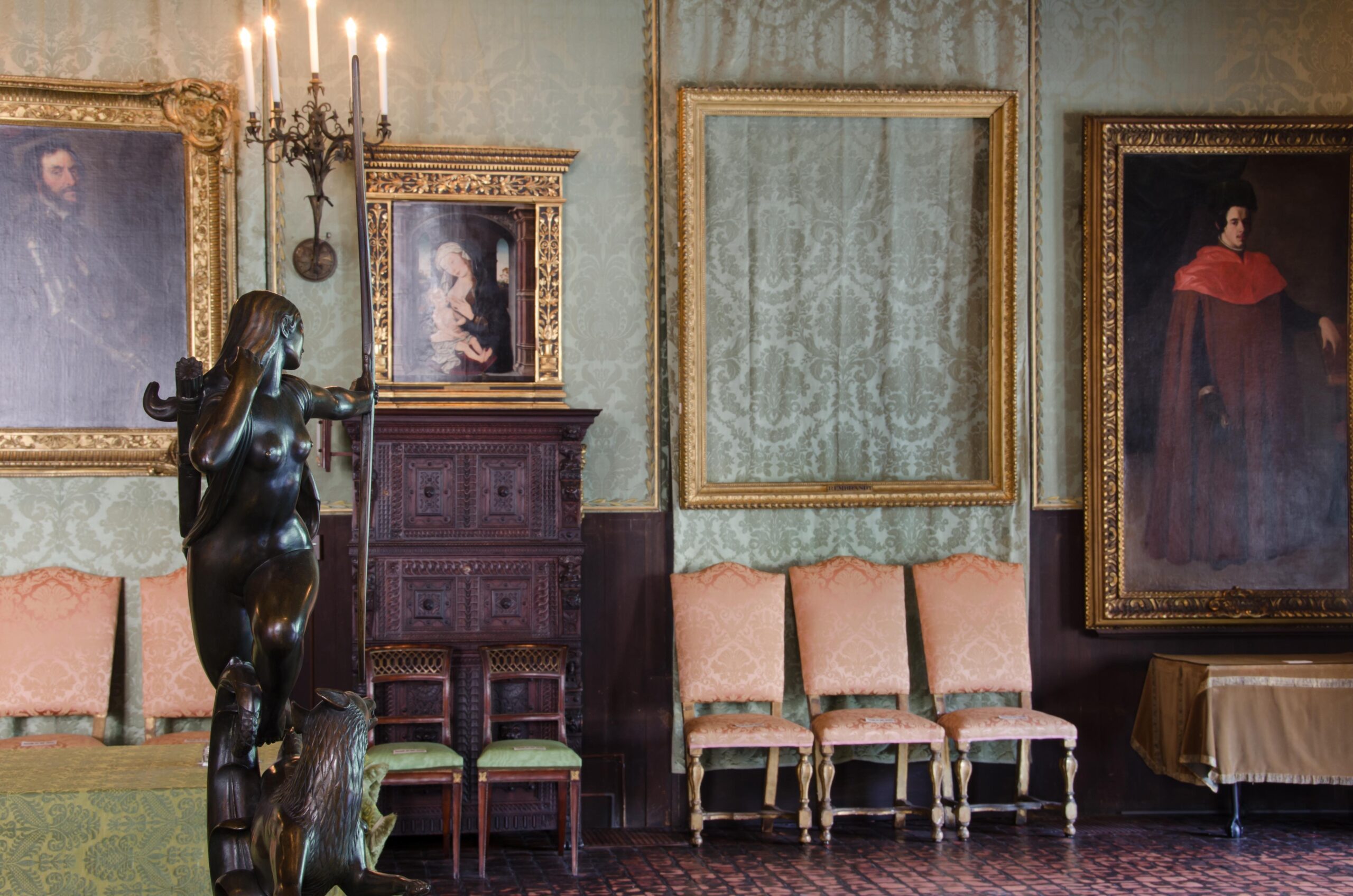
The thieves spent eighty-one minutes walking the Dutch Room and Short Gallery, triggering infrared motion detectors that logged their exact paths. In the Dutch Room, the thieves used utility blades to brutally slash Rembrandt van Rijn’s 1633 masterpiece The Storm on the Sea of Galilee—the Dutch master’s only known maritime painting—and A Lady and Gentleman in Black directly out of their heavy wooden frames.
They also stole Johannes Vermeer’s The Concert (one of only 34 known Vermeer paintings in existence, valued alone at over $250 million), Rembrandt’s postage-stamp-sized etching Self-Portrait, Govaert Flinck’s Landscape with an Obelisk, and an ancient Chinese bronze Gu beaker dating to the Shang Dynasty (1200–1100 BC). In the Short Gallery, the thieves removed five delicate sketches on paper by French Impressionist Edgar Degas and Édouard Manet’s Chez Tortoni from the Blue Room, before making off with a decorative gilded bronze eagle finial from a Napoleonic silk flag.
Curiously, the thieves ignored surrounding works of far greater value, including Titian’s The Rape of Europa (often called the greatest Renaissance painting in America) and masterworks by Botticelli and Raphael. At 2:45 AM, after making two trips to load the rolled canvases into their vehicle, the thieves departed into the Boston night.
The FBI Investigation and Boston Mob Suspects
At 8:15 AM on Sunday morning, the morning security shift arrived, discovering the bound guards in the basement and alerting the Boston Police Department and the FBI. The FBI established a dedicated task force, cataloging latent fingerprints, DNA trace from duct tape bindings, and motion detector electronic logs.
Over thirty-four years of global investigation spanning Europe, Asia, and South America, the FBI focused extensively on Boston and New England organized crime factions. In March 2013, the FBI Boston Field Office announced a major breakthrough, officially confirming that federal investigators had identified the two thieves who broke into the museum with high confidence, determining they belonged to a mid-level organized crime syndicate based in the Mid-Atlantic and New England.
Investigative reporting and federal grand jury transcripts identified the primary suspects as associates of Boston mobster Carmello Merlino’s crew, including George Reissfelder and Leonard DiMuzio (both deceased within a year of the heist), as well as Robert Guarente and Robert Gentile, a Connecticut mobster whose residence was searched by the FBI in 2012, uncovering a handwritten list of the stolen Gardner paintings and their black market valuations.
The Enduring $10 Million Reward and Empty Frames
To this day, the Isabella Stewart Gardner Museum Board of Trustees offers an unprecedented $10 million cash reward for information leading directly to the recovery of the thirteen artworks in good physical condition. A separate $100,000 reward is offered specifically for the safe return of the Napoleonic eagle finial. The United States Attorney’s Office has repeatedly confirmed that immunity from criminal prosecution will be granted to anyone who safely returns the stolen masterpieces.
Visitors to the Gardner Museum today will encounter an unforgettable and haunting sight: in accordance with Mrs. Gardner’s will and as a powerful symbol of eternal hope, the empty gilt and wooden frames still hang on the damask-covered walls of the Dutch Room and Short Gallery, awaiting the return of the world’s most sought-after stolen treasures.
FBI Art Crime Team & Forensic Fiber Analysis on Empty Frames
In recent years, the FBI’s specialized Art Crime Team and the US Attorney’s Office in Boston have utilized modern forensic science to examine the physical crime scene materials preserved since March 18, 1990. M-Vac DNA collection and high-resolution optical microscopy were applied to the duct tape bindings, discarded utility knife blades, and gilded wooden frames left behind in the Dutch Room and Short Gallery.
The FBI confirmed that micro-traces of pigment, varnish, and linen fibers match historical samples of Rembrandt’s The Storm on the Sea of Galilee, confirming the cutting technique used during the robbery. The ongoing federal investigation remains active worldwide, backed by the museum’s standing million private reward.
The National Stolen Art File & Global Black Market Interdiction
Following the theft of the thirteen masterworks from the Isabella Stewart Gardner Museum, the FBI entered the artworks into the National Stolen Art File (NSAF) and Interpol’s Stolen Works of Art database. Federal art crime specialists established that high-profile masterpieces like Vermeer’s The Concert and Rembrandt’s The Storm on the Sea of Galilee are effectively unsellable on open or private legitimate art markets due to their worldwide fame.
Instead, federal intelligence suggests that stolen masterworks are frequently held by organized crime networks as collateral for illicit loans or narcotics transactions. The US Attorney’s Office has repeatedly emphasized that federal immunity remains an option for individuals who facilitate the safe, undamaged return of the collection to the museum’s historic Dutch Room.
Case Timeline & Key Forensic Milestones
| Date / Year | Milestone / Event | Investigative Significance |
|---|---|---|
| March 18, 1990 | Two fake police officers steal 13 masterpieces from Gardner Museum | Valuation over $500M; largest property theft in world history |
| 1997 | Boston reporter William Young inspects purported stolen Rembrandt | Leads to extensive FBI undercover negotiations; paintings not recovered |
| March 2013 | FBI officially announces identification of the two thieves | Thieves confirmed deceased; recovery shifts to black market holders |
| May 2017 | Museum Board doubles reward to unprecedented $10 Million | Reward remains active with full immunity from prosecution |
Frequently Asked Questions (FAQ)
What is the most valuable painting stolen in the Gardner Museum heist?
Johannes Vermeer’s The Concert (c. 1664) is universally considered the most valuable stolen artwork in the world, with an estimated standalone market value exceeding $250 million. It is one of only 34 authenticated Vermeer canvases known to exist.
Why are the empty frames still hanging in the Gardner Museum?
The empty frames remain hanging on the walls of the Dutch Room and Short Gallery in accordance with Isabella Stewart Gardner’s historic founding trust—which mandated that the installation never be changed—and as a poignant visual reminder and symbol of hope for the collection’s eventual recovery.
What reward is currently offered for the return of the Gardner art?
The Isabella Stewart Gardner Museum offers an active $10 million reward for information leading directly to the recovery of the thirteen artworks in good physical condition, alongside full legal immunity from federal prosecution for anyone facilitating their safe return.



