
INVESTIGATIVE CASE DOSSIER: THE 18-YEAR DISAPPEARANCE & CAPTURE OF JOHN LIST
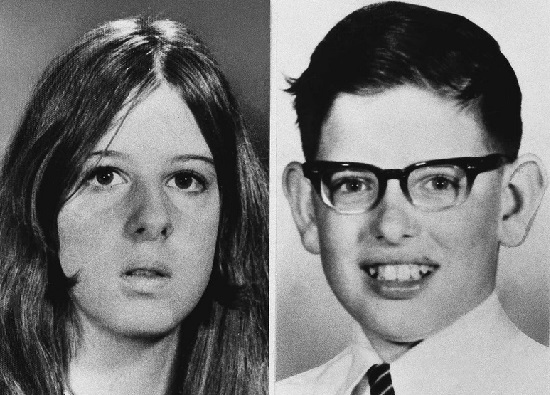
- Victims: Alma List (84; Mother), Helen List (46; Wife), Patricia (16; Daughter), John Jr. (15; Son), Frederick (13; Son)
- Date of Crime: November 9, 1971 (Bodies discovered December 7, 1971)
- Location: Breeze Knoll Mansion, 431 Hillside Avenue, Westfield, Union County, New Jersey
- Perpetrator: John Emil List (Accountant & Sunday School Teacher; Lived under alias Robert Peter Clark)
- Fugitive Duration: 17 years, 6 months, 23 days (Captured June 1, 1989 in Richmond, Virginia)
- Breakthrough Forensic Tool: Forensic age-progression bust created by forensic sculptor Frank Bender & forensic psychologist Richard Walter
- Capture Catalyst: Broadcast on FOX’s America’s Most Wanted (Episode aired May 21, 1989)
On November 9, 1971, 46-year-old devout Lutheran Sunday school teacher and accountant John Emil List methodically executed his mother, wife, and three children inside their 19-room Victorian mansion in Westfield, New Jersey. In an act of chilling premeditation, List cut his face out of every family photograph in the home, canceled all mail and milk deliveries, turned on classical religious organ music to play on loop throughout the house, and vanished into thin air. For nearly eighteen years, the “Westfield Slayer” eluded the FBI and Interpol. His legendary capture on June 1, 1989, stands as the most famous achievement in forensic facial reconstruction history, orchestrated through the uncanny artistry of sculptor Frank Bender and the television broadcast America’s Most Wanted.
The Breeze Knoll Murders: November 9, 1971
Breeze Knoll was an opulent 19-room mansion boasting a Tiffany stained-glass skylight, located in the affluent suburban town of Westfield, New Jersey. Outwardly, John List presented the image of rigid suburban respectability: a devout churchgoer who wore a suit and tie even while doing yard work. Inwardly, however, List was facing complete financial ruin. He had lost his lucrative banking vice-president job, was secretly stealing money from his elderly mother’s bank account to pay his mortgage, and was terrified of public bankruptcy and social disgrace.
Convinced in his twisted religious rationale that killing his family would guarantee their souls entrance into heaven before they fell into poverty and moral corruption, List executed his plan on Tuesday, November 9, 1971. Using a 9mm Steyr automatic pistol and his father’s .22 caliber revolver, List shot his wife Helen in the back of the head in the kitchen as she drank her morning coffee. He then climbed to the third-floor attic apartment and shot his 84-year-old mother, Alma, above the left eye.
List waited calmly for his children to return from school. When 16-year-old Patricia and 13-year-old Frederick arrived home, List shot each of them in the back of the head as they walked through the door. He then made lunch, drove to Westfield High School to watch his 15-year-old son John Jr. play in a soccer game, drove him home, and shot him multiple times in the ballroom after a brief struggle.
List placed the bodies of his wife and children on sleeping bags in the ballroom beneath the Tiffany skylight, leaving his mother’s body in the attic. He methodically cleaned up blood, wrote a detailed five-page confession letter to his Lutheran pastor explaining his religious justifications, turned the mansion thermostat down to freezing to delay decomposition, turned on classical radio music to echo through the empty halls, and drove to John F. Kennedy International Airport, where he abandoned his car and vanished.
The Discovery and 18-Year Cold Case Impasse
Because List had sent written notes to the children’s schools stating the family was taking an extended trip to North Carolina to care for a sick maternal grandmother, nearly an entire month passed before neighbors noticed that all the lights in the mansion remained on night and day and that mail was piling up. On December 7, 1971, Westfield police officers entered through an unlocked window, discovering the horrific crime scene to the sound of eerie organ hymns playing on the stereo system.
The Union County Prosecutor’s Office and the FBI launched an immediate international manhunt. However, detectives faced an unprecedented obstacle: List had carefully snipped his own face out of every single photograph in the mansion and removed all family portrait albums. The only remaining likeness available to law enforcement was a tiny, low-resolution black-and-white photograph from an old high school yearbook and a blurred military ID card.
Throughout the 1970s and 1980s, investigators followed thousands of leads across North America, Europe, and Latin America. Suspect sightings ranged from bank managers in Denver to international travelers in Switzerland. In August 1972, Breeze Knoll burned to the ground in an unsolved arson fire, destroying the historic crime scene. By 1988, the case was considered completely dormant.
The Masterpiece of Frank Bender and the America’s Most Wanted Broadcast
In early 1989, Union County Captain Frank Kurywczak met with producers of the nascent television program America’s Most Wanted, hosted by John Walsh. To present a viable image of what a 63-year-old John List would look like after eighteen years on the run, producers commissioned Philadelphia forensic sculptor Frank Bender and renowned forensic psychologist Richard Walter.
Bender and Walter analyzed List’s personality profile, family genetic history, posture, and psychological traits. Walter determined that List was an obsessive, rigid perfectionist who would not have changed his career path or physical style; he predicted List would still work as an accountant, wear conservative business suits, and suffer from sagging facial tissue due to chronic stress. Bender meticulously sculpted a three-dimensional clay bust, selecting thick, dark horn-rimmed glasses from a thrift store—reasoning that List, an insecure man with severe astigmatism, would choose frames that made him look authoritative and intellectual.
On May 21, 1989, America’s Most Wanted broadcast the segment to an estimated 22 million viewers across the United States. Viewers were stunned by the lifelike bust, which rotated on screen alongside a detailed description of List’s habits and distinctive surgical scar on his right shoulder.
Capture in Richmond, Virginia and Trial Proceedings
Less than twenty minutes after the broadcast, telephone switchboards lit up with tips. The decisive tip came from a viewer in Denver, Colorado, who recognized the bust as her former neighbor, an accountant named “Robert Peter Clark.” The tipster reported that Clark had recently relocated to Midlothian, a suburb of Richmond, Virginia, where he was working for an accounting firm and had remarried a woman named Delores Miller.
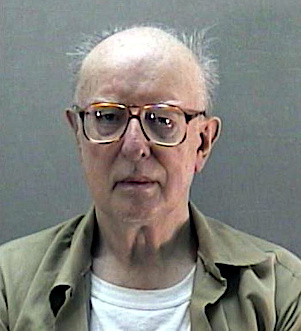
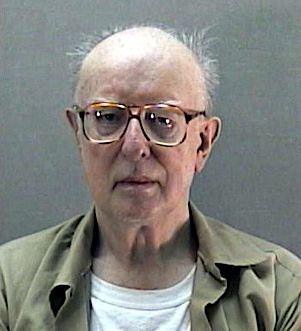
On June 1, 1989, FBI Special Agents and Union County detectives surrounded the Richmond accounting office, confronting the man at his desk. He was wearing conservative dark horn-rimmed glasses virtually identical to those chosen by Frank Bender. When asked for his identity, the suspect claimed to be Robert Clark. However, FBI fingerprint technicians compared his ink prints against John List’s World War II military service records, confirming a positive, unquestionable match.
List was extradited to New Jersey and stood trial in Union County Superior Court in April 1990 before Judge William Wertheimer. Defense attorney Elijah Miller presented an insanity defense, claiming List suffered from post-traumatic stress disorder from his military service and a severe religious delusion. The jury rejected the defense, convicting List on five counts of first-degree murder. On May 1, 1990, Judge Wertheimer sentenced John List to five consecutive life sentences, stating that List had earned “the highest punishment the laws of New Jersey allow.” List died in prison custody at St. Francis Medical Center in Trenton in March 2008 at the age of 82.
Case Timeline & Key Forensic Milestones
| Date / Year | Milestone / Event | Forensic & Investigative Significance |
|---|---|---|
| November 9, 1971 | John List murders his mother, wife, and three children | Photographs removed; five-page confession letter left for pastor |
| December 7, 1971 | Bodies discovered inside Breeze Knoll mansion | Nearly one month head start allows List to vanish completely |
| May 21, 1989 | America’s Most Wanted broadcasts Frank Bender’s forensic bust | Over 22 million viewers view age-progressed likeness; tip received |
| June 1, 1989 | FBI arrests List in Richmond, Virginia, living as Robert Clark | Fingerprint comparison confirms identity after 18 years |
| May 1, 1990 | List sentenced to five consecutive life prison terms | Insanity defense rejected; dies in prison custody in 2008 |
Frequently Asked Questions (FAQ)
How did forensic sculptor Frank Bender accurately predict John List’s appearance?
Frank Bender collaborated with forensic psychologist Richard Walter to construct a psychological and genetic profile. Bender factored in aging skin laxity, bone structure, receding hairline, and psychological habits, predicting that List would wear conservative, thick horn-rimmed glasses to appear intellectual. The resulting clay bust matched List’s real-life appearance with astonishing accuracy.
What alias did John List use while on the run for 18 years?
John List assumed the identity of “Robert Peter Clark” (often called Bob Clark). He obtained a fraudulent Social Security card, worked as an accountant in Denver, Colorado, and Richmond, Virginia, attended a local church, and remarried in 1985.
What was John List’s motive for killing his entire family?
List was facing imminent personal bankruptcy, having lost his banking job and depleted his mother’s savings. Guided by severe religious rigidity, List believed that murdering his family would save their souls from the moral degradation and shame of poverty, ensuring they would go to heaven.



