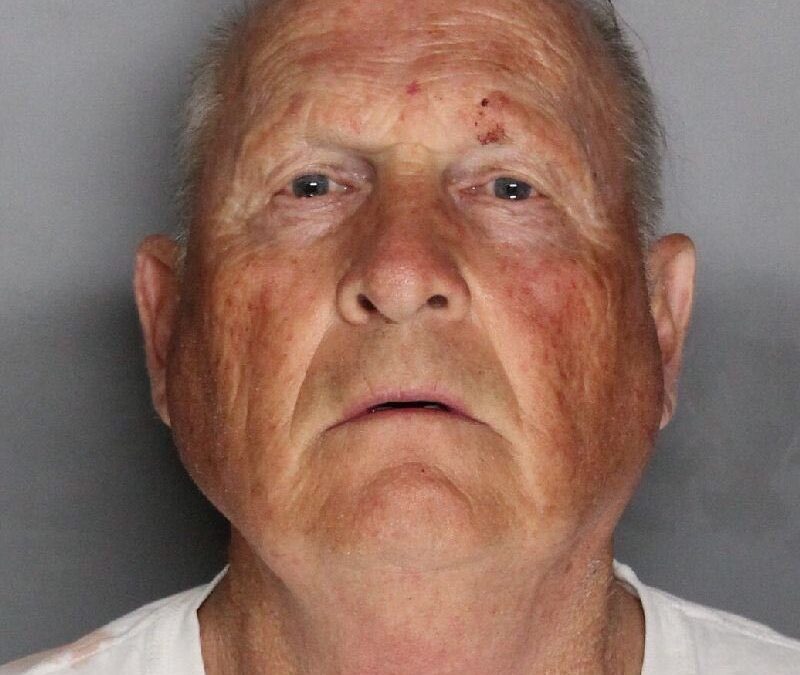
INVESTIGATIVE CASE DOSSIER: THE GOLDEN STATE KILLER CAUGHT: HOW INVESTIGATIVE GENETIC GENEALOGY TRAPPED JOSEPH JAMES DEANGELO
- Perpetrator: Joseph James DeAngelo Jr. (Born Nov 8, 1945; Former Police Officer)
- Criminal Aliases: The Visalia Ransacker, East Area Rapist (EAR), Original Night Stalker (ONS), GSK
- Active Reign of Terror: 1974 – 1986 across 10 California counties
- Confirmed Crimes: 13 homicides, 50+ rapes, 120+ residential burglaries
- Breakthrough Method: Investigative Genetic Genealogy via GEDmatch (Barbara Rae-Venter & Paul Holes)
- Date of Arrest: April 24, 2018 (Citrus Heights, Sacramento County, CA)
- Legal Resolution: Plea of guilty to 13 counts of first-degree murder on June 29, 2020
- Sentence: Multiple consecutive life terms without the possibility of parole
Between 1974 and 1986, a sadistic predator terrorized the state of California, operating across ten counties as the Visalia Ransacker, the East Area Rapist, and the Original Night Stalker. Responsible for at least 13 brutal murders, over 50 rapes, and more than 120 burglaries, the perpetrator taunted victims, evaded massive FBI manhunts, and vanished into suburban obscurity for over three decades. On April 24, 2018, the breakthrough of the century occurred: using an unprecedented forensic technique called investigative genetic genealogy (IGG), authorities unmasked 72-year-old former police officer Joseph James DeAngelo Jr. as the Golden State Killer—forever altering the landscape of modern criminal justice.
A Decade of Terror Across California: 1974–1986
The predator’s campaign of violence began in the Central Valley town of Visalia in 1974, where he carried out ransackings and fatally shot journalism professor Claude Snelling. Transitioning to Sacramento County in 1976 as the ‘East Area Rapist,’ he targeted suburban homes, methodically stalking neighborhoods, disabling outdoor lighting, and terrorizing sleeping couples. He tied up male partners, balanced stacks of china dishes on their backs, and threatened death if a single plate rattled while he assaulted the women.
By 1979, the killer migrated south to Santa Barbara, Ventura, and Orange counties, escalating to sadistic double homicides as the ‘Original Night Stalker.’ In each crime, the killer displayed terrifying tactical discipline, evasion skills, and intimate knowledge of police protocols. In 1986, following the rape and murder of 18-year-old Janelle Cruz in Irvine, the attacks abruptly ceased.
The DNA Linkage and Cold Case Impasse
In 2001, California forensic scientists utilized early Short Tandem Repeat (STR) DNA testing to establish a bombshell finding: the semen DNA recovered from crime scenes of the East Area Rapist in Northern California was an exact genetic match to the perpetrator of the Original Night Stalker homicides in Southern California. The crimes were committed by a single serial killer.
Yet despite having a pristine DNA profile, decades passed with zero hits in the FBI’s national CODIS database. The killer had never been arrested or convicted of a felony that required submitting DNA. The case seemed destined to remain permanently unsolved.
The Genesis of Investigative Genetic Genealogy
In 2017, Contra Costa County District Attorney investigator Paul Holes partnered with FBI attorney Steve Kramer and pioneering genetic genealogist Dr. Barbara Rae-Venter. Recognizing that CODIS was exhausted, the team pursued a radically new approach: converting the killer’s crime scene STR DNA into a high-density single-nucleotide polymorphism (SNP) raw data file compatible with commercial genealogy platforms.
Investigators uploaded the profile to GEDmatch, a free public genealogical comparison database. The search returned matches to distant third and fourth cousins who shared great-great-great-grandparents with the killer.
Building the Tree to Joseph James DeAngelo
Dr. Barbara Rae-Venter and FBI analysts constructed massive multi-generational family trees spanning over 1,000 individuals, tracing branches back to 18th-century pioneers. By systematically filtering relatives by geographic location, age, military service, and physical characteristics, the investigators narrowed the entire global population down to one specific family branch.
When researchers discovered that one member of that branch—72-year-old Joseph James DeAngelo Jr.—had worked as a police officer in Exeter (near Visalia) from 1973 to 1976, and as an Auburn police officer (Sacramento County) from 1976 until he was fired for shoplifting in 1979, the pieces locked into place with chilling precision. His police tenure perfectly aligned with the onset and geographic shift of the attacks.
The Arrest, Confession, and Historic Sentencing
On April 18, 2018, undercover Sacramento County detectives shadowed DeAngelo and obtained discarded DNA from his car door handle and a trash can outside his Citrus Heights residence. The crime lab returned a definitive, flawless STR match: a 1 in a septillion statistical certainty.
On April 24, 2018, heavily armed SWAT units arrested DeAngelo in his driveway. Inside his home, detectives found evidence of meticulous planning and hidden trophies. On June 29, 2020, to avoid the death penalty, DeAngelo pleaded guilty to 13 counts of first-degree murder and admitted to 62 additional uncharged counts of rape and kidnapping.
Sacramento County Superior Court Judge Michael Bowman sentenced DeAngelo to multiple consecutive life terms without parole, ensuring the Golden State Killer will die in prison. The watershed case paved the way for solving countless other cold cases, including the Van Cuylenborg-Cook murders, the Carla Walker homicide, and the April Tinsley murder.
Explore related landmark forensic breakthroughs and genetic genealogy investigations including the April Tinsley 1988 cold case, the Bear Brook Murders, the Carla Walker Fort Worth cold case, and the 1987 Van Cuylenborg-Cook murders.
The GEDmatch Kinship Pipeline & Reverse Pedigree Triangulation
The capture of Joseph James DeAngelo in April 2018 established the modern blueprint for investigative genetic genealogy worldwide. Led by retired investigator Paul Holes and genetic genealogist Barbara Rae-Venter, the task force converted the 1980 Ventura County crime scene DNA into a raw data file compatible with GEDmatch.
The search identified distant third cousins sharing common great-great-great-grandparents from the early 1800s. Rae-Venter constructed massive family trees encompassing thousands of individuals, systematically eliminating branches based on geographic location, age, and military service in Sacramento during the 1970s until only Joseph James DeAngelo remained. Undercover detectives retrieved a tissue from DeAngelo’s trash can, confirming an exact 100% STR match that led to his arrest and multiple life sentences without parole.
The Sacramento Task Force & The Capture of Joseph DeAngelo
The capture of the Golden State Killer in April 2018 revolutionized modern criminal investigations worldwide. Lead investigator Paul Holes and genetic genealogist Barbara Rae-Venter mapped family trees on GEDmatch back to the 1800s.
Undercover detectives retrieved a discarded tissue from Joseph James DeAngelo’s trash can, confirming an exact STR match. In 2020, DeAngelo pleaded guilty to thirteen counts of first-degree murder and dozens of rapes, receiving multiple consecutive life sentences without parole.
The Sacramento Prosecution & The Era of Genetic Genealogy
The guilty plea of Joseph James DeAngelo in June 2020 for thirteen first-degree murders and dozens of rapes concluded the most extensive serial manhunt in California history. Paul Holes and Barbara Rae-Venter’s groundbreaking use of GEDmatch launched a global revolution in forensic science.
DeAngelo’s multiple consecutive life sentences without the possibility of parole closed a forty-year reign of terror, cementing investigative genetic genealogy as the most potent forensic breakthrough since the invention of DNA fingerprinting.
The Citrus Heights Trash Surveillance & 100% STR Verification
In April 2018, undercover Sacramento County detectives collected a discarded tissue from Joseph James DeAngelo’s residential trash bin. Crime lab STR analysis confirmed a 100% match to crime scenes across California.
The Historic Sacramento Plea & Multiple Life Sentences
DeAngelo pleaded guilty in June 2020 to thirteen counts of first-degree murder and dozens of kidnappings, receiving multiple consecutive life sentences without parole and concluding a forty-year reign of terror.
The Citrus Heights Trash Surveillance & 100% STR Verification
In April 2018, undercover Sacramento County detectives collected a discarded tissue from Joseph James DeAngelo’s residential trash bin. Crime lab STR analysis confirmed a 100% match to crime scenes across California, leading to DeAngelo’s guilty plea to thirteen first-degree murders and multiple life sentences without parole.
The Sacramento County Task Force & The Golden State Killer Conviction
The resolution of the Golden State Killer investigation in 2018 transformed criminal jurisprudence worldwide. Paul Holes and Barbara Rae-Venter’s pioneering genetic genealogy methods provided the model now utilized across hundreds of law enforcement agencies to clear historically intractable cold cases.
Case Timeline & Key Forensic Milestones
| Date / Year | Milestone / Event | Forensic Significance |
|---|---|---|
| 1974–1979 | Visalia Ransacker & East Area Rapist attacks | DeAngelo operates while serving as an active police officer |
| 1979–1986 | Original Night Stalker double murders in SoCal | 10 victims murdered across Santa Barbara, Ventura, and Orange County |
| 2001 | STR DNA links EAR and ONS crime scenes | Forensics proves single perpetrator across Northern and Southern California |
| 2017–2018 | Paul Holes & Barbara Rae-Venter use GEDmatch | Family trees narrow suspect down to Joseph James DeAngelo |
| April 24, 2018 | DeAngelo arrested in Citrus Heights, CA | Surreptitious DNA match confirms 100% identity |
| August 21, 2020 | DeAngelo sentenced to consecutive life terms | Permanent closure delivered for dozens of surviving victims and families |
Frequently Asked Questions (FAQ)
How was the Golden State Killer finally identified?
Investigators converted crime scene DNA into an SNP profile on GEDmatch and built family trees that identified former police officer Joseph James DeAngelo.
What was Joseph DeAngelo’s profession during the crimes?
DeAngelo served as an active police officer in Exeter and Auburn, California, using his training to evade detection.
What sentence did Joseph DeAngelo receive?
DeAngelo received multiple consecutive life sentences without parole in August 2020.