Case File Dossier: Morgan Heimer (2015)
- Victim: Morgan Heimer (Age 22) — Professional Commercial Whitewater River Guide
- Date of Disappearance: Tuesday, June 2, 2015 (~4:30 PM MST)
- Location: River Mile 213 (Pumpkin Springs), Colorado River, Grand Canyon NP, AZ
- Safety Equipment Worn: Bright blue commercial Type V Personal Flotation Device (PFD), neoprene river shoes, wide-brimmed sun hat
- Primary Investigating Agencies: National Park Service ISB, Coconino County Sheriff’s Office
- Current Status: Active Unsolved Missing Person Investigation
- Investigation Desk: National Park Disappearances
On the late afternoon of June 2, 2015, 22-year-old professional commercial river guide Morgan Heimer was working on an eight-day motorized whitewater expedition down the Colorado River in Grand Canyon National Park. While the expedition was temporarily moored for an interpretive geological stop at Pumpkin Springs (River Mile 213), Morgan stood on the rocky shoreline in full river safety gear, conversing with an expedition guest. Less than ten minutes later, as guides gave the signal for passengers to re-board the motorized rafts to proceed downstream, Morgan had completely vanished from the canyon corridor.
Morgan Heimer was not an inexperienced tourist unfamiliar with river hazards; he was an elite swimmer, a certified wilderness first responder, and a seasoned professional guide employed by Tour West who had navigated the most powerful whitewater rapids in North America. Crucially, at the moment he disappeared, Morgan was wearing a high-buoyancy, commercial Type V Personal Flotation Device (PFD)—a mandatory piece of marine safety equipment engineered to keep a human body floating upright at the water’s surface indefinitely. Despite an exhaustive multi-agency search deploying sonar boats, infrared-equipped helicopters, and specialized dive teams across more than sixty miles of river, neither Morgan, his vibrant blue lifejacket, nor his water shoes were ever recovered.
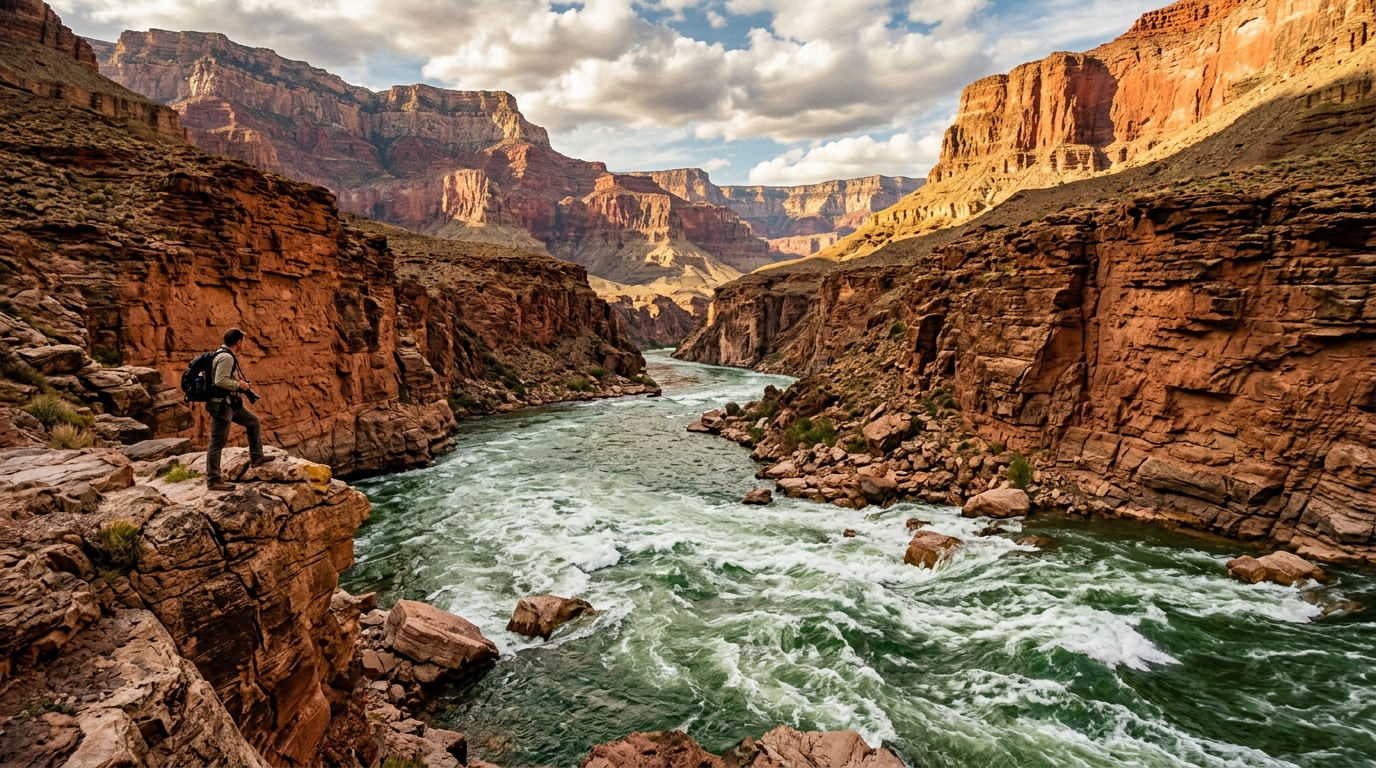
The Mooring at River Mile 213: Pumpkin Springs
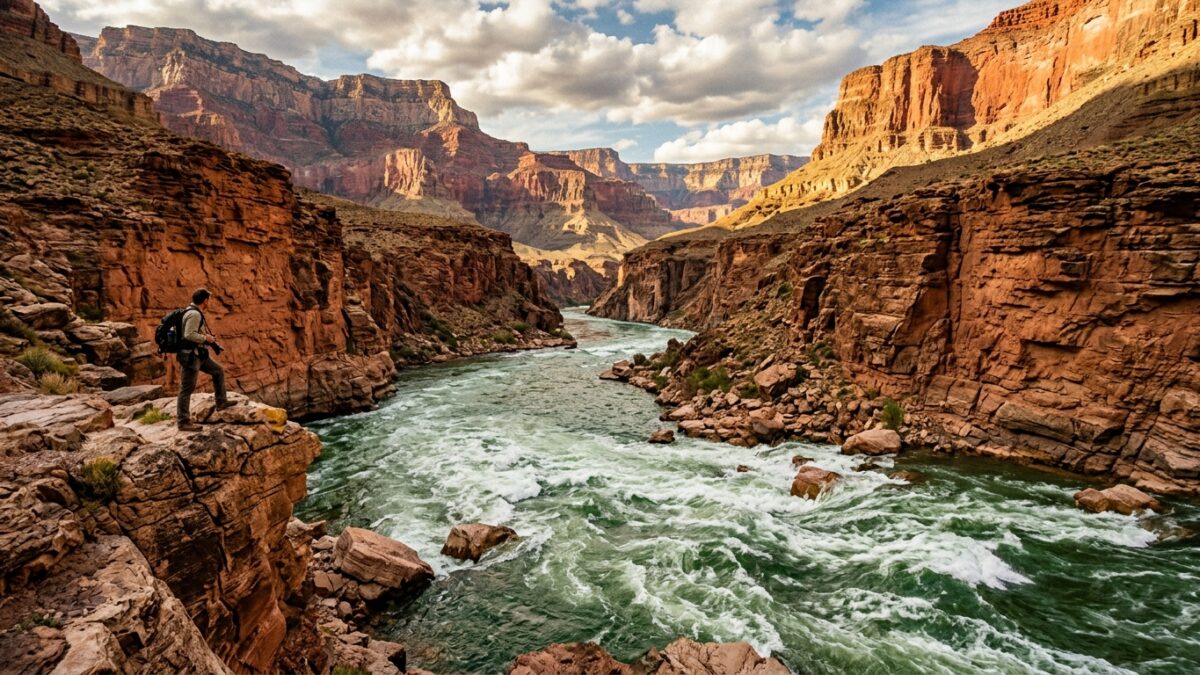
The Colorado River through the Lower Granite Gorge of the Grand Canyon is one of the most isolated and geologically formidable wilderness environments on earth. At River Mile 213, the river flows through a narrow, sheer-walled chasm where towering cliffs of Vishnu Schist and Tapeats Sandstone rise thousands of vertical feet straight out of the churning emerald current.
Pumpkin Springs is a prominent geographical landmark on river left, distinguished by a massive, bulbous travertine limestone bowl holding warm, mineral-rich geothermal spring water. The location is completely inaccessible by land; there are no hiking trails or overland routes connecting River Mile 213 to either the North or South Rim. The only ingress or egress is by watercraft or helicopter.
The Tour West commercial expedition, consisting of multiple motorized S-Rig rafts carrying dozens of paying guests and experienced guides, pulled ashore along the narrow boulder field below Pumpkin Springs at approximately 4:00 PM. Guests disembarked to inspect the mineral bowl and take photographs. Around 4:30 PM, the trip leader sounded the call for departure. Several passengers recalled speaking directly with Morgan on the rocks just minutes before the boarding call. When crew members conducted the mandatory head count aboard the rafts, Morgan was absent.
The Massive Downstream Search & The Flotation Paradox
Recognizing the extreme hazards of the Colorado River, the commercial crew immediately conducted hasty searches of the shoreline boulder fields, rock shelves, and travertine pools before broadcasting an urgent distress message via satellite communication to Grand Canyon National Park Dispatch.
The National Park Service mounted an extensive, highly coordinated tactical search operation:
- Aviation Reconnaissance: NPS helicopters equipped with high-resolution Forward Looking Infrared (FLIR) thermal cameras flew continuous low-altitude sweeps along the sheer canyon walls, scanning from Mile 213 down to Pearce Ferry at the headwaters of Lake Mead—a downstream search corridor exceeding 65 river miles.
- River Patrol Sweeps: Specialized National Park Service motorized catarafts and rescue patrol boats methodically checked every eddy line, gravel bar, sand spit, and tamarisk thicket along both banks of the river.
- Sub-Surface Sonar & Dive Teams: Technical rescue teams deployed side-scan sonar devices and underwater camera probes to inspect deep hydraulic eddies and submerged rock ledges adjacent to Pumpkin Springs.
- Backcountry Cliff Search: Ground rangers scaled the steep talus slopes above the spring, inspecting natural crevices and rock crevices.
The enduring enigma of Morgan Heimer’s disappearance centers on the fundamental laws of river hydrology and physics: Morgan was wearing a Type V commercial life vest providing upwards of 22 pounds of positive buoyancy. In river drowning incidents, a victim wearing a Type V PFD remains buoyant on the surface; even if momentarily trapped in a hydraulic vortex, the buoyant vest forces the body to the surface downstream within hours. In Morgan’s case, not a single fragment of buoyant foam, ripstop nylon, or strap from his lifejacket was ever sighted or recovered by search teams, nor by any of the subsequent commercial river expeditions navigating the corridor.
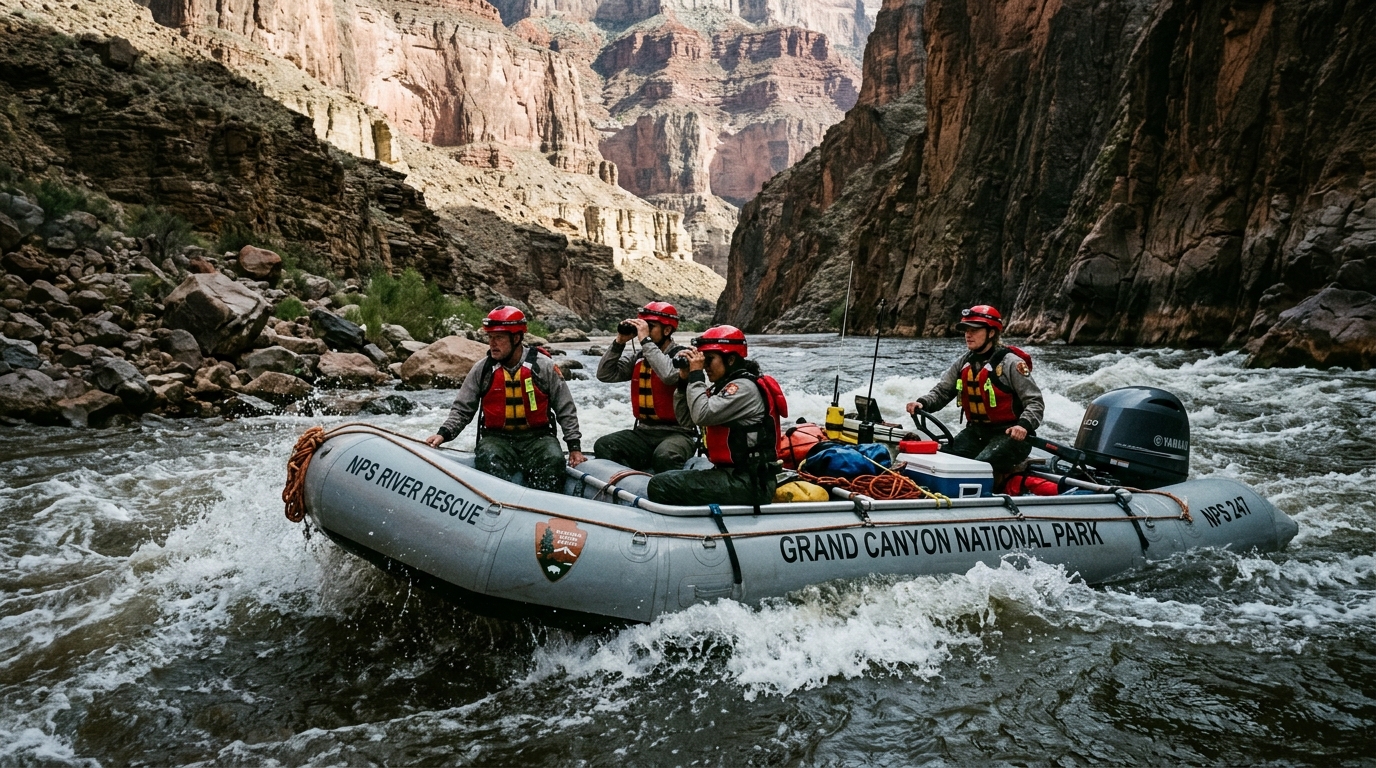
Forensic Hypotheses & Investigative Scenarios
Investigators, hydrological experts, and river veterans have evaluated three primary scenarios:
1. Sub-Surface Entrapment in Underwater Siphons
The riverbed flanking River Mile 213 features complex geological formations where high-velocity currents carve underwater siphons and undercut limestone caverns. Proponents of this theory speculate that Morgan may have slipped into the river from a slippery rock ledge, been drawn into a deep underwater undercut, and pinned beneath the riverbed by thousands of pounds of hydraulic pressure. However, extensive side-scan sonar mapping of the river floor surrounding the mooring area revealed no anomalies or trapped objects.
2. Terrestrial Misadventure in Concealed Slot Formations
Another hypothesis suggests that Morgan attempted to scramble up a steep, fractured talus gully behind Pumpkin Springs to capture a photograph or scout terrain, suffered a catastrophic fall into a deep, hidden sandstone slot or bedrock crevice, and was rendered unconscious. However, specialized alpine rescue teams systematically searched every climbable gully and rock face within a two-mile perimeter, finding no disturbed scree, scuff marks, or discarded gear.
3. Foul Play and River Interception
Due to the complete absence of physical debris in the river corridor, federal investigators also explored potential interpersonal altercations or criminal acts. Investigators conducted comprehensive background checks and in-depth interviews with all passengers, guides, and crew members aboard the expedition. No evidence of foul play or illicit conflict was ever discovered.
Parallels with Grand Canyon Cold Cases
Morgan Heimer’s case is part of a storied history of unexplained vanishings within the Grand Canyon wilderness. It echoes the legendary 1928 disappearance of Glen and Bessie Hyde at River Mile 237, whose wooden scow was found floating fully intact with no trace of the couple, as well as modern rim disappearances including Drake Kramer (2015) and Floyd Roberts (2016).
Current Status & Official Tip Submission
The disappearance of Morgan Heimer remains an active, open missing person investigation under the National Park Service Investigative Services Branch. Anyone possessing information, photographs, or river sightings from June 2015 is encouraged to contact investigators:
Hydrological Dynamics of the Colorado River at Mile 213
To understand the forensic mystery of Morgan Heimer’s vanishing, one must analyze the complex hydraulic environment of the Colorado River through the Lower Granite Gorge. At River Mile 213, the river channels through a narrow chasm of Vishnu Schist and Tapeats Sandstone, creating deep, powerful currents with turbulent eddy lines and underwater boils.
Pumpkin Springs is located on river left, where geothermal mineral waters emerge from the canyon wall to form a bulbous travertine limestone bowl perched directly above the river. The water along the shoreline appears deceptively calm in localized back-eddies, but the main current mere yards away flows with immense volume and velocity.
The Physics of Type V Commercial Flotation Devices
The single most baffling aspect of the investigation is the physical equipment Morgan was wearing at the moment he vanished. As a professional commercial river guide for Tour West, Morgan was outfitted in a high-buoyancy Type V Personal Flotation Device (PFD). These specialized life jackets are engineered specifically for commercial whitewater navigation, providing over 22 pounds of positive buoyancy—more than double the flotation required to keep an unconscious adult’s head above water.
In standard river drowning incidents, an individual wearing a Type V PFD remains visible on the water’s surface, carried downstream by the surface current where they are easily spotted by search aircraft or downstream river trips. Even in rare scenarios where an individual is caught in an underwater hydraulic recirculating hole, the tremendous positive buoyancy of the life jacket forces the victim to the surface once the body clears the hydraulic obstacle.
During the extensive six-day search, National Park Service patrol boats, commercial motorized rigs, and private kayakers navigated every mile of river between Mile 213 and Lake Mead. Not a single fragment of bright blue foam, nylon webbing, or plastic buckle from Morgan’s life jacket was ever seen. For a high-buoyancy commercial PFD to vanish entirely without surfacing downstream defies standard hydrological and forensic models.
Sub-Surface Sonar Scans & Underwater Cave Systems
In response to theories that Morgan may have been trapped underwater, the National Park Service mobilized specialized dive rescue teams equipped with high-frequency side-scan sonar and submersible robotic camera units. These teams mapped the underwater riverbed surrounding Pumpkin Springs, searching deep undercut ledges, submerged boulders, and subterranean rock fractures.
The sonar scans confirmed that the riverbed at Mile 213 contains deep scour holes and fractured limestone shelves. However, exhaustive sonar imaging revealed no anomalies, trapped clothing, or foreign objects wedged beneath the ledges. The total absence of physical debris leaves the case as one of the most enigmatic missing-person investigations in modern river running history.
Information on Morgan Heimer’s Disappearance
Please contact the official Grand Canyon investigative desk:
- Grand Canyon National Park Dispatch: (928) 638-7805
- NPS ISB Tip Line: Call/Text 888-653-0009 | Email:
[email protected] - Coconino County Sheriff’s Office: (928) 774-4523
- True Crime Stories Tip Desk: Submit a confidential lead online.