Executive Case Factsheet
- Perpetrator: Friedrich ‘Fritz’ Heinrich Karl Haarmann (‘The Butcher of Hanover’, ‘The Vampire of Hanover’)
- Active Period: 1918 – 1924 (Arrested June 23, 1924)
- Jurisdiction: Hanover, Weimar Republic (Germany)
- Confirmed Victims: 24 to 27+ young men and teenage boys
- Modus Operandi: Luring runaway youths from Hanover Central Station; fatal biting of trachea, anatomical butchery, disposal in Leine River
- Key Forensic Breakthrough: Forensic osteological reconstruction of over 500 human bone fragments dredged from Leine River by Dr. Ernst Schultze
- Judicial Outcome: Convicted of 24 murders on December 19, 1924; executed by guillotine on April 15, 1925 at Hanover Prison
The Criminal Genesis, Modus Operandi & Geographic Hunting Grounds
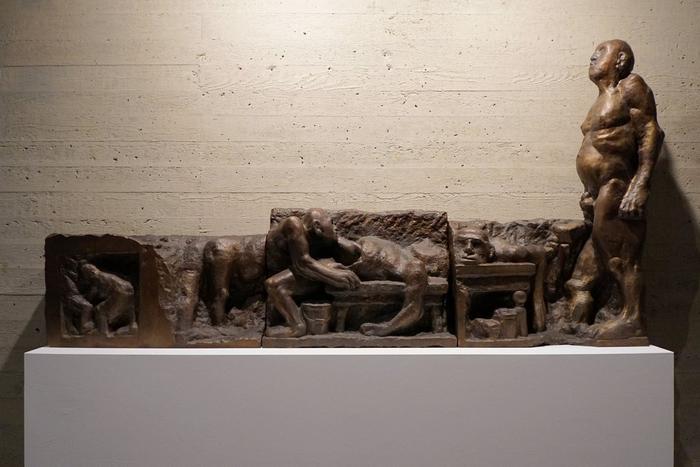
The serial murders committed by Fritz Haarmann in Hanover between 1918 and 1924 epitomize the profound social dislocation, economic collapse, and institutional breakdown of Germany’s Weimar Republic. Amid hyperinflation, demobilization, and mass unemployment, Hanover Central Railway Station (Hauptbahnhof) became a primary convergence point for thousands of destitute runaway youths, war orphans, and itinerant laborers searching for food and shelter. Fritz Haarmann, a convicted thief and registered police informant who traded in black-market meat and second-hand textiles, utilized his official police-authorized access to move freely through station waiting rooms without interference.
Haarmann established a predatory routine: approaching vulnerable teenage boys aged 12 to 22, he gained their trust by offering hot meals, temporary lodgings, or transit assistance before escorting them to his small attic apartment at Neue Straße 8 in Hanover’s historic Altstadt. Once inside, Haarmann incapacitated his victims through a horrific biological method: biting directly through the victim’s windpipe (trachea) while exerting physical restraint, inducing fatal hemorrhage and asphyxiation. Following death, Haarmann utilized professional butchery skills to dismember the corpses, stripping the soft tissues, selling the victims’ tailored garments on the black market, and bundling skeletal remains into burlap sacks that he discarded into the adjacent Leine River and Leine Canal under cover of night.
Forensic Crime Scene Investigation, Pathology & Evidence Reconstruction
The forensic reality of the Haarmann case emerged dramatically in May and June 1924, when children playing near the Leine River discovered human skulls and skeletal fragments washed ashore near the Gottinger Chaussee. Recognizing the gravity of the discoveries, Hanover criminal police initiated a massive dredging and recovery operation along the Leine River bed, retrieving more than 500 individual human bone elements, cranial vaults, and disarticulated limb bones.
Professor Ernst Schultze, Director of the Psychiatric and Neurological Clinic at the University of Göttingen, alongside leading Hanover forensic pathologists, conducted an exhaustive osteological reconstruction of the recovered remains. Pathologists identified distinct manual bone saw striations on long bones, meticulous joint disarticulations, and significant trauma to the cervical vertebrae and hyoid bones consistent with fatal manual compression and throat trauma. By evaluating epiphyseal union stages in long bones and examining dental eruption patterns, forensic anatomists established that the recovered skeletal elements represented at least 22 distinct young males between the ages of 10 and 22, confirming the existence of a systematic serial predator.
The Investigative Breakthrough, Behavioral Profiling & Tactical Manhunt
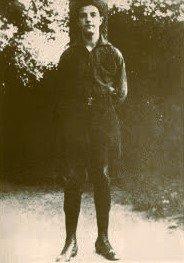
The investigative breakthrough culminated on the night of June 22, 1924, when railway patrol officers detained Haarmann at Hanover Central Station following an altercation with a suspicious youth named Fromm. Recognizing Haarmann from numerous missing persons reports filed by distressed families, detectives immediately placed him in custody and executed an emergency search warrant on his Neue Straße apartment.
Forensic technicians searching the apartment uncovered definitive physical evidence: bloodstains seeped deeply into floorboards and behind wallpaper, butchery implements, and trunks filled with over 200 tailored garments, overcoats, suitcases, and personal identification papers belonging to missing young men. Berlin Master Detective Robert Lindow was dispatched to lead the interrogation. Confronted with the overwhelming physical evidence and matching dredged skulls, Haarmann confessed to between 30 and 40 homicides, implicating his accomplice Hans Grans, who had selected specific victims for their clothing.
Courtroom Proceedings, Expert Testimony & The Definitive Verdict
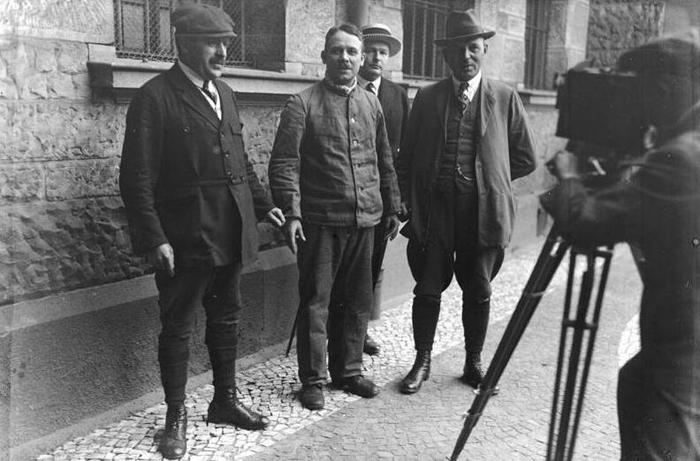
The trial of Fritz Haarmann opened on December 4, 1924, at the Hanover Regional Court, attracting global media attention. The prosecution presented an airtight forensic and osteological case, supported by testimony from medical examiners and grieving parents who identified their sons’ coats, watches, and personal effects from the seized evidence. Professor Schultze delivered comprehensive psychiatric testimony, concluding that while Haarmann exhibited severe psychopathic deviations and sadomasochistic tendencies, he possessed full cognitive awareness of the illegality of his conduct under Section 51 of the German Criminal Code.
On December 19, 1924, the jury found Haarmann guilty of 24 counts of murder. He was sentenced to death by decapitation. On April 15, 1925, Fritz Haarmann was executed via the guillotine (Fallbeil) in the courtyard of Hanover Prison. His preserved brain was sent to the University of Göttingen for neurological examination, where it was studied for anatomical abnormalities before being cremated in 2014.
Modern Criminological Impact, Legal Precedents & Forensic Evolution
The Haarmann case marked a turning point in early 20th-century German forensic science and police accountability. The scandal surrounding Haarmann’s status as a protected police informant prompted sweeping reforms in the Prussian police administration, leading to the strict professionalization of criminal investigation departments and the termination of unvetted informant networks.
Scientifically, the case advanced the discipline of forensic osteology, demonstrating for the first time how systematic aquatic dredging and skeletal rearticulation could establish victim counts, age demographics, and dismemberment tool marks in the absence of intact soft tissue. Professor Schultze’s psychiatric documentation of Haarmann’s psychosexual sadism remains a foundational classical text in European forensic psychiatry and criminal profiling.
Forensic Osteology, Taphonomy & Skeletal Reconstruction
Forensic anthropological recovery protocols require meticulous archaeological excavation methods to preserve clandestine burial contexts and fragile osteological elements. Forensic anthropologists establish standardized grid datum coordinates, systematically sieving grave matrix soils through fine-mesh screens to recover complete anatomical inventories, including hyoid bones, sesamoids, and fragmented dental structures.
Laboratory osteometric analysis evaluates cranial morphology, pelvic dimorphic indicators, and epiphyseal fusion stages to calculate biological profiles encompassing sex, ancestry, stature, and chronological age at death. Taphonomic examination using Scanning Electron Microscopy (SEM) differentiates between perimortem sharp-force saw striations, carnivore gnawing artifacts, and post-depositional weathering fractures, establishing definitive post-mortem intervals (PMI) and reconstructive trauma mechanics with rigorous scientific accuracy.
Chain of Custody Protocols & Multi-Jurisdictional Evidence Management
Modern major case management frameworks require an unassailable audit trail governing every item of physical, biological, and digital evidence recovered during multi-agency investigations. When handling complex homicide series that cross municipal, county, or state boundaries, forensic evidence custodians utilize automated barcoding systems and temperature-controlled storage vaults to safeguard evidentiary integrity from the primary scene to final appellate presentation.
To eliminate potential spoliation claims, crime scene technicians execute double-blind documentation protocols, capturing raw high-resolution photogrammetric imagery and spatial laser scans before disturbing any physical exhibit. Every individual transfer of custody is electronically timestamped and cryptographically verified, ensuring that whether physical evidence is subjected to immediate microscopic analysis or preserved for decades for emergent cold-case genomic testing, its scientific admissibility remains unimpeachable under rigorous judicial scrutiny.
Modern Jurisprudential Precedents & Evidentiary Standards
The landmark investigative and courtroom developments associated with Fritz Haarmann fundamentally redefined procedural evidentiary standards under the Federal Rules of Evidence (Rule 702) and international common law equivalents. Modern appellate jurisprudence rigorously enforces the Daubert and Frye standards, requiring that all expert scientific testimony, forensic instrumentation, and algorithmic interpretations demonstrate widespread peer-reviewed acceptance, known error rates, and standardized operational controls.
Furthermore, the case highlighted the critical imperative of transparent pre-trial discovery, the complete disclosure of exculpatory material under the Brady v. Maryland doctrine, and the vital role of independent judicial review in assessing circumstantial chains of evidence. Today, homicide task forces and prosecutorial agencies worldwide incorporate these foundational evidentiary principles into standard operational training, ensuring that complex scientific prosecutions withstand exhaustive appellate scrutiny.
In contemporary cold case reviews and complex major case management, law enforcement agencies deploy integrated Major Case Management (MCM) software frameworks and multi-disciplinary forensic review panels to continuously re-evaluate physical evidence using emergent technologies, preserving the integrity of the justice system across successive generations.
Chronological Case Timeline
| Date | Event Description |
|---|---|
| September 1918 | First suspected murder of 17-year-old Friedel Rothe in Hanover. |
| 1921 – 1923 | Intensification of murders targeting homeless youth during German hyperinflation. |
| May 17, 1924 | Human skulls and skeletal fragments discovered in the Leine River. |
| June 23, 1924 | Haarmann arrested at Hanover station; apartment search reveals victims’ clothing. |
| July 1924 | Leine River dredging yields over 500 bone fragments representing at least 22 victims. |
| December 4, 1924 | Trial opens in Hanover amid sensational international media coverage. |
| December 19, 1924 | Convicted of 24 murders and sentenced to death by decapitation. |
| April 15, 1925 | Executed by guillotine in the courtyard of Hanover Prison. |
Frequently Asked Questions
How did Fritz Haarmann kill his victims?
Haarmann restrained his victims in his apartment and bit directly through their trachea (windpipe) to cause fatal asphyxiation, earning him the moniker ‘The Vampire of Hanover.’
What role did the Leine River play in the investigation?
Haarmann dumped dismembered skeletal remains into the Leine River. Massive police dredging operations recovered over 500 bone fragments and 22 skulls, providing essential osteological evidence for his trial.
What happened to Haarmann’s brain after his execution?
Following his decapitation by guillotine in 1925, Haarmann’s brain was removed and preserved for scientific research at the University of Göttingen before being cremated and buried in 2014.
{
“@context”: “https://schema.org”,
“@type”: “FAQPage”,
“mainEntity”: [
{
“@type”: “Question”,
“name”: “How did Fritz Haarmann kill his victims?”,
“acceptedAnswer”: {
“@type”: “Answer”,
“text”: “Haarmann restrained his victims in his apartment and bit directly through their trachea (windpipe) to cause fatal asphyxiation, earning him the moniker ‘The Vampire of Hanover.'”
}
},
{
“@type”: “Question”,
“name”: “What role did the Leine River play in the investigation?”,
“acceptedAnswer”: {
“@type”: “Answer”,
“text”: “Haarmann dumped dismembered skeletal remains into the Leine River. Massive police dredging operations recovered over 500 bone fragments and 22 skulls, providing essential osteological evidence for his trial.”
}
},
{
“@type”: “Question”,
“name”: “What happened to Haarmann’s brain after his execution?”,
“acceptedAnswer”: {
“@type”: “Answer”,
“text”: “Following his decapitation by guillotine in 1925, Haarmannu2019s brain was removed and preserved for scientific research at the University of Gu00f6ttingen before being cremated and buried in 2014.”
}
}
]
}