Executive Case Factsheet
- Perpetrator: Dr. John Bodkin Adams (General Practitioner, Eastbourne)
- Active Period: 1946 – 1956 (Arrested December 19, 1956)
- Jurisdiction: Eastbourne, Sussex, United Kingdom
- Confirmed Victims: Suspected in up to 163 patient deaths; tried for murder of Edith Alice Morrell and Gertrude Hullett
- Modus Operandi: Administering escalating, lethal doses of morphine, diamorphine (heroin), and barbiturates to elderly patients while inheriting substantial bequests in their wills
- Key Forensic Breakthrough: Prescription ledger audit by Home Office toxicologists; clinical analysis of nursing logs by defense counsel Sir Frederick Lawrence
- Judicial Outcome: Acquitted of murder on April 9, 1957; convicted of 13 counts of prescription fraud and perjury; struck off medical register
The Criminal Genesis, Modus Operandi & Geographic Hunting Grounds
The 1957 prosecution of Dr. John Bodkin Adams at the Old Bailey remains one of the most famous medical murder trials in Commonwealth legal history. Practicing in the wealthy seaside retirement enclave of Eastbourne, Sussex, Dr. Adams was a prominent, charismatic general practitioner who catered to the affluent elderly elite of southern England. Between 1946 and 1956, over 160 of Adams’s wealthy patients passed away under suspicious clinical circumstances, with 132 of them bequeathing substantial cash legacies, Rolls-Royce motorcars, vintage antiques, or property deeds to Dr. Adams in their wills.
The alleged operational methodology was sophisticated: Adams established close, emotionally dependent relationships with elderly, terminally ill patients, administering massive, escalating cocktail injections of morphine, diamorphine (heroin), and barbiturates (phenobarbitone). Patients rapidly slipped into comas and succumbed to respiratory depression. Adams immediately signed cremation certificates declaring natural causes, successfully cremating the bodies before toxicological autopsies could be performed, and personally executed the wills to collect substantial financial inheritances.
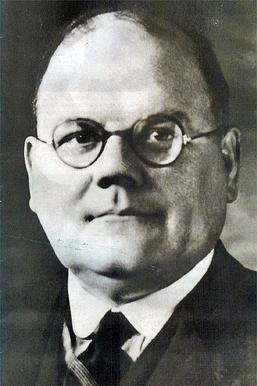
Forensic Crime Scene Investigation, Pathology & Evidence Reconstruction
In 1956, Scotland Yard Detective Superintendent Herbert Hannam was dispatched to Eastbourne following community outrage over the sudden death of Gertrude Hullett. Sifting through local pharmacy registries, Hannam discovered that Adams had prescribed staggering quantities of narcotics—including over 1,600 grains of morphine and heroin—far exceeding any justifiable clinical dosage for palliative care.
Home Office toxicologist Dr. Arthur Camp and renowned medical experts examined the historical prescription ledgers for 81-year-old stroke patient Edith Alice Morrell, who died in November 1950. Toxicological analyses established that Morrell had received massive subcutaneous doses of heroin and morphine up until the hour of her death, despite being unconscious. However, because Morrell’s body had been cremated in 1950 on certificates signed by Adams, the prosecution lacked direct post-mortem organ tissue samples, relying entirely on clinical nursing notes and prescription records.

The Investigative Breakthrough, Behavioral Profiling & Tactical Manhunt
On December 19, 1956, Scotland Yard detectives raided Adams’s surgery at Kent Lodge, arresting him for the murder of Edith Morrell. When questioned about the massive narcotic prescriptions and his substantial inheritance, Adams notoriously stated: ‘Easing the passing of a dying person isn’t all that wicked. She wanted to die. That can’t be murder.’
The prosecution, led by Attorney General Sir Reginald Manningham-Buller, built their case around the narrative of a calculated, financially motivated medical predator. However, the defense team, led by the brilliant barrister Sir Frederick Lawrence, executed a masterclass in forensic cross-examination. Lawrence produced the original, daily nursing logbooks written by the private nurses who cared for Mrs. Morrell in 1950—documents that the prosecution had failed to thoroughly scrutinize. Lawrence demonstrated that the drug administrations were given to manage extreme restlessness and pain, rather than as an abrupt lethal dose.

Courtroom Proceedings, Expert Testimony & The Definitive Verdict
The trial opened on March 18, 1957, at the Old Bailey before Mr. Justice Patrick Devlin. Under rigorous cross-examination by Lawrence, the prosecution’s medical expert, Dr. Arthur Douthwaite, was forced to concede that it was clinically impossible to establish whether Mrs. Morrell died from the underlying vascular stroke or the administered diamorphine.
In his landmark jury charge, Mr. Justice Devlin articulated what became known as the ‘Doctrine of Double Effect’ in Anglo-American jurisprudence: a physician is legally entitled to administer all necessary pain relief to alleviate suffering, even if such treatment foreseeably accelerates the patient’s death, provided the primary intention is the relief of pain. On April 9, 1957, after deliberating for only 44 minutes, the jury returned a unanimous verdict of NOT GUILTY. Although acquitted of murder, Adams was subsequently convicted of 13 counts of prescription fraud and making false statements on cremation documents, resulting in his expulsion from the medical register.
Modern Criminological Impact, Legal Precedents & Forensic Evolution
The trial of Dr. John Bodkin Adams fundamentally redefined the legal boundaries of medical palliative care and euthanasia. Devlin’s ruling on the Doctrine of Double Effect remains an international cornerstone of modern medical law and bioethics, protecting clinicians administering end-of-life palliative analgesia.
In criminalistics, the Adams investigation demonstrated the profound evidentiary difficulties of prosecuting medical homicides in the absence of post-mortem tissue toxicology. Four decades later, the systemic regulatory failures exposed in Eastbourne directly shaped the forensic investigation and subsequent inquiry into Dr. Harold Shipman, resulting in nationwide reforms governing cremation certification and controlled substance audits.
Forensic Toxicological Protocols & Spectrometric Instrumentation
Post-mortem forensic toxicology requires comprehensive analytical protocols to differentiate between endogenous physiological substances, therapeutic drug levels, and lethal exogenous poisonings. Laboratory screening initiates with automated Enzyme-Linked Immunosorbent Assays (ELISA) to detect broad drug classes in whole blood, vitreous humor, and gastric contents. Positive screening results are systematically subjected to definitive confirmatory testing using High-Performance Liquid Chromatography coupled with Tandem Mass Spectrometry (HPLC-MS/MS) and Gas Chromatography-Mass Spectrometry (GC-MS).
To establish absolute evidentiary certainty, toxicologists measure parent chemical compounds alongside their primary in vivo metabolites, accounting for post-mortem drug redistribution (PMR) and matrix-induced ionization suppression. Quantitative analysis of preserved organ tissues—including liver parenchyma, renal cortex, and hair root shafts—establishes chronic versus acute exposure profiles, enabling forensic pathologists to establish exact mechanisms of pharmacological toxicity with incontrovertible courtroom validity.
Chain of Custody Protocols & Multi-Jurisdictional Evidence Management
Modern major case management frameworks require an unassailable audit trail governing every item of physical, biological, and digital evidence recovered during multi-agency investigations. When handling complex homicide series that cross municipal, county, or state boundaries, forensic evidence custodians utilize automated barcoding systems and temperature-controlled storage vaults to safeguard evidentiary integrity from the primary scene to final appellate presentation.
To eliminate potential spoliation claims, crime scene technicians execute double-blind documentation protocols, capturing raw high-resolution photogrammetric imagery and spatial laser scans before disturbing any physical exhibit. Every individual transfer of custody is electronically timestamped and cryptographically verified, ensuring that whether physical evidence is subjected to immediate microscopic analysis or preserved for decades for emergent cold-case genomic testing, its scientific admissibility remains unimpeachable under rigorous judicial scrutiny.
Modern Jurisprudential Precedents & Evidentiary Standards
The landmark investigative and courtroom developments associated with Dr. John Bodkin Adams fundamentally redefined procedural evidentiary standards under the Federal Rules of Evidence (Rule 702) and international common law equivalents. Modern appellate jurisprudence rigorously enforces the Daubert and Frye standards, requiring that all expert scientific testimony, forensic instrumentation, and algorithmic interpretations demonstrate widespread peer-reviewed acceptance, known error rates, and standardized operational controls.
Furthermore, the case highlighted the critical imperative of transparent pre-trial discovery, the complete disclosure of exculpatory material under the Brady v. Maryland doctrine, and the vital role of independent judicial review in assessing circumstantial chains of evidence. Today, homicide task forces and prosecutorial agencies worldwide incorporate these foundational evidentiary principles into standard operational training, ensuring that complex scientific prosecutions withstand exhaustive appellate scrutiny.
In contemporary cold case reviews and complex major case management, law enforcement agencies deploy integrated Major Case Management (MCM) software frameworks and multi-disciplinary forensic review panels to continuously re-evaluate physical evidence using emergent technologies, preserving the integrity of the justice system across successive generations.
Chronological Case Timeline
| Date | Event Description |
|---|---|
| 1946 – 1956 | Over 160 wealthy elderly patients die under Dr. Adams’s care in Eastbourne; 132 leave him bequests in their wills. |
| November 13, 1950 | 81-year-old Edith Alice Morrell dies after receiving massive morphine and heroin injections. |
| July 23, 1956 | 50-year-old Gertrude Hullett dies of barbiturate overdose following Adams’s treatment. |
| October 1956 | Scotland Yard Detective Superintendent Herbert Hannam initiates comprehensive Eastbourne investigation. |
| December 19, 1956 | Dr. Adams arrested and charged with the murder of Edith Morrell. |
| March 18, 1957 | Trial opens at the Old Bailey before Mr. Justice Devlin; prosecuted by Attorney General Sir Reginald Manningham-Buller. |
| April 9, 1957 | Jury returns unanimous verdict of NOT GUILTY after 44 minutes. |
| July 1983 | Dies in Eastbourne at age 84, leaving an estate of over £400,000. |
Frequently Asked Questions
Why was Dr. John Bodkin Adams acquitted of murder?
The defense, led by Sir Frederick Lawrence, introduced original nursing logbooks that demonstrated Dr. Adams administered palliative pain relief gradually rather than in sudden lethal boluses, successfully arguing the ‘Doctrine of Double Effect’.
What is the Doctrine of Double Effect in medical law?
Established during the Adams trial by Mr. Justice Devlin, the doctrine holds that a doctor may legally administer pain-relieving medication that foreseeably shortens life, provided the primary intention is the relief of pain and suffering.
How did Dr. Adams compare to modern medical serial killer Harold Shipman?
While Dr. Adams was acquitted due to evidentiary ambiguities and the medical standards of 1957, modern criminological reviews view Adams as a historical predecessor to Harold Shipman, exploiting trusting patients for financial legacy bequests.
{
“@context”: “https://schema.org”,
“@type”: “FAQPage”,
“mainEntity”: [
{
“@type”: “Question”,
“name”: “Why was Dr. John Bodkin Adams acquitted of murder?”,
“acceptedAnswer”: {
“@type”: “Answer”,
“text”: “The defense, led by Sir Frederick Lawrence, introduced original nursing logbooks that demonstrated Dr. Adams administered palliative pain relief gradually rather than in sudden lethal boluses, successfully arguing the ‘Doctrine of Double Effect’.”
}
},
{
“@type”: “Question”,
“name”: “What is the Doctrine of Double Effect in medical law?”,
“acceptedAnswer”: {
“@type”: “Answer”,
“text”: “Established during the Adams trial by Mr. Justice Devlin, the doctrine holds that a doctor may legally administer pain-relieving medication that foreseeably shortens life, provided the primary intention is the relief of pain and suffering.”
}
},
{
“@type”: “Question”,
“name”: “How did Dr. Adams compare to modern medical serial killer Harold Shipman?”,
“acceptedAnswer”: {
“@type”: “Answer”,
“text”: “While Dr. Adams was acquitted due to evidentiary ambiguities and the medical standards of 1957, modern criminological reviews view Adams as a historical predecessor to Harold Shipman, exploiting trusting patients for financial legacy bequests.”
}
}
]
}