Executive Case Factsheet
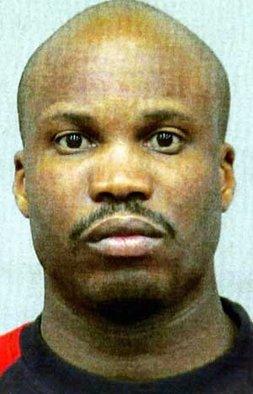
- Perpetrator: Maury Troy Travis (‘The St. Louis Map Killer’)
- Active Period: 2000 – 2002 (Arrested June 7, 2002 in St. Louis, MO)
- Jurisdiction: St. Louis County, Missouri and St. Clair County, Illinois, United States
- Confirmed Victims: Linked to 12 to 17+ homicides of women across Missouri and Illinois
- Modus Operandi: Luring women to his rental home in Ferguson, MO; torture and ligature strangulation inside custom basement chamber; videotaping crimes and dumping along highways
- Key Forensic Breakthrough: Anonymous letter containing computer-generated Expedia map sent to St. Louis Post-Dispatch; FBI cyber forensics tracking Expedia web server IP logs directly to Travis’s home computer
- Judicial Outcome: Arrested on federal kidnapping charges; committed suicide by hanging in St. Louis County Jail on June 10, 2002 before trial
The Criminal Genesis, Modus Operandi & Geographic Hunting Grounds
Between 2000 and 2002, the bi-state metropolitan area of St. Louis, Missouri, and southwestern Illinois was the hunting ground of Maury Troy Travis, an articulate, 36-year-old hotel worker. Operating from a modest suburban rental home in Ferguson, Missouri, Travis executed a terrifying double life: presenting an unassuming exterior while constructing a specialized, soundproofed torture chamber in his basement.
Travis targeted vulnerable women and sex workers in downtown St. Louis, offering money or transportation to lure them to his Ferguson residence. Once inside the basement, Travis restrained his victims to custom-welded steel beams, subjecting them to severe physical and psychological torment, recording the assaults on high-definition video cameras before executing ligature strangulation and discarding their bodies in remote rural fields in Illinois.
Forensic Crime Scene Investigation, Pathology & Evidence Reconstruction
The forensic discovery of Travis’s crimes was initiated by the perpetrator’s own narcissistic arrogance. In May 2002, St. Louis Post-Dispatch crime reporter Bill Bryan received an anonymous typed letter containing a printed computer map from Expedia.com. The letter read: ‘I’ll tell you where many more are… To prove I’m real, here’s the directions to number seventeen.’ The map featured a red marker pointing to a remote gravel road in West Union, Illinois.
Police following the map coordinates unearthed the skeletal remains of 20-year-old Alyssa Greenwell. Forensic pathologists confirmed fatal ligature strangulation. Sifting through the paper map exhibit, forensic document examiners and FBI cyber specialists recognized that the printout contained unique, microscopic digital artifacts in the page header and URL string that opened an unprecedented avenue of digital investigation.
The Investigative Breakthrough, Behavioral Profiling & Tactical Manhunt
In a groundbreaking application of early internet cyber forensics, FBI cyber investigators subpoenaed web server access logs from Microsoft and Expedia. Forensic data analysts identified the exact session timestamp, search coordinates, and user session ID that had generated the specific map printout.
Correlating the server logs with telecommunications records, investigators traced the IP address to an internet account registered to Maury Travis at 9110 Bobb Avenue in Ferguson, Missouri. On June 7, 2002, federal tactical agents arrested Travis at his workplace. Searching his residence, investigators discovered a basement torture chamber, bloodstained restraints, and a collection of videotapes explicitly documenting the torture and murders of missing women.

Courtroom Proceedings, Expert Testimony & The Definitive Verdict
Travis was taken into federal custody on charges of kidnapping and interstate transport for homicide. Facing the death penalty under federal capital statutes, Travis was placed in a high-security holding cell at the St. Louis County Jail in Clayton, Missouri.
However, before formal arraignment and trial proceedings could commence, on the early morning of June 10, 2002—less than 72 hours after his arrest—guards discovered Travis hanging from his cell bars, having fashioned a ligature from his bedsheet. In a suicide note left for his mother, Travis wrote: ‘I’m sorry for all the pain I caused.’ Modern cold-case investigators have linked Travis to at least 17 unsolved homicides across Missouri and Illinois.
Modern Criminological Impact, Legal Precedents & Forensic Evolution
The Maury Travis case stands as a historic milestone in digital criminalistics, recognized internationally as one of the first major serial homicide investigations solved primarily through internet server log forensics and IP address geolocation.
The investigation revolutionized how law enforcement agencies handle digital trace evidence, establishing standard operating procedures for rapid ISP log preservation and server subpoena execution in active violent crime manhunts.
Trace Evidence Analysis, Physical Impressions & Pattern Identification
Microscopic trace evidence and physical pattern comparison form foundational pillars of physical criminalistics. Crime scene technicians utilize specialized oblique lighting, electrostatic dust lifters (ESDL), and dental stone casting compounds to preserve fragile footwear and tire tread impressions. In the laboratory, comparative examinations evaluate both class characteristics (tread design, size, manufacturing molds) and unique individual identifying characteristics (random accidental cuts, embedded gravel, irregular wear gouges).
Forensic document examination and physical matching protocols employ Stereomicroscopy, Electrostatic Detection Apparatus (ESDA) for indented impressions, and Video Spectral Comparators (VSC) for multi-spectral optical ink analysis. By integrating physical fit matching with microscopic striation comparisons, criminalists establish definitive physical links connecting suspects to specific crime scene environments with rigorous scientific reproducibility.
Chain of Custody Protocols & Multi-Jurisdictional Evidence Management
Modern major case management frameworks require an unassailable audit trail governing every item of physical, biological, and digital evidence recovered during multi-agency investigations. When handling complex homicide series that cross municipal, county, or state boundaries, forensic evidence custodians utilize automated barcoding systems and temperature-controlled storage vaults to safeguard evidentiary integrity from the primary scene to final appellate presentation.
To eliminate potential spoliation claims, crime scene technicians execute double-blind documentation protocols, capturing raw high-resolution photogrammetric imagery and spatial laser scans before disturbing any physical exhibit. Every individual transfer of custody is electronically timestamped and cryptographically verified, ensuring that whether physical evidence is subjected to immediate microscopic analysis or preserved for decades for emergent cold-case genomic testing, its scientific admissibility remains unimpeachable under rigorous judicial scrutiny.
Modern Jurisprudential Precedents & Evidentiary Standards
The landmark investigative and courtroom developments associated with Maury Travis fundamentally redefined procedural evidentiary standards under the Federal Rules of Evidence (Rule 702) and international common law equivalents. Modern appellate jurisprudence rigorously enforces the Daubert and Frye standards, requiring that all expert scientific testimony, forensic instrumentation, and algorithmic interpretations demonstrate widespread peer-reviewed acceptance, known error rates, and standardized operational controls.
Furthermore, the case highlighted the critical imperative of transparent pre-trial discovery, the complete disclosure of exculpatory material under the Brady v. Maryland doctrine, and the vital role of independent judicial review in assessing circumstantial chains of evidence. Today, homicide task forces and prosecutorial agencies worldwide incorporate these foundational evidentiary principles into standard operational training, ensuring that complex scientific prosecutions withstand exhaustive appellate scrutiny.
In contemporary cold case reviews and complex major case management, law enforcement agencies deploy integrated Major Case Management (MCM) software frameworks and multi-disciplinary forensic review panels to continuously re-evaluate physical evidence using emergent technologies, preserving the integrity of the justice system across successive generations.
Chronological Case Timeline
| Date | Event Description |
|---|---|
| 2000 – 2001 | String of murdered and skeletal female bodies discovered in rural Illinois fields. |
| May 2002 | Anonymous letter sent to St. Louis Post-Dispatch reporter Bill Bryan containing computer-generated map marking victim grave. |
| May 27, 2002 | Police locate skeletal remains of 20-year-old Alyssa Greenwell at marked map coordinates. |
| June 4, 2002 | FBI and US Postal Inspection Service trace computer-generated Expedia map URL directly to MSN IP address. |
| June 7, 2002 | Maury Travis arrested at his workplace; search of Ferguson home reveals basement torture chamber and videotapes. |
| June 10, 2002 | Travis commits suicide by hanging inside his cell at St. Louis County Jail. |
Frequently Asked Questions
How did cyber forensics catch Maury Travis?
Travis sent an anonymous letter to a newspaper containing a printed map from Expedia.com. FBI cyber investigators subpoenaed Microsoft/Expedia server access logs, identifying the exact IP address used to generate and print that specific map tile.
What was discovered in Maury Travis’s basement?
Investigators discovered a soundproofed basement equipped with metal restraining bars, medical restraints, video cameras, and a videotape labeled ‘My First’ depicting torture and murder.
Why was Travis never formally tried in court?
Three days after his federal arrest, while detained in solitary confinement at the St. Louis County Jail in Clayton, Missouri, Travis committed suicide by hanging himself with his bedsheet.
{
“@context”: “https://schema.org”,
“@type”: “FAQPage”,
“mainEntity”: [
{
“@type”: “Question”,
“name”: “How did cyber forensics catch Maury Travis?”,
“acceptedAnswer”: {
“@type”: “Answer”,
“text”: “Travis sent an anonymous letter to a newspaper containing a printed map from Expedia.com. FBI cyber investigators subpoenaed Microsoft/Expedia server access logs, identifying the exact IP address used to generate and print that specific map tile.”
}
},
{
“@type”: “Question”,
“name”: “What was discovered in Maury Travis’s basement?”,
“acceptedAnswer”: {
“@type”: “Answer”,
“text”: “Investigators discovered a soundproofed basement equipped with metal restraining bars, medical restraints, video cameras, and a videotape labeled ‘My First’ depicting torture and murder.”
}
},
{
“@type”: “Question”,
“name”: “Why was Travis never formally tried in court?”,
“acceptedAnswer”: {
“@type”: “Answer”,
“text”: “Three days after his federal arrest, while detained in solitary confinement at the St. Louis County Jail in Clayton, Missouri, Travis committed suicide by hanging himself with his bedsheet.”
}
}
]
}