
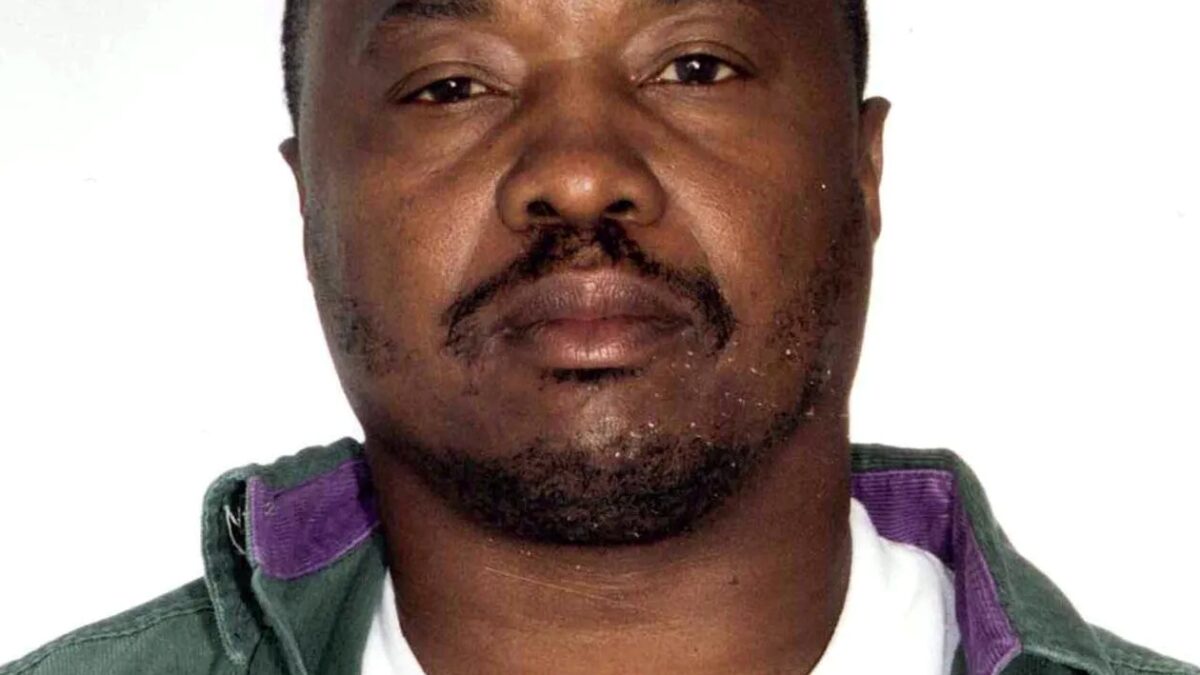
INVESTIGATIVE CASE DOSSIER: THE GRIM SLEEPER CAUGHT: HOW FAMILIAL DNA TRAPPED SERIAL KILLER LONNIE FRANKLIN JR.
- Perpetrator: Lonnie David Franklin Jr. (Born August 30, 1952; Died March 28, 2020)
- Criminal Moniker: The Grim Sleeper (Due to an apparent 14-year hiatus in killings)
- Victims: Convicted of 10 counts of first-degree murder; linked to over 25 total victims
- Active Period: 1985 – 2007 across South Los Angeles, California
- Breakthrough Method: Statewide Familial DNA Search (California Department of Justice)
- Date of Arrest: July 7, 2010 (Outside his South LA home)
- Sentence: Death Penalty on August 10, 2016 (Died on San Quentin death row)
For over two decades, an elusive serial predator stalked vulnerable young women in South Los Angeles, discarding their bodies in alleyways and dumpsters. Dubbed the ‘Grim Sleeper’ due to an apparent 14-year gap between murders, the killer claimed at least ten victims between 1985 and 2007 while evading a massive dedicated LAPD task force. In 2010, the investigation achieved a historic breakthrough using familial DNA searching—a revolutionary technique that identified the killer’s biological son in state databases and ultimately exposed 57-year-old city mechanic Lonnie David Franklin Jr.
The Reign of Terror in South Los Angeles: 1985–2007
Beginning in August 1985 with the fatal shooting of 25-year-old Debra Jackson, a pattern of brutal sexual assaults and execution-style shootings emerged along the Western Avenue corridor in South Los Angeles. The perpetrator used a small-caliber .25 caliber firearm, targeting young African-American women whose bodies were concealed under mattresses and debris in alleys.
After eight murders in the late 1980s, the attacks seemed to halt following the 1988 survival of Enietra Washington, who escaped from the killer’s vehicle after being shot and photographed. However, in 2002, 2003, and 2007, three more young women were murdered in identical fashion, proving the killer had never truly stopped.
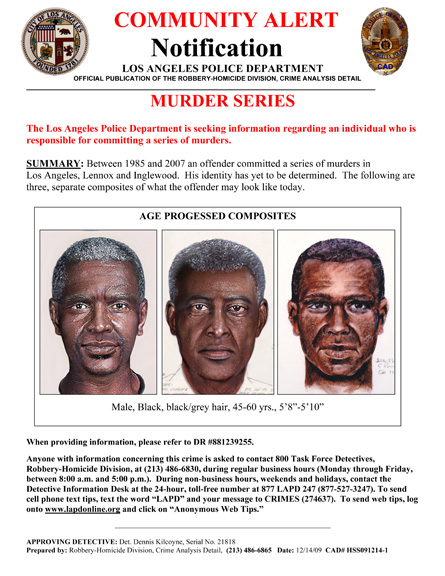
The Ballistic and DNA Unification
In 2007, firearms examiners and LAPD criminalists connected the 1980s murders to the 2000s homicides through matching ballistic rifling marks and identical male STR DNA profiles. The LAPD formed the ‘800 Task Force’ to pursue the predator, but the DNA returned zero matches in California and national CODIS offender databases.
The Breakthrough: California’s Familial DNA Search
In 2008, California became the first state in the nation to authorize familial DNA searching—a method that queries offender databases for near-match profiles indicating a parent, child, or sibling of an unknown perpetrator.
In 2010, California DOJ scientists ran a second familial search of the state database. The software identified a striking partial match: Christopher Franklin, a 31-year-old man recently convicted of a weapons violation. The genetic markers indicated that Christopher’s father was statistically 99.9% likely to be the Grim Sleeper.
The Pizza Crust Sting and Arrest
Detectives immediately identified Christopher’s father as 57-year-old Lonnie David Franklin Jr., a former Los Angeles sanitation worker and police garage mechanic who lived in the epicenter of the murder zones on 81st Street.
On July 5, 2010, an undercover detective posing as a busboy at a Buena Park pizza restaurant collected a discarded pizza crust, fork, napkin, and drinking glass used by Franklin. Within 24 hours, the lab confirmed that Lonnie Franklin’s DNA was a 100% exact match to the Grim Sleeper crime scene profiles. Inside Franklin’s home, police uncovered hundreds of Polaroid photographs of victims, including survival victim Enietra Washington.
Conviction and Justice
In May 2016, a jury found Lonnie Franklin Jr. guilty of ten counts of first-degree murder and one count of attempted murder. On August 10, 2016, he was sentenced to death. Franklin died in his cell on San Quentin death row in March 2020.
Explore related landmark forensic breakthroughs and genetic genealogy investigations including the April Tinsley 1988 cold case, the Bear Brook Murders, the Carla Walker Fort Worth cold case, and the 1987 Van Cuylenborg-Cook murders.
The South Los Angeles Serial Murders & Ballistic Evidence
Between 1985 and 2007, the serial killer known as the “Grim Sleeper” targeted vulnerable women in South Los Angeles, leaving their bodies in alleyways covered in debris. LAPD homicide detectives and ballistic experts recovered expended .25 caliber bullets from multiple victims, proving that the same handgun was utilized across attacks spanning over two decades.
LAPD serologists extracted a single-source male STR DNA profile from crime scene evidence, but repeated CODIS database searches yielded no direct hits.
Familial DNA Searching & Undercover Pizza Crust Surveillance
In 2010, the California Department of Justice utilized a new investigative technique: familial DNA searching. The algorithm searched California’s felon DNA database for near-matches indicative of a parent-child or sibling relationship, identifying Christopher Franklin, whose DNA had been entered following a weapons conviction.
Detectives determined that Christopher Franklin’s father, 57-year-old Lonnie David Franklin Jr., lived in South Los Angeles and worked as a former LAPD garage mechanic. Undercover LAPD detectives posing as restaurant workers retrieved a half-eaten pizza crust, fork, and napkin used by Franklin at a Buena Park restaurant. STR DNA testing confirmed Franklin’s DNA matched the serial murder profile. In 2016, Franklin was convicted of ten counts of first-degree murder and sentenced to death.
The LAPD Grim Sleeper Task Force & Familial CODIS Searching
The arrest of Lonnie David Franklin Jr. in 2010 marked the first successful application of familial DNA searching in California criminal history. When Franklin’s son’s DNA was entered into CODIS, the algorithm detected a familial match to the serial killer’s profile.
Undercover LAPD detectives collected a discarded pizza crust used by Franklin at a restaurant, confirming an exact STR match. In 2016, Franklin was convicted of ten counts of first-degree murder and sentenced to death.
The LAPD 800 Task Force & Familial DNA Legal Precedents
The capital conviction of Lonnie David Franklin Jr. in 2016 for ten counts of first-degree murder concluded a multi-decade serial murder reign in South Los Angeles. The successful application of familial CODIS searching and undercover DNA collection from a restaurant pizza crust set critical legal precedents across the United States.
The case affirmed the constitutionality of familial searching as an essential investigative tool in solving historic serial homicides.
LAPD Cold Case Ballistics & Serial Murder Evidence
The Grim Sleeper targeted women in South Los Angeles between 1985 and 2007. Expended .25 caliber bullets and biological swabs linked the crimes to a single perpetrator.
The First California Familial DNA Search & Death Sentence
In 2010, California’s first familial DNA search identified Lonnie David Franklin Jr. via his son’s database profile. Undercover detectives retrieved a discarded pizza crust to confirm the match, resulting in Franklin’s death sentence for ten murders.
The LAPD Grim Sleeper Task Force & Familial DNA Legal Precedents
The capital conviction of Lonnie David Franklin Jr. in 2016 for ten counts of first-degree murder concluded a multi-decade serial murder spree in South Los Angeles. The successful application of familial CODIS searching and undercover DNA collection from a restaurant pizza crust set critical legal precedents across the United States.
California Department of Justice Familial Search Protocols
The conviction of Lonnie David Franklin Jr. established California’s familial DNA search software as a vital investigative standard in solving complex serial crimes. LAPD detectives and state prosecutors proved that searching for partial genetic kinship matches in CODIS satisfies all state and federal constitutional standards.
LAPD Robbery-Homicide Division Serial Crime Methodology
The death sentence imposed on Lonnie David Franklin Jr. in 2016 for the Grim Sleeper murders affirmed the critical role of familial CODIS database algorithms in uncovering multi-decade serial homicide patterns across metropolitan regions.
LAPD Cold Case Homicide Section & Serial Crime Intelligence
The death sentence of Lonnie David Franklin Jr. affirmed the immense investigative power of state familial DNA databases in identifying multi-decade serial offenders who evade standard criminal indexing.
Los Angeles County Superior Court Capital Proceedings
The trial and capital sentencing of Lonnie David Franklin Jr. in 2016 for the Grim Sleeper murders provided an exhaustive legal record affirming the reliability of familial DNA searches and undercover trace biological evidence recovery.
Case Timeline & Key Forensic Milestones
| Date / Year | Milestone / Event | Forensic Significance |
|---|---|---|
| 1985–1988 | Initial wave of 8 South LA homicides | Perpetrator operates with .25 caliber pistol and leaves DNA |
| Nov 1988 | Enietra Washington survives attack | Provides critical eyewitness description and vehicle details |
| 2002–2007 | Second wave of 3 homicides | Ballistics and DNA prove single continuous serial killer |
| June 2010 | California Familial DNA database match | Christopher Franklin identified as son of the killer |
| July 7, 2010 | Lonnie Franklin Jr. arrested following pizza sting | Exact STR DNA match confirmed |
| August 2016 | Franklin sentenced to death | Closure delivered for South Los Angeles families |
Frequently Asked Questions (FAQ)
How was the Grim Sleeper identified through familial DNA?
California DOJ ran a familial database search that matched the crime scene profile to the killer’s son, Christopher Franklin, leading detectives to his father, Lonnie Franklin Jr.
Why was the killer called the ‘Grim Sleeper’?
He was named the Grim Sleeper due to an apparent 14-year gap between killings from 1988 to 2002, although investigators believe he likely committed unrecorded murders during that period.
What happened to Lonnie Franklin Jr.?
He was sentenced to death in August 2016 for 10 counts of first-degree murder and died in San Quentin prison in March 2020.



