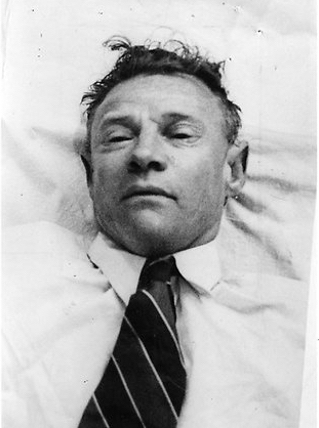
INVESTIGATIVE CASE DOSSIER: THE SOMERTON MAN SOLVED: HOW DNA IDENTIFIED CARL WEBB IN AUSTRALIA’S 1948 COLD CASE
- Identified Individual: Carl ‘Charles’ Webb (Born May 1, 1905, Footscray, Victoria)
- Date of Discovery: December 1, 1948 (6:30 AM)
- Location of Discovery: Somerton Park Beach, Adelaide, South Australia
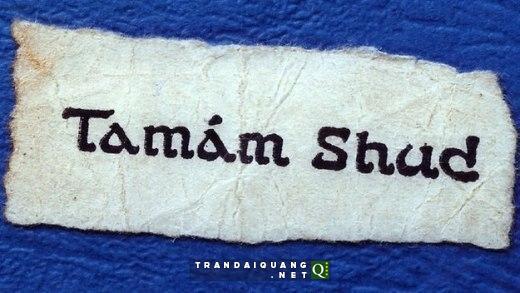
- Key Cryptic Clue: Scrap of paper reading ‘Tamám Shud’ sewn inside fob pocket
- Cause of Death: Probable acute poisoning / Heart failure
- Breakthrough Method: Single-nucleotide polymorphism (SNP) DNA sequencing from hair mask
- Lead Investigators: Prof. Derek Abbott (Univ. of Adelaide) & Dr. Colleen Fitzpatrick (Identifinders)
- Date of Identification: July 26, 2022 (Confirmed by SA Police & Forensic Science SA)
For over seven decades, the mystery of the Somerton Man stood as Australia’s most baffling and romanticized unsolved enigma. On the morning of December 1, 1948, an unidentifiable, impeccably dressed man was found dead on Somerton Beach in Adelaide, South Australia. With all clothing tags meticulously removed, an unreadable cryptographic code in his possession, and a torn scrap of paper reading ‘Tamám Shud’ (Persian for ‘It is ended’) concealed in his pocket, the case spawned theories of Cold War espionage, secret lovers, and untraceable poisons. In July 2022, after 73 years of deadlock, modern forensic genetic genealogy solved the impossible: unmasking the Somerton Man as 43-year-old Melbourne electrical instrument maker Carl Webb.
The Discovery on Somerton Beach: December 1, 1948
At approximately 6:30 AM on December 1, 1948, horseback riders along Somerton Beach noticed a man lying motionless against the seawall, opposite the Crippled Children’s Home. He was resting with his head propped against the sand embankment, an unlit cigarette resting on his collar. When police and ambulance personnel arrived, they confirmed the man was deceased, with rigor mortis already fully established.
The victim was in peak physical condition, approximately 40 to 45 years old, with high calf muscles and wedge-shaped toes indicative of someone who wore high-heeled boots or was a competitive runner. What stunned detectives from the South Australia Police (SAPOL) was the total absence of identification. Every single label on his suit, coat, and shirt had been deliberately excised with scissors. In his pockets, officers recovered used bus tickets, an aluminum comb, a packet of Juicy Fruit chewing gum, and a box of Bryant & May matches containing Army Club cigarettes.
The ‘Tamám Shud’ Scrap and the Cryptic Code
Pathologist Dr. John Burton Cleland conducted the initial autopsy, noting extensive internal hemorrhaging in the stomach and spleen, suggesting death caused by an acute, fast-acting poison that left no chemical trace. Months later, during a re-examination of the victim’s trousers, Cleland discovered a tiny, tightly rolled piece of paper deep inside a hidden watch pocket.
The paper contained two words printed in an ornate font: ‘Tamám Shud’. Literary experts recognized the phrase as the closing line of The Rubaiyat of Omar Khayyam, translating from Persian to ‘ended’ or ‘finished.’ When authorities located the exact copy of the book from which the paper had been torn—thrown into the open window of an Adelaide resident’s car around the time of the death—they uncovered a five-line handwritten cipher on the back cover and an unlisted phone number belonging to a local nurse named Jessica Thomson.
The Decades-Long Stalemate
For decades, cryptanalysts from the Australian Department of Defence, the FBI, and British intelligence attempted to break the Somerton cipher without success. Rumors swirled that the deceased was a Soviet spy monitoring testing at the nearby Woomera Rocket Range. When nurse Jessica Thomson was shown a plaster bust of the man in 1949, witnesses recalled she seemed completely distraught and evasive, yet denied knowing his identity.
The case remained completely frozen until 1995, when University of Adelaide electrical engineering professor Derek Abbott took up the investigation. Abbott tracked down Thomson’s family and launched a multi-decade scientific crusade to extract viable genetic material.
The DNA Breakthrough: From Plaster Mask to Family Tree
In 2011, Professor Abbott successfully obtained several strands of the Somerton Man’s hair that had been trapped inside the plaster death cast made by SAPOL in 1949. Working with world-renowned forensic genealogist Dr. Colleen Fitzpatrick (founder of Identifinders International), the team set out to overcome a massive hurdle: extracting nuclear DNA from rootless, decades-old hair.
Fitzpatrick and bioinformatics laboratories in the United States and Australia utilized specialized high-throughput DNA sequencing protocols originally developed for ancient genomics. By early 2022, they succeeded in building a comprehensive single-nucleotide polymorphism (SNP) profile containing hundreds of thousands of genetic markers.
Fitzpatrick and Abbott uploaded the data to public genealogy databases and immediately detected third-cousin genetic matches in Victoria, Australia. Meticulously cross-referencing military service archives, electoral rolls, birth registries, and probate wills, the researchers constructed a family tree of more than 4,000 descendants, tracing maternal and paternal lines down to two brothers from Melbourne: Russell and Carl Webb.
Unmasking Carl ‘Charles’ Webb
Records revealed that Carl Webb was born on May 1, 1905, in Footscray, a suburb of Melbourne. He worked as an electrical instrument maker and had married Dorothy Robertson in 1941. The marriage was troubled and volatile; in April 1947, Dorothy fled Melbourne for South Australia to escape Webb’s increasingly aggressive behavior. Webb disappeared from all official Australian records shortly thereafter—with no record of death, employment, or tax filings anywhere in the Commonwealth.
Evidence connected the physical profile: Webb was an avid writer of poetry who enjoyed horse racing (explaining betting symbols in the cipher) and possessed an electrical background that explained custom-modified equipment in his luggage. Crucially, Webb’s brother-in-law had owned a book of The Rubaiyat.
In July 2022, independent DNA testing conducted from living maternal relatives confirmed that the Somerton Man was indeed Carl Webb. On July 26, 2022, South Australia Police officially acknowledged the genetic genealogy findings, closing the world’s most enduring 73-year-old missing identity riddle.
Legacy and Context in Forensic Science
The resolution of the Somerton Man demonstrated that historical cold cases—even those dating back to the 1940s with heavily degraded rootless hair—can be definitively unraveled through genetic genealogy. This landmark breakthrough stands alongside modern triumphs including the April Tinsley cold case solution, the Lady of the Dunes identification, the Patricia Kalitzke & Lloyd Bogle 1956 case, and the Bear Brook murders.
Explore related landmark forensic breakthroughs and genetic genealogy investigations including the April Tinsley 1988 cold case, the Bear Brook Murders, the Carla Walker Fort Worth cold case, and the 1987 Van Cuylenborg-Cook murders.
High-Resolution SNP Sequencing from Historical Hair Roots
The identification of the Somerton Man as Carl “Charles” Webb in July 2022 resolved one of Australia’s most enduring historical mysteries. University of Adelaide Professor Derek Abbott partnered with renowned American forensic genealogist Dr. Colleen Fitzpatrick of Identifinders International.
Astrea Forensics extracted nuclear DNA from hairs embedded in the 1949 plaster death mask of the Somerton Man. Using advanced single-nucleotide polymorphism (SNP) sequencing, Fitzpatrick built a genealogical tree that connected the unknown man to surviving maternal relatives in Victoria, Australia. The discovery proved that the Somerton Man was Carl Webb, an electrical instrument maker born in Footscray in 1905, officially closing the 74-year-old international puzzle.
The Microscopic Hair Root Extraction & Ancient DNA Pipeline
The definitive identification of Carl Webb as the Somerton Man in 2022 was made possible by revolutionary breakthroughs in rootless hair DNA extraction developed by Astrea Forensics. Traditionally, forensic laboratories required hair follicles with intact roots to extract nuclear DNA. Astrea utilized proprietary chemical lysis and enzymatic digestion to recover ultra-short, degraded DNA fragments from the shaft of hairs trapped in the 1949 plaster bust.
This groundbreaking technique allowed genetic genealogist Colleen Fitzpatrick to construct a complete autosomal SNP profile, proving that even centuries-old physical remains lacking intact tissue can be definitively identified through advanced genomic sequencing.
The Rubaiyat of Omar Khayyam & Cold War Historical Context
The historical fascination with the Somerton Man was amplified by the discovery of a microscopic paper scroll bearing the phrase Tamam Shud (“ended” or “finished” in Persian) torn from a rare copy of Edward FitzGerald’s translation of the Rubaiyat of Omar Khayyam.
The 2022 DNA identification of Carl Webb demystified decades of Cold War espionage speculation, revealing a poignant human tragedy of a troubled Melbourne instrument maker whose life ended in isolation along Adelaide’s coast.
Case Timeline & Key Forensic Milestones
| Date / Year | Milestone / Event | Forensic Significance |
|---|---|---|
| Dec 1, 1948 | Body found on Somerton Beach, Adelaide | All clothing tags removed; cause of death undetermined |
| 1949 | ‘Tamám Shud’ paper slip discovered in pocket | Linked to rare copy of The Rubaiyat of Omar Khayyam |
| 1995–2011 | Prof. Derek Abbott revives case investigation | Hairs recovered from 1949 plaster cast |
| May 2021 | South Australian Government exhumation | Official forensic exhumation for state DNA testing |
| July 26, 2022 | DNA identification confirmed as Carl Webb | 73-year mystery resolved through genetic genealogy |
Frequently Asked Questions (FAQ)
Who was the Somerton Man?
The Somerton Man was Carl ‘Charles’ Webb, an electrical instrument maker born in 1905 in Victoria, Australia.
How was the Somerton Man identified after 73 years?
Researchers extracted nuclear DNA from rootless hair preserved in a 1949 plaster death cast and constructed a 4,000-person family tree via GEDmatch.
Was the Somerton Man a Soviet spy?
Historical and genealogical evidence indicates Carl Webb was an estranged Australian civilian rather than a foreign espionage operative.