Executive Case Factsheet
- Perpetrator: Unidentified serial killer or criminal sect (known as “Il Mostro di Firenze”, “The Monster of Florence”)
- Active Period: August 1968 – September 1985 (Eight double homicides)
- Jurisdiction: Countryside hills surrounding Florence (Signa, Borgo San Lorenzo, Scandicci, Calenzano, Baccaiano, Giogoli, Vicchio, San Casciano), Tuscany, Italy
- Confirmed Victims: 16 young people (eight young couples in parked vehicles)
- Modus Operandi: Ambushing young couples parked in secluded lovers’ lanes in the Tuscan hills during new moon weekends; firing through automobile windows with a .22-caliber Beretta pistol; ritualistic post-mortem excisions and anatomical mutilations of female victims using sharp surgical blades
- Key Forensic Breakthrough: Ballistics recovery of Winchester .22 Long Rifle cartridges stamped with the distinctive letter “H” on the base; matching extractor and firing pin marks spanning from the 1968 Signa murder to the 1985 French tourists homicide
- Judicial Outcome: Complex, contentious judicial history; peasant farmer Pietro Pacciani convicted in 1994, acquitted in 1996, died before retrial; companions Mario Vanni and Giancarlo Lotti convicted as “picnic companions” (compagni di merende); underlying occult commission theory remains officially unresolved
Between 1968 and 1985, the picturesque countryside surrounding Florence was transformed into a landscape of terror by an elusive serial predator known as Il Mostro di Firenze (“The Monster of Florence”). Over eight double homicides targeting young couples parked in secluded lovers’ lanes, the killer utilized a single .22-caliber Beretta pistol and performed ritualistic surgical mutilations on female victims. The investigation represents Italy’s most complex and controversial criminal saga, spanning decades of ballistics matching, inter-agency conflict, and deep explorations into esoteric occult cults.
The Lovers’ Lane Ambushes & The Tuscan Hunting Grounds
In Italy during the 1970s and 1980s, young couples seeking privacy routinely drove into the secluded hills surrounding Florence, parking along isolated dirt roads (strade vicinali). The Monster established a rigid predatory pattern: striking almost exclusively during moonless summer weekends, ambushing vehicles under cover of darkness.
Between 1974 and 1985, couples were gunned down in Rabatta, Scandicci, Calenzano, Baccaiano, Giogoli, Vicchio, and San Casciano. After incapacitating the male victims with rapid gunfire, the perpetrator dragged the female victims from the car, carrying out precise, ritualized excisions of the pubic area and left breast using a heavy-bladed knife. The killer left no fingerprints, tire tracks, or biological fluid traces, demonstrating exceptional tactical discipline.
Forensic Ballistics: The Beretta Series 70 & The “H” Ammunition
The forensic linchpin linking the disparate homicides was uncovered by ballistics experts with the Carabinieri and Florence Police Forensic Scientific Division (Polizia Scientifica). Microscopic comparison of cartridge casings recovered from every crime scene revealed identical micro-striations on the firing pins and extractor marks.
Ballistics examinations proved that every shot across all eight crime scenes was fired from the exact same weapon: a .22-caliber Long Rifle Beretta Series 70 pistol. Furthermore, the ammunition utilized across seventeen years belonged to a rare, obsolete 1960s production batch of Winchester .22 Long Rifle ammunition, identifiable by a distinct embossed letter “H” on the base of each copper-plated lead projectile. This ballistics consistency led detectives in 1982 to unearth an unsolved 1968 double homicide in Signa, revealing the weapon had been active for nearly two decades.
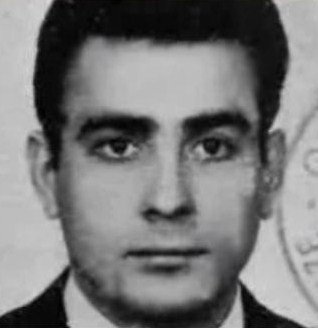
The Sardinian Trail, Pietro Pacciani & The “Picnic Companions”
The investigation initially focused on the “Sardinian Trail” (pista sarda), probing immigrant families connected to the 1968 Signa shooting. However, by the late 1980s, an elite inter-agency task force—the Squadra Anti-Mostro (SAM) led by Chief Inspector Ruggero Perugini—redirected inquiries toward local eccentric farmworkers in the Chianti region.
Detectives focused on Pietro Pacciani, a violent peasant farmer from Mercatale in Val di Pesa who had previously served a prison sentence for murdering a romantic rival in 1951. During a forensic search of Pacciani’s garden in 1992, detectives discovered an unexploded Winchester .22 “H” cartridge buried in the soil, alongside a German artist sketchpad matching items stolen from German victims murdered in Giogoli in 1983.

The Florence Court of Assizes Trials & The Esoteric Sect Theory
In 1994, the Florence Court of Assizes convicted Pietro Pacciani on seven counts of double murder, sentencing him to life imprisonment. However, on appeal in 1996, the verdict was overturned due to lack of direct eyewitness evidence and evidentiary doubts surrounding the discovered cartridge. Pacciani died under mysterious circumstances in February 1998 before a Supreme Court-mandated retrial could convene.
Subsequent prosecutions led by magistrate Giuliano Mignini targeted Pacciani’s rural associates, Mario Vanni and Giancarlo Lotti (the so-called “picnic companions”, compagni di merende). Lotti confessed to acting as a lookout and participating in several attacks, leading to convictions for both men. Mignini and Florence prosecutors advanced the controversial theory that the murders were commissioned by a wealthy, high-society occult sect in Florence and Perugia seeking anatomical trophies for ritualistic ceremonies. The identity of the masterminds and the location of the Beretta pistol remain one of Europe’s most intriguing unsolved forensic puzzles.
Ballistic Micro-Striations: The Winchester ‘H’ Cartridge Mystery
The forensic ballistics investigation into the Monster of Florence represents one of the most comprehensive firearms matching operations in European criminalistics. Italian Carabinieri and Polizia Scientifica ballistics experts analyzed hundreds of recovered .22 Long Rifle cartridge casings across eight double murder crime scenes spanning from 1968 to 1985.
Microscopic comparison confirmed that every bullet was fired from a single .22-caliber Beretta Series 70 pistol, with identical firing pin impressions and extractor claw marks. Furthermore, the ammunition belonged to a distinct 1960s production batch of Winchester cartridges stamped with the letter ‘H’ on the base. The discovery of an unspent cartridge of this exact rare batch buried in Pietro Pacciani’s garden in Mercatale in 1992 provided the physical cornerstone for the landmark 1994 Florence Court of Assizes trial.
Criminological Profiling & The Occult Sect Hypothesis
The behavioral profiling of the Monster of Florence conducted by the FBI Behavioral Science Unit (including John Douglas) and Italian forensic psychiatrists identified the perpetrator as an organized sexual sadist driven by profound misogyny and voyeuristic compulsions. The surgical precision with which anatomical excisions were performed on female victims led prosecutors to develop the complex theory of a high-society esoteric sect commissioning ritual murders in the Tuscan hills.
The subsequent trials of the ‘picnic companions’ (Mario Vanni and Giancarlo Lotti) exposed a shadowy underworld of rural accomplices and wealthy patrons, ensuring that the Monster of Florence remains Italy’s most intensely debated criminal enigma.
Chronological Case Timeline
| Date / Period | Investigative & Legal Milestone |
|---|---|
| August 21, 1968 | Antonio Lo Bianco and Barbara Locci murdered in Signa; first use of the Beretta .22 weapon. |
| September 14, 1974 | Pasquale Gentilcore and Stefania Pettini killed near Borgo San Lorenzo; serial mutilations begin. |
| 1981 – 1984 | Escalation of double homicides across Scandicci, Calenzano, Baccaiano, Giogoli, and Vicchio. |
| September 8, 1985 | French tourists Jean-Michel Kraveichvili and Nadine Mauriot murdered in San Casciano; final attack. |
| 1992 | Search of Pietro Pacciani’s garden in Mercatale uncovers buried Winchester “H” cartridge. |
| 1994 | Pacciani convicted by Florence Court of Assizes; overturned on appeal in 1996. |
| 2000 | Mario Vanni and Giancarlo Lotti convicted by Court of Assizes for complicity in multiple murders. |
Forensic Evidence Matrix & Criminological Assessment
The investigation into Il Mostro di Firenze represents Italy’s most extensive ballistics matching and psychiatric profiling saga. Key evidential pillars include:
- Winchester ‘H’ Cartridge Matching: Identical firing pin and extractor marks from a .22-caliber Beretta Series 70 pistol firing rare Winchester ‘H’ ammunition across eight double murders.
- Anatomical Excision Signatures: Surgical excisions of female victims using heavy blades, reflecting organized paraphilic sadism and voyeuristic compulsions.
- The Trials of the ‘Compagni di Merende’: Convictions of Mario Vanni and Giancarlo Lotti, alongside extensive probes into high-society esoteric occult commissions.
The Monster of Florence case remains Italy’s most heavily analyzed forensic and judicial mystery.
Related Case Files & Investigative Dossiers
Explore related deep-dive investigations into international serial murders, ballistics tracking, and complex judicial trials:
- The Texarkana Moonlight Murders: The Phantom Killer & Lovers’ Lane Attacks
- Jack the Stripper: The Hammersmith Nude Murders, Thames Paint Flecks & Scotland Yard
- Bible John: The Barrowland Ballroom Murders, Glasgow Manhunt & DNA Forensics
- Richard Ramirez: The Night Stalker, AFIS Fingerprint ID & East LA Capture
- Ted Bundy: The Chi Omega Murders, Forensic Odontology & Trial Analysis
Frequently Asked Questions
Who was the Monster of Florence?
The Monster of Florence (Il Mostro di Firenze) was an unidentified serial killer (or group) who murdered sixteen young people (eight couples) parked in lovers’ lanes around Florence, Italy between 1968 and 1985.
What was the key ballistics evidence in the Monster of Florence case?
Every crime scene was linked by identical ballistic markings from a .22-caliber Beretta Series 70 pistol firing rare Winchester .22 Long Rifle cartridges stamped with the letter “H”.
Was Pietro Pacciani ever conclusively proven to be the Monster?
Pacciani was convicted in 1994 but acquitted on appeal in 1996 and died before his retrial. While associates Mario Vanni and Giancarlo Lotti were convicted for several murders, the case remains heavily debated and officially unresolved.
{
“@context”: “https://schema.org”,
“@type”: “FAQPage”,
“mainEntity”: [
{
“@type”: “Question”,
“name”: “Who was the Monster of Florence?”,
“acceptedAnswer”: {
“@type”: “Answer”,
“text”: “The Monster of Florence (Il Mostro di Firenze) was an unidentified serial killer (or group) who murdered sixteen young people (eight couples) parked in lovers’ lanes around Florence, Italy between 1968 and 1985.”
}
},
{
“@type”: “Question”,
“name”: “What was the key ballistics evidence in the Monster of Florence case?”,
“acceptedAnswer”: {
“@type”: “Answer”,
“text”: “Every crime scene was linked by identical ballistic markings from a .22-caliber Beretta Series 70 pistol firing rare Winchester .22 Long Rifle cartridges stamped with the letter ‘H’.”
}
},
{
“@type”: “Question”,
“name”: “Was Pietro Pacciani ever conclusively proven to be the Monster?”,
“acceptedAnswer”: {
“@type”: “Answer”,
“text”: “Pacciani was convicted in 1994 but acquitted on appeal in 1996 and died before his retrial. While associates Mario Vanni and Giancarlo Lotti were convicted for several murders, the case remains heavily debated and officially unresolved.”
}
}
]
}