In September 1978, a charismatic photographer who had previously been placed on the FBI’s Ten Most Wanted list appeared as a winning contestant on the nationally televised game show The Dating Game. The Rodney Alcala Dating Game Killer storage locker photos investigation exposed a prolific cross-country serial predator who used photography as a predatory lure, leaving behind a chilling archive of hundreds of victim portraits and triggering decades of groundbreaking cold case DNA reconciliations.
Executive Case Factsheet
- Victim(s): Robin Samsoe (12), Jill Barcomb (18), Georgia Wixted (27), Charlotte Lamb (31), Jill Parenteau (21), Cornelia Crilley (23), Ellen Jane Hover (23); suspected in up to 130 murders
- Date of Incident: 1971 – June 20, 1979
- Primary Crime Scene / Location: Huntington Beach, Los Angeles, Orange County, CA and New York City, NY
- Lead Investigating Jurisdictions: Huntington Beach Police Department, Orange County District Attorney’s Office, LAPD, NYPD
- Key Forensic Evidence: Gold ball earrings belonging to Robin Samsoe seized from Seattle storage locker, forensic dental impressions, photographic slide archive containing over 1,000 victim portraits, STR DNA matches in 2011
- Suspect(s) / Perpetrator(s):
- Legal Outcome & Status: Convicted of capital murder in three separate trials (1980, 1986, 2010); sentenced to death; pleaded guilty to 2 New York murders in 2012; died in prison in July 2021
The Abduction of Robin Samsoe & The Huntington Beach Investigation
On the afternoon of June 20, 1979, twelve-year-old Robin Samsoe disappeared while riding a borrowed yellow bicycle along Pacific Coast Highway in Huntington Beach, California, on her way to ballet class. Witnesses reported that minutes earlier, an adult male carrying a professional 35mm camera had approached Robin and her friend on the beach, asking to take their photographs for a contest.
Twelve days later, on July 2, 1979, Robin Samsoe’s skeletal remains were discovered by a county worker in a remote ravine in the foothills of the Santa Ana Mountains near Sierra Madre. An autopsy revealed she had suffered massive blunt force trauma to the skull and fatal neck injuries.
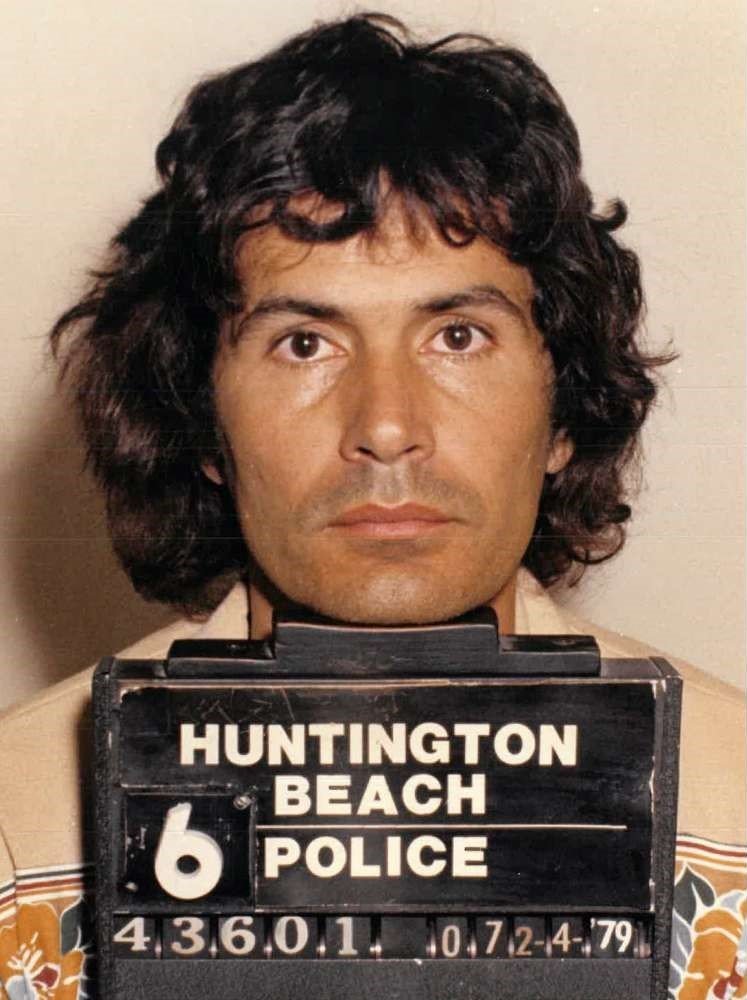
Huntington Beach Police Detective Bob Hughes distributed a forensic composite sketch based on eyewitness descriptions of the photographer on the beach. Alcala’s parole officer recognized the composite drawing as thirty-five-year-old Rodney James Alcala, a paroled child molester who had graduated in fine arts and photography from UCLA and New York University under director Roman Polanski.
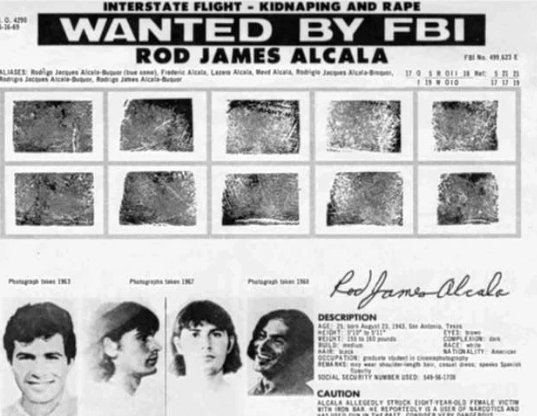
Detectives discovered that during the height of his killings in 1978, Alcala had auditioned for and won an episode of ABC’s The Dating Game, introduced to national television audiences as a ‘successful fashion photographer’.
The Seattle Storage Locker Photographic Archive & The Gold Earrings
On July 24, 1979, Huntington Beach detectives and Seattle Police executed a search warrant on a public self-storage locker rented by Alcala’s sister in Seattle, Washington. Inside the storage unit, detectives uncovered a treasure trove of incriminating physical evidence, including high-end Nikon camera equipment, custom darkroom chemicals, and a collection of pawn receipts.
Most critically, detectives recovered a black jewelry pouch containing several pairs of earrings. Robin Samsoe’s mother, Marianne Connelly, positively identified a pair of distinct rose-gold ball earrings as the exact pair Robin was wearing on the afternoon she was abducted.
Detectives also seized hundreds of photographic slides and negatives depicting young women, teenage girls, and boys posing in vulnerable, seductive, or distressed positions in outdoor settings and motel rooms. The photographic archive suggested that Alcala maintained a vast catalog of victims spanning California, New York, and Washington State.
Forensic photographic analysis revealed that Alcala used professional lighting and composition techniques to disarm victims, creating a false pretense of fashion modeling before executing them.
Rodney Alcala’s case remains one of the most horrifying examples of a psychopathic predator exploiting societal trust and institutional loopholes. The Seattle storage locker evidence recovery fundamentally altered how law enforcement archives and shares photographic troves of unidentified victims. The ongoing collaboration between the Orange County District Attorney’s Office, NYPD, and the National Center for Missing and Exploited Children (NCMEC) has established a permanent digital archive to ensure that every cold case associated with Alcala’s photographs is eventually investigated to completion.
Three Trials, Overturned Verdicts & The Self-Representation Spectacle
Alcala was initially convicted of Robin Samsoe’s murder and sentenced to death in 1980 in Orange County. However, in 1984, the California Supreme Court overturned the conviction on procedural grounds, ruling that the jury had been improperly informed of Alcala’s prior sex crime convictions.
Retried in 1986, Alcala was convicted and sentenced to death a second time. In 2001, the United States Court of Appeals for the Ninth Circuit again overturned the death sentence, ruling that the trial judge had improperly excluded defense testimony regarding a park worker’s statement.
In 2010, Orange County Senior Deputy District Attorney Matt Murphy prosecuted Alcala in a monumental third trial before Judge Francisco Briseno. Choosing to represent himself, Alcala created a bizarre courtroom spectacle, interrogating himself in the third person, playing Arlo Guthrie’s folk song ‘Alice’s Restaurant’, and cross-examining surviving victims and family members.
However, the prosecution presented modern short tandem repeat (STR) DNA evidence linking Alcala to four additional unsolved cold case homicides in Los Angeles County: Jill Barcomb (1977), Georgia Wixted (1977), Charlotte Lamb (1978), and Jill Parenteau (1979).
Cold Case DNA Retesting & The Public Photographic Canvass
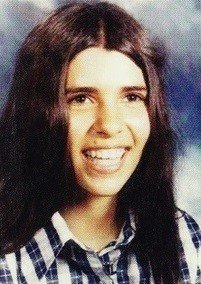
In 2010, the Huntington Beach Police Department and the Orange County District Attorney’s Office took the unprecedented step of releasing over 100 seized photographs from Alcala’s Seattle storage locker to the public, seeking help in identifying possible missing persons.
The public release yielded immediate nationwide breakthroughs. New York authorities recognized twenty-three-year-old Ellen Jane Hover, who had vanished from Manhattan in 1977. Her remains were later identified on the Rockefeller estate in Westchester County. Additionally, NYPD cold case detectives linked Alcala’s DNA to the 1971 strangulation of twenty-three-year-old flight attendant Cornelia Crilley in her Manhattan apartment.
In 2012, Alcala was extradited to New York, where he pleaded guilty to the first-degree murders of Crilley and Hover, receiving an additional sentence of 25 years to life.
In 2016, Wyoming prosecutors formally charged Alcala with the 1977 murder of twenty-eight-year-old Christine Ruth Thornton, whose body had been discovered in Sweetwater County after her family recognized her photograph in the public database.
San Quentin Death Row, Death in Custody & Legal Legacy
In April 2010, the Orange County jury convicted Alcala of all five California murder counts, returning a unanimous sentence of death. Superior Court Judge Francisco Briseno described Alcala as an ‘uncompromising monster’ who inflicted unimaginable cruelty on his victims.
Alcala spent over a decade on California’s death row at San Quentin State Prison and was later transferred to the California Health Care Facility in Stockton due to deteriorating medical conditions. On July 24, 2021, Rodney Alcala died of natural causes at age seventy-seven.
Criminologists and law enforcement agencies estimate that Alcala may have been responsible for between 50 and 130 homicides across the United States between 1968 and 1979.
The Rodney Alcala investigation established critical nationwide protocols for forensic photographic archiving, public crowd-sourced cold case identification, and multi-state DNA cross-jurisdictional CODIS indexing.
Chronological Case Timeline
| Date / Milestone | Investigative Development | Forensic / Evidentiary Significance |
|---|---|---|
| June 20, 1979 | Robin Samsoe abducted in Huntington Beach | Eyewitnesses describe photographer on the beach |
| July 24, 1979 | Seattle storage locker searched | Samsoe’s gold earrings and 1,000+ victim photos seized |
| 1980 & 1986 | Alcala convicted in first and second trials | Both death sentences overturned on procedural appeals |
| 2003–2008 | Cold case DNA links Alcala to 4 Los Angeles murders | STR DNA matches Jill Barcomb, Georgia Wixted, Charlotte Lamb |
| February 25, 2010 | Alcala convicted of 5 murders in third trial | Sentenced to death after self-representation spectacle |
| 2012 | Pleads guilty to 2 New York City cold cases | Admits killing Cornelia Crilley (1971) and Ellen Hover (1977) |
| July 24, 2021 | Rodney Alcala dies in prison hospital | Dies of natural causes in Stockton, California, at age 77 |
Frequently Asked Questions: Forensic & Legal Review
What evidence in the Seattle storage locker proved crucial to convicting Rodney Alcala?
Detectives recovered a jewelry pouch containing a pair of rose-gold ball earrings positively identified by Robin Samsoe’s mother as the exact earrings her twelve-year-old daughter was wearing when abducted, alongside darkroom supplies and over 1,000 photographs of unidentified young women and girls.
How did Rodney Alcala appear on ‘The Dating Game’ while being a suspected killer?
In 1978, despite having a prior conviction for child molestation and having been on the FBI Ten Most Wanted list, Alcala auditioned for and was accepted onto ABC’s ‘The Dating Game’. He won the episode as ‘Bachelor Number One’, but the bachelorette refused to go on a date with him after finding his backstage behavior creepy.
How many victims is Rodney Alcala suspected of killing?
Alcala was officially convicted of seven murders across California and New York and charged with an eighth in Wyoming. However, law enforcement and FBI profilers estimate he may have murdered between 50 and 130 women and children based on hundreds of unidentified portraits seized from his photographic archive.