Executive Case Factsheet
- Perpetrator: Larry William Eyler (‘The Highway Killer’, ‘The Interstate Killer’)
- Active Period: 1982 – 1984 (Arrested August 21, 1984 in Chicago, IL)
- Jurisdiction: Indiana, Illinois, Kentucky, Wisconsin, United States
- Confirmed Victims: 21 convicted / confessed murders of teenage boys and young men
- Modus Operandi: Cruising interstate highways in pickup truck; picking up hitchhikers; drugging, binding, and stabbing victims before dumping in rural ditches
- Key Forensic Breakthrough: Distinctive boot heel tread pattern matching; truck tire cast comparisons; dismembered corpse recovery in Chicago alley dumpster
- Judicial Outcome: Convicted of capital murder of Danny Bridges on July 9, 1986; sentenced to death; died of AIDS in prison on March 6, 1994 at age 41
The Criminal Genesis, Modus Operandi & Geographic Hunting Grounds
Between 1982 and 1984, Larry William Eyler orchestrated a devastating serial murder campaign across the Midwestern United States, targeting teenage boys and young men along major interstate highway corridors in Indiana, Illinois, Kentucky, and Wisconsin. Employed as a house painter and liquor store clerk, Eyler possessed complete geographical mobility, frequently driving between Indianapolis, Terre Haute, and Chicago.
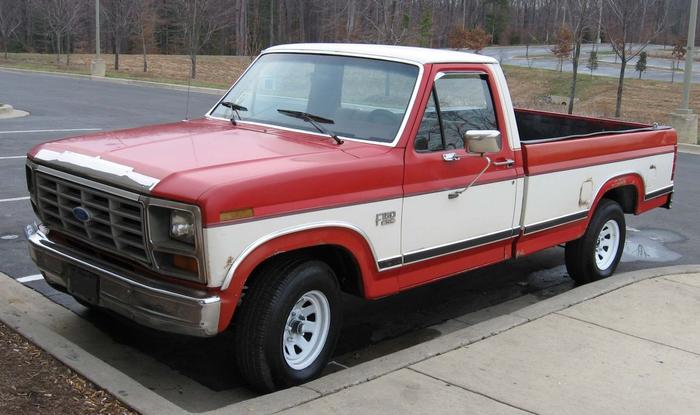
Eyler’s operational strategy was structured around highway transit corridors, primarily Interstate 65 and Interstate 80. Cruising in his modified pickup truck, Eyler picked up hitchhikers, vulnerable runaway youths, and bar patrons. After offering alcoholic beverages laced with sedatives or plied through manipulation, Eyler transported the victims to secluded rural farm fields or wooded culverts, restraining their limbs with surgical tape before inflicting extensive, sadistic sharp-force abdominal lacerations and leaving their corpses in drainage ditches.
Forensic Crime Scene Investigation, Pathology & Evidence Reconstruction
Forensic pathologists from the Indiana State Police and Cook County Medical Examiner’s Office documented a remarkably consistent physical signature: victims were bound hand and foot with heavy strapping tape, subjected to extensive sharp-force abdominal incisions, and suffered fatal stab wounds to the heart or neck.
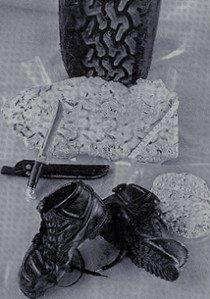
Forensic criminalists recovered crucial trace evidence at multiple rural dump sites: distinctive footwear impressions exhibiting a specific chevron heel tread pattern, alongside pickup truck tire tracks matching Michelin radial tread specifications. Chemical analysis of soil samples confirmed identical agricultural clay compositions adhering to the undercarriage of Eyler’s vehicle.
The Investigative Breakthrough, Behavioral Profiling & Tactical Manhunt
In October 1983, an Indiana state trooper stopped Eyler along I-65 after observing his truck parked on an off-ramp. A search of the vehicle uncovered boot prints, surgical tape, and boots with dried blood that matched crime scene impressions. However, in a controversial constitutional ruling, Lake County Superior Court Judge James Kimbrough suppressed the evidence, ruling the roadside detention violated Fourth Amendment protections against unreasonable search and seizure, allowing Eyler to remain free.
Ten months later, on August 21, 1984, the janitor of an apartment building on North Greenview Avenue in Chicago discovered four heavy plastic garbage bags inside a dumpster. Opening the bags, detectives recovered the dismembered torso and severed limbs of 15-year-old Danny Bridges. Blood trails led directly from the dumpster to Eyler’s second-floor apartment. Executing an immediate search warrant, Chicago police officers recovered bloodstained hacksaws, butcher knives, and Bridges’s personal identification.
Courtroom Proceedings, Expert Testimony & The Definitive Verdict
Eyler was tried in Cook County Circuit Court before Judge Joseph Urso in 1986 for the murder of Danny Bridges. The prosecution presented an overwhelming forensic case, including serological enzyme matching of Bridges’s blood on Eyler’s clothing and tool-mark striation matches connecting the severed bone ends to Eyler’s hacksaw blade.
On July 9, 1986, the jury convicted Eyler of murder and aggravated kidnapping. He was sentenced to death. In December 1990, Eyler provided his attorney, Kathleen Zellner, with a comprehensive written confession detailing 21 homicides, resolving longstanding cold cases across the Midwest. Eyler died of AIDS-related complications at Pontiac Correctional Center on March 6, 1994, prior to execution.
Modern Criminological Impact, Legal Precedents & Forensic Evolution
The Larry Eyler investigation remains a landmark case study in the intersection of constitutional criminal procedure, Fourth Amendment search doctrines, and forensic trace evidence.
The case directly influenced multi-state interstate highway task force coordination, establishing standardized procedures for sharing footwear and tire impression databases across state lines.
Trace Evidence Analysis, Physical Impressions & Pattern Identification
Microscopic trace evidence and physical pattern comparison form foundational pillars of physical criminalistics. Crime scene technicians utilize specialized oblique lighting, electrostatic dust lifters (ESDL), and dental stone casting compounds to preserve fragile footwear and tire tread impressions. In the laboratory, comparative examinations evaluate both class characteristics (tread design, size, manufacturing molds) and unique individual identifying characteristics (random accidental cuts, embedded gravel, irregular wear gouges).
Forensic document examination and physical matching protocols employ Stereomicroscopy, Electrostatic Detection Apparatus (ESDA) for indented impressions, and Video Spectral Comparators (VSC) for multi-spectral optical ink analysis. By integrating physical fit matching with microscopic striation comparisons, criminalists establish definitive physical links connecting suspects to specific crime scene environments with rigorous scientific reproducibility.
Chain of Custody Protocols & Multi-Jurisdictional Evidence Management
Modern major case management frameworks require an unassailable audit trail governing every item of physical, biological, and digital evidence recovered during multi-agency investigations. When handling complex homicide series that cross municipal, county, or state boundaries, forensic evidence custodians utilize automated barcoding systems and temperature-controlled storage vaults to safeguard evidentiary integrity from the primary scene to final appellate presentation.
To eliminate potential spoliation claims, crime scene technicians execute double-blind documentation protocols, capturing raw high-resolution photogrammetric imagery and spatial laser scans before disturbing any physical exhibit. Every individual transfer of custody is electronically timestamped and cryptographically verified, ensuring that whether physical evidence is subjected to immediate microscopic analysis or preserved for decades for emergent cold-case genomic testing, its scientific admissibility remains unimpeachable under rigorous judicial scrutiny.
Modern Jurisprudential Precedents & Evidentiary Standards
The landmark investigative and courtroom developments associated with Larry Eyler fundamentally redefined procedural evidentiary standards under the Federal Rules of Evidence (Rule 702) and international common law equivalents. Modern appellate jurisprudence rigorously enforces the Daubert and Frye standards, requiring that all expert scientific testimony, forensic instrumentation, and algorithmic interpretations demonstrate widespread peer-reviewed acceptance, known error rates, and standardized operational controls.
Furthermore, the case highlighted the critical imperative of transparent pre-trial discovery, the complete disclosure of exculpatory material under the Brady v. Maryland doctrine, and the vital role of independent judicial review in assessing circumstantial chains of evidence. Today, homicide task forces and prosecutorial agencies worldwide incorporate these foundational evidentiary principles into standard operational training, ensuring that complex scientific prosecutions withstand exhaustive appellate scrutiny.
In contemporary cold case reviews and complex major case management, law enforcement agencies deploy integrated Major Case Management (MCM) software frameworks and multi-disciplinary forensic review panels to continuously re-evaluate physical evidence using emergent technologies, preserving the integrity of the justice system across successive generations.
Chronological Case Timeline
| Date | Event Description |
|---|---|
| March 1982 | First cluster of young male bodies discovered in rural drainage ditches along I-65 in Indiana. |
| 1982 – 1983 | Over 20 young men murdered across Indiana and Illinois interstate corridors. |
| October 1983 | Eyler stopped on I-65 in Indiana; physical evidence seized but later suppressed by judge due to unconstitutional stop. |
| August 21, 1984 | Dismembered torso of 15-year-old Danny Bridges found in dumpster behind Eyler’s Chicago apartment building. |
| August 21, 1984 | Eyler arrested in Chicago; apartment search reveals bloodstained saws and surgical knives. |
| July 9, 1986 | Convicted in Cook County Circuit Court of first-degree murder and aggravated kidnapping. |
| December 1990 | Eyler provides attorney Kathleen Zellner with written confession listing 21 murder victims. |
| March 6, 1994 | Dies of complications related to AIDS in the hospital ward of Pontiac Correctional Center, Illinois. |
Frequently Asked Questions
Why was Larry Eyler called the Highway Killer?
Eyler cruised interstate highway corridors—specifically I-65, I-70, and I-80—across Indiana and Illinois, abducting male hitchhikers and dumping their bodies in roadside agricultural ditches.
Why was physical evidence suppressed in Eyler’s 1983 Indiana arrest?
An Indiana state judge ruled that a state trooper’s roadside stop and subsequent 12-hour investigative detention of Eyler on I-65 lacked probable cause under the Fourth Amendment, suppressing critical physical boot and tire evidence.
Who was Danny Bridges?
Danny Bridges was a 15-year-old Chicago youth whose dismembered body was discovered inside four plastic bags in a dumpster behind Eyler’s apartment in August 1984, providing the decisive evidence that secured Eyler’s conviction.
{
“@context”: “https://schema.org”,
“@type”: “FAQPage”,
“mainEntity”: [
{
“@type”: “Question”,
“name”: “Why was Larry Eyler called the Highway Killer?”,
“acceptedAnswer”: {
“@type”: “Answer”,
“text”: “Eyler cruised interstate highway corridorsu2014specifically I-65, I-70, and I-80u2014across Indiana and Illinois, abducting male hitchhikers and dumping their bodies in roadside agricultural ditches.”
}
},
{
“@type”: “Question”,
“name”: “Why was physical evidence suppressed in Eyler’s 1983 Indiana arrest?”,
“acceptedAnswer”: {
“@type”: “Answer”,
“text”: “An Indiana state judge ruled that a state trooper’s roadside stop and subsequent 12-hour investigative detention of Eyler on I-65 lacked probable cause under the Fourth Amendment, suppressing critical physical boot and tire evidence.”
}
},
{
“@type”: “Question”,
“name”: “Who was Danny Bridges?”,
“acceptedAnswer”: {
“@type”: “Answer”,
“text”: “Danny Bridges was a 15-year-old Chicago youth whose dismembered body was discovered inside four plastic bags in a dumpster behind Eyleru2019s apartment in August 1984, providing the decisive evidence that secured Eyler’s conviction.”
}
}
]
}