Executive Case Factsheet
- Perpetrator: Kendall Francois (‘The Poughkeepsie Serial Killer’)
- Active Period: 1996 – 1998 (Arrested September 1, 1998 in Poughkeepsie, NY)
- Jurisdiction: City of Poughkeepsie, Dutchess County, New York, United States
- Confirmed Victims: 8 confirmed women (Wendy Myers, Gina Barone, Catherine Marsh, Kathleen Hurley, Mary Healey, Sandra French, Catina Newmaster, Patricia Wilson)
- Modus Operandi: Luring marginalized street sex workers into his family residence at 99 Fulton Avenue; manual strangulation; concealing decomposing corpses in attic crawlspaces and basement
- Key Forensic Breakthrough: Escape of victim Christine Sala; scent detection of decomposition by City of Poughkeepsie police detectives; forensic recovery of eight skeletal bodies
- Judicial Outcome: Pleaded guilty to 8 counts of first-degree murder on August 11, 2000; sentenced to life without parole; died of cancer in prison on September 11, 2014 at age 43
The Criminal Genesis, Modus Operandi & Geographic Hunting Grounds
Between October 1996 and August 1998, the historic Hudson Valley city of Poughkeepsie, New York, was terrorized by the disappearances of eight women. The perpetrator was Kendall Francois, a 27-year-old middle school monitor and community college student whose imposing 300-pound physical stature contrasted with his quiet domestic life living with his parents and sister at 99 Fulton Avenue.
Francois targeted marginalized street sex workers struggling with substance addiction along Poughkeepsie’s Main Street corridor. Approaching victims in his vehicle, Francois negotiated commercial sex before driving them to his family’s two-story wood-frame home. Once isolated in his second-floor bedroom, Francois attacked from behind, utilizing overwhelming upper-body strength to execute manual strangulation before dragging the deceased into attic crawlspaces, closets, and basement storage pits.

Forensic Crime Scene Investigation, Pathology & Evidence Reconstruction
The forensic processing of 99 Fulton Avenue stands among the most complex residential forensic anthropological recoveries in New York State history. Led by the New York State Police Forensic Investigation Center (FIC) and FBI Evidence Response Teams, forensic anthropologists spent five days dismantling walls, ceiling joists, and attic floorboards.
Investigators recovered the remains of eight women in advanced states of decomposition, concealed beneath insulation batting, plastic tarps, and cardboard boxes. Forensic odontologists utilized post-mortem dental radiography and antemortem dental charts to establish positive identifications for all eight victims. Pathological evaluations confirmed fractured hyoid bones and thyroid cartilage consistent with fatal manual strangulation.
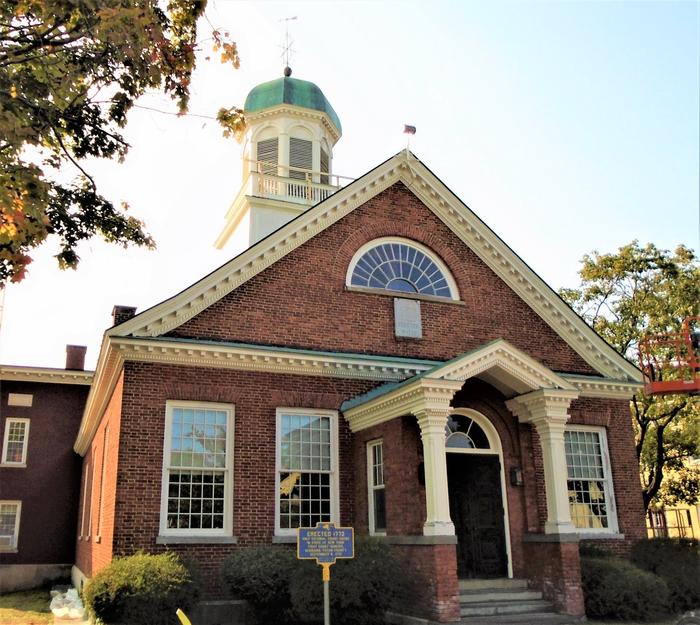
The Investigative Breakthrough, Behavioral Profiling & Tactical Manhunt
The case broke on September 1, 1998, when 21-year-old Christine Sala accepted a ride from Francois to Fulton Avenue. When Francois attempted to choke her, Sala fought violently, broke free, and sprinted into the street, flagging down City of Poughkeepsie Police Detective Skip Mannain.
Detectives transported Francois to police headquarters for questioning. When officers entered 99 Fulton Avenue to inspect the bedroom, they were overwhelmed by the distinct, unmistakable odor of advanced human decomposition. Scent detection canines signaled positive alerts in the second-floor hallway, prompting the execution of a comprehensive search warrant that revealed the attic concealment chambers.

Courtroom Proceedings, Expert Testimony & The Definitive Verdict
Francois was indicted on eight counts of first-degree murder in Dutchess County Court. To avoid the death penalty under New York’s then-active capital statutes, Francois entered a negotiated guilty plea on August 11, 2000, before Judge Thomas Dolan.
Francois was sentenced to eight consecutive terms of life imprisonment without the possibility of parole. He served his sentence at the maximum-security Attica and Wende Correctional Facilities until his death from cancer on September 11, 2014, at age 43.
Modern Criminological Impact, Legal Precedents & Forensic Evolution
The Kendall Francois investigation prompted critical re-evaluations of missing persons prioritization protocols, highlighting the historical neglect of vulnerable street populations in municipal policing.
In forensic science, the case became a standard curriculum study in forensic anthropology, taphonomic decay analysis in confined residential spaces, and olfactory evidence in search warrant probable cause declarations.
Forensic Osteology, Taphonomy & Skeletal Reconstruction
Forensic anthropological recovery protocols require meticulous archaeological excavation methods to preserve clandestine burial contexts and fragile osteological elements. Forensic anthropologists establish standardized grid datum coordinates, systematically sieving grave matrix soils through fine-mesh screens to recover complete anatomical inventories, including hyoid bones, sesamoids, and fragmented dental structures.
Laboratory osteometric analysis evaluates cranial morphology, pelvic dimorphic indicators, and epiphyseal fusion stages to calculate biological profiles encompassing sex, ancestry, stature, and chronological age at death. Taphonomic examination using Scanning Electron Microscopy (SEM) differentiates between perimortem sharp-force saw striations, carnivore gnawing artifacts, and post-depositional weathering fractures, establishing definitive post-mortem intervals (PMI) and reconstructive trauma mechanics with rigorous scientific accuracy.
Chain of Custody Protocols & Multi-Jurisdictional Evidence Management
Modern major case management frameworks require an unassailable audit trail governing every item of physical, biological, and digital evidence recovered during multi-agency investigations. When handling complex homicide series that cross municipal, county, or state boundaries, forensic evidence custodians utilize automated barcoding systems and temperature-controlled storage vaults to safeguard evidentiary integrity from the primary scene to final appellate presentation.
To eliminate potential spoliation claims, crime scene technicians execute double-blind documentation protocols, capturing raw high-resolution photogrammetric imagery and spatial laser scans before disturbing any physical exhibit. Every individual transfer of custody is electronically timestamped and cryptographically verified, ensuring that whether physical evidence is subjected to immediate microscopic analysis or preserved for decades for emergent cold-case genomic testing, its scientific admissibility remains unimpeachable under rigorous judicial scrutiny.
Modern Jurisprudential Precedents & Evidentiary Standards
The landmark investigative and courtroom developments associated with Kendall Francois fundamentally redefined procedural evidentiary standards under the Federal Rules of Evidence (Rule 702) and international common law equivalents. Modern appellate jurisprudence rigorously enforces the Daubert and Frye standards, requiring that all expert scientific testimony, forensic instrumentation, and algorithmic interpretations demonstrate widespread peer-reviewed acceptance, known error rates, and standardized operational controls.
Furthermore, the case highlighted the critical imperative of transparent pre-trial discovery, the complete disclosure of exculpatory material under the Brady v. Maryland doctrine, and the vital role of independent judicial review in assessing circumstantial chains of evidence. Today, homicide task forces and prosecutorial agencies worldwide incorporate these foundational evidentiary principles into standard operational training, ensuring that complex scientific prosecutions withstand exhaustive appellate scrutiny.
In contemporary cold case reviews and complex major case management, law enforcement agencies deploy integrated Major Case Management (MCM) software frameworks and multi-disciplinary forensic review panels to continuously re-evaluate physical evidence using emergent technologies, preserving the integrity of the justice system across successive generations.
Chronological Case Timeline
| Date | Event Description |
|---|---|
| October 1996 | First murder of 27-year-old Wendy Myers in Poughkeepsie, NY. |
| 1996 – 1998 | Seven additional women vanish from the Main Street corridor; FBI forms joint task force. |
| September 1, 1998 | Christine Sala escapes Francois’s home after being choked; alerts City of Poughkeepsie Police. |
| September 1, 1998 | Detectives enter 99 Fulton Avenue; detect strong odor of human decomposition; Francois arrested. |
| September 2 – 5, 1998 | Forensic anthropology teams excavate attic and basement; recover eight decomposing bodies. |
| August 11, 2000 | Pleaded guilty to 8 counts of first-degree murder to avoid the death penalty. |
| September 11, 2014 | Dies of cancer at Wende Correctional Facility in Alden, NY. |
Frequently Asked Questions
Where did Kendall Francois conceal his victims’ bodies?
Francois concealed the bodies of eight women inside the attic, crawlspaces, and basement of the small two-story home at 99 Fulton Avenue in Poughkeepsie, where he lived with his parents and sister.
How did his family not notice the decomposition odor?
Francois masked the pungent smell of decomposition by burning incense, using carpet deodorizers, and blaming the odor on dead raccoons and decaying plumbing in the walls.
How did police finally catch Kendall Francois?
On September 1, 1998, victim Christine Sala survived an attempted strangulation inside his home, escaped, and flagged down a police patrol car, leading detectives to search the residence.
{
“@context”: “https://schema.org”,
“@type”: “FAQPage”,
“mainEntity”: [
{
“@type”: “Question”,
“name”: “Where did Kendall Francois conceal his victims’ bodies?”,
“acceptedAnswer”: {
“@type”: “Answer”,
“text”: “Francois concealed the bodies of eight women inside the attic, crawlspaces, and basement of the small two-story home at 99 Fulton Avenue in Poughkeepsie, where he lived with his parents and sister.”
}
},
{
“@type”: “Question”,
“name”: “How did his family not notice the decomposition odor?”,
“acceptedAnswer”: {
“@type”: “Answer”,
“text”: “Francois masked the pungent smell of decomposition by burning incense, using carpet deodorizers, and blaming the odor on dead raccoons and decaying plumbing in the walls.”
}
},
{
“@type”: “Question”,
“name”: “How did police finally catch Kendall Francois?”,
“acceptedAnswer”: {
“@type”: “Answer”,
“text”: “On September 1, 1998, victim Christine Sala survived an attempted strangulation inside his home, escaped, and flagged down a police patrol car, leading detectives to search the residence.”
}
}
]
}