Case File Dossier: Paul Braxton Fugate (1980)
- Victim: Paul Braxton Fugate (Age 41) — Lead Permanent Law Enforcement Ranger
- Date of Disappearance: Sunday, January 13, 1980 (~2:00 PM MST)
- Location: Chiricahua National Monument, Cochise County, Arizona
- Terrain: Faraway Ranch Trail & Rhyolite Canyon volcanic rock spires
- Gear Worn: Official NPS uniform, badge, gun belt, .357 Magnum service revolver
- Investigating Agencies: National Park Service ISB, Cochise County Sheriff’s Office, FBI
- Reward Offered: $60,000 for actionable information leading to case resolution
- Current Status: Active Unsolved Federal Missing Person / Presumed Homicide
- Investigation Desk: National Park Disappearances
On the quiet winter afternoon of January 13, 1980, 41-year-old Paul Braxton Fugate, the lone permanent National Park Service law enforcement ranger on duty at Arizona’s rugged Chiricahua National Monument, put on his official green-and-gray uniform, strapped on his holstered .357 Magnum service sidearm, and stepped out of the visitor center. Informing a seasonal park employee that he was going to walk the 1.2-mile trail toward the historic Faraway Ranch property, Fugate walked past the administration building into the labyrinthine volcanic spires of the Chiricahua Mountains. He was never seen again.
More than four decades later, Paul Fugate occupies a unique and somber place in American law enforcement history: he remains the only on-duty law enforcement ranger in the history of the National Park Service to vanish without leaving a single trace. His disappearance ignited a sprawling multi-agency federal manhunt, intense administrative and legal battles regarding official death benefits, and persistent intelligence linking his vanishing to violent international narcotics smuggling rings operating along the United States–Mexico border corridor.
The Wonderland of Rocks: The Chiricahua Backcountry
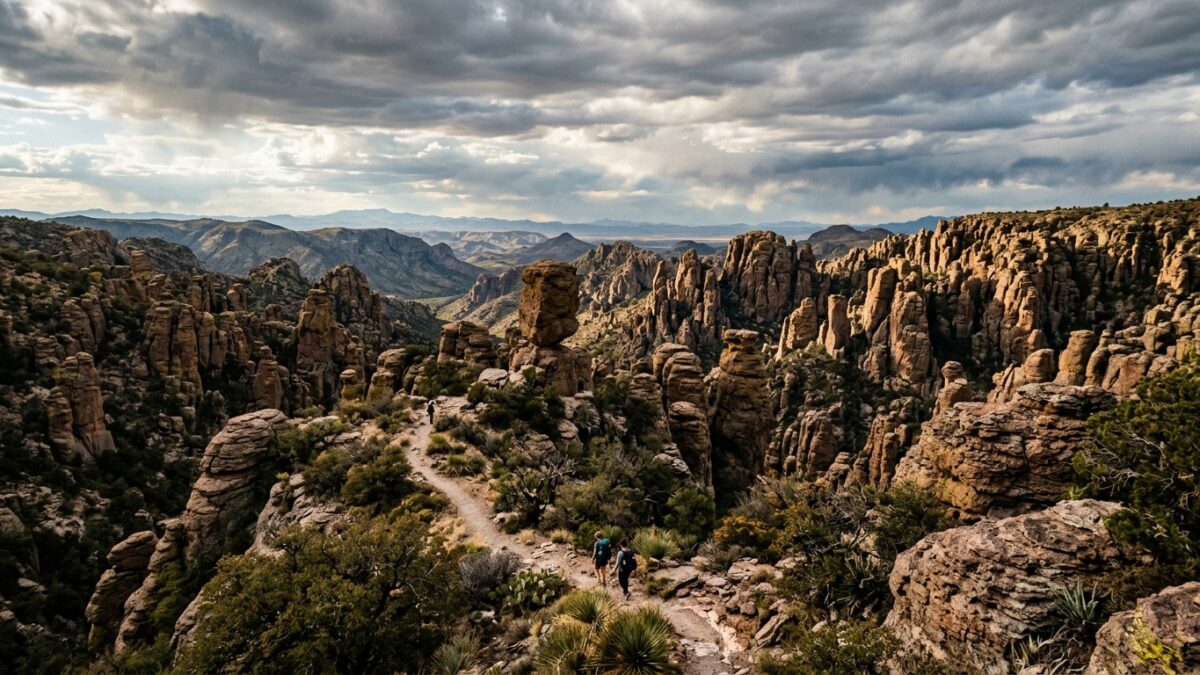
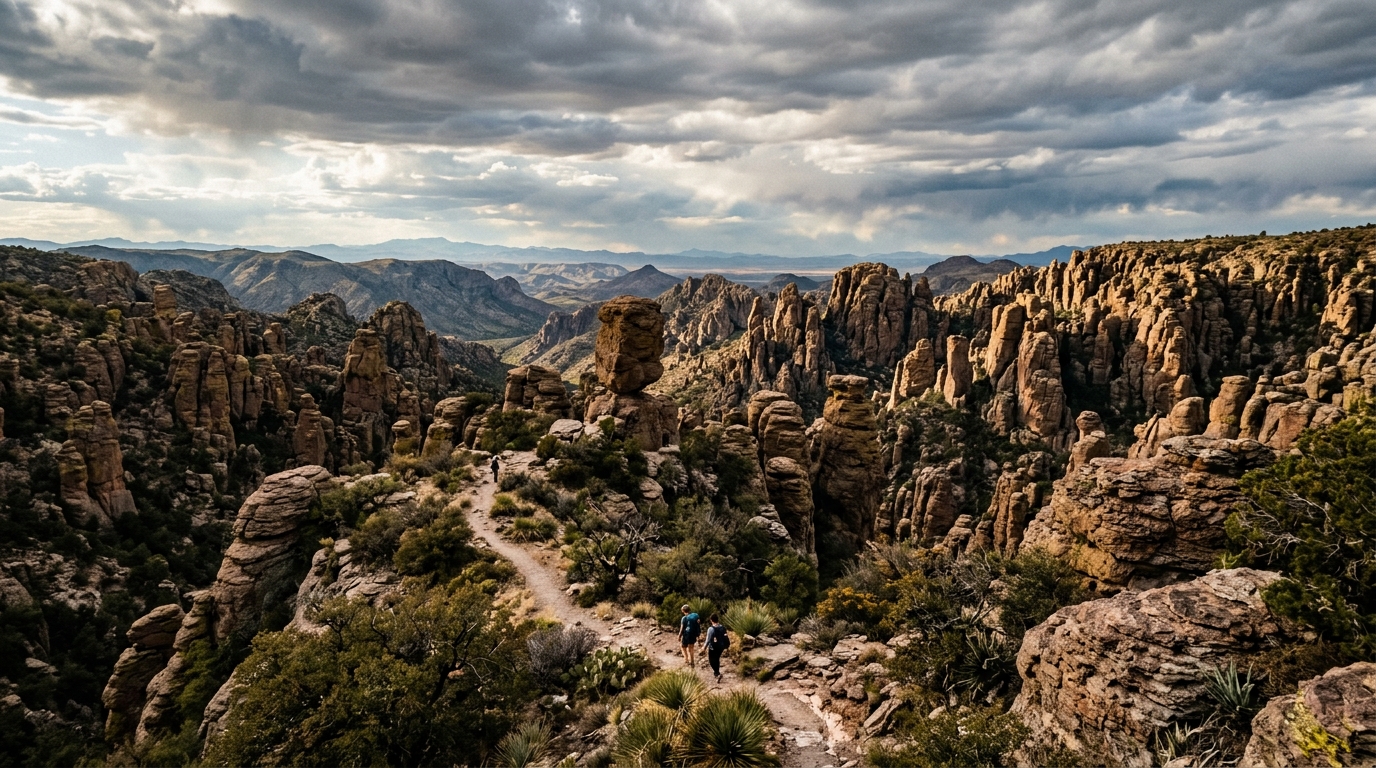
Chiricahua National Monument spans nearly 12,000 acres of dramatic, untamed volcanic topography in Cochise County, southeastern Arizona. Situated roughly 35 miles north of the international border with Mexico, the monument is famously dubbed the “Wonderland of Rocks.” Millions of years of volcanic eruptions and weathering carved thousands of delicate, precarious rhyolite rock pillars, balancing boulders, narrow vertical canyons, and dense pinyon-juniper forests.
In 1980, the monument was remote and sparsely staffed. Paul Fugate was a seasoned, highly capable wilderness ranger who had served at Chiricahua for six years. Familiar with every wash, abandoned silver mine shaft, and backcountry trail, Fugate was also responsible for enforcing federal laws across the park’s isolated acreage.
At approximately 2:00 PM on Sunday, January 13, Fugate told seasonal park worker Gertrude Hostetler that he was heading out on foot to inspect the 1.2-mile Faraway Ranch trail. Hostetler anticipated his return before 4:30 PM to secure the visitor center and lock the entrance gates. When 5:00 PM passed with no sign of the ranger, Hostetler drove to Fugate’s on-site residence. His personal pickup truck was parked in the driveway; his keys, wallet, and private identification were sitting undisturbed on the kitchen counter. Fugate had vanished wearing only what was on his person: his green-and-gray uniform, gold law enforcement badge, heavy winter jacket, and holstered service revolver.
The Massive Search Operation: Air, Ground, and Mine Shafts
By daybreak on January 14, a massive search-and-rescue operation was mobilized under the joint coordination of the National Park Service, Cochise County Sheriff’s Office, U.S. Border Patrol, and the Southern Arizona Search and Rescue Association (SARAS). Military search-and-rescue helicopters from nearby Fort Huachuca conducted low-altitude aerial sweeps over the precipitous rhyolite canyons, utilizing early infrared imaging technology.
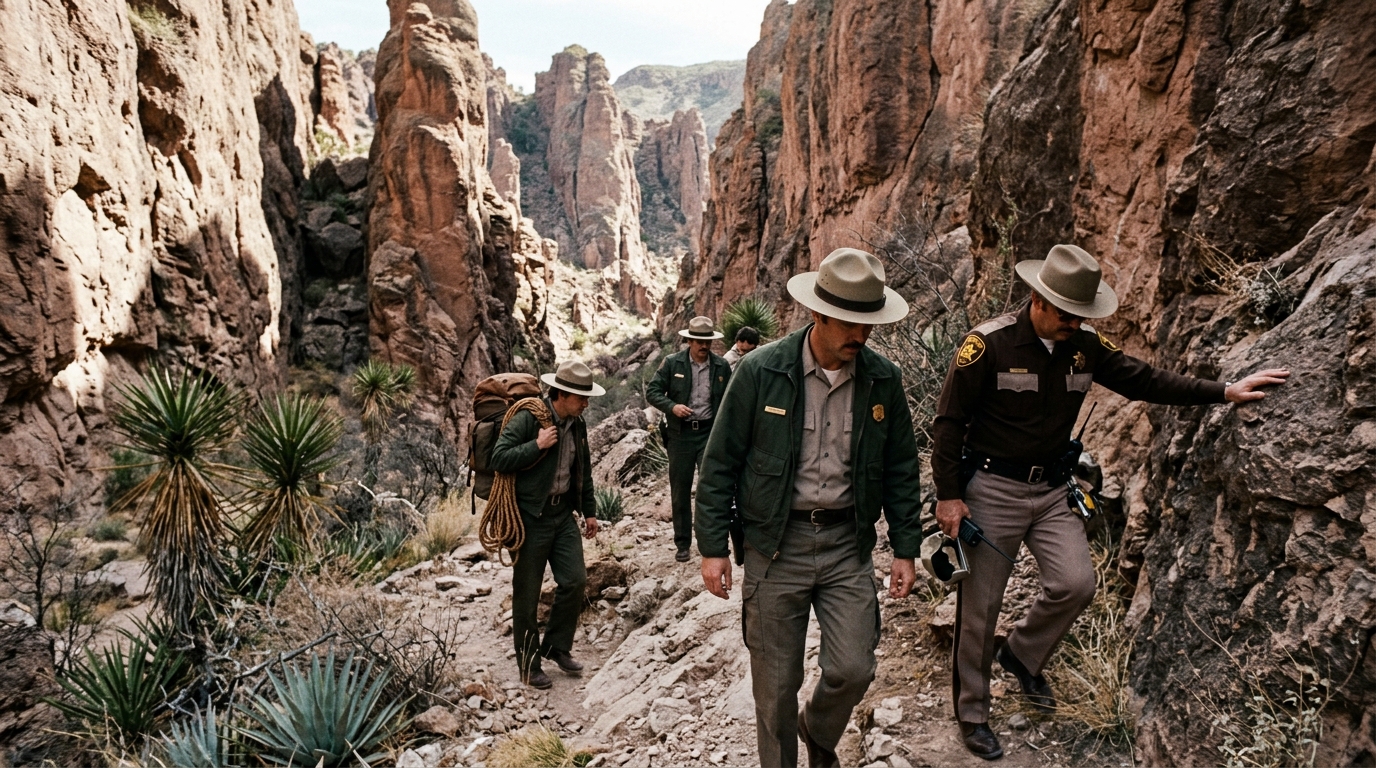
Over the course of two intensive weeks, more than 100 expert trackers, mountaineers, and speleologists conducted a systematic grid search of the monument:
- Abandoned Mine Explorations: Teams of technical cavers were lowered into dozens of historic, unmapped 19th-century silver and copper mine shafts scattered throughout the mountain range. Every subterranean shaft was declared clear.
- Canine Scent Tracking: Certified bloodhounds were introduced to Fugate’s scent. The dogs followed a definitive trail leading from the Faraway Ranch trail directly toward the monument’s western boundary near Arizona State Route 181.
- Roadway Scent Termination: At the edge of the asphalt pavement on Highway 181, the bloodhounds abruptly circled and lost the scent completely, indicating that Fugate had either entered a vehicle or was loaded into one.
The complete lack of discarded equipment was the most telling forensic detail. In accidental wilderness deaths—such as a fall from a cliff or sudden medical incapacitation—searchers invariably recover metallic items, bullet casings, radio transmitters, sidearms, or footwear. None of Fugate’s gear was ever recovered.
The Clandestine Narcotics Corridor & Border Smuggling Networks
To understand the investigative reality facing federal detectives, one must examine the criminal landscape of Cochise County in the late 1970s and early 1980s. Due to its close proximity to the Mexican border and vast expanses of unpatrolled desert valleys, the region surrounding Chiricahua National Monument was heavily utilized by cross-border narcotics cartels as a staging area for aerial airdrops and clandestine landing strips.
Unpaved rural roads flanking Faraway Ranch provided secluded meeting points where smugglers in four-wheel-drive trucks retrieved narcotics dropped by low-flying aircraft. Law enforcement intelligence gathered in the months following Fugate’s disappearance indicated that Ranger Fugate may have inadvertently stumbled upon an active narcotics exchange while patrolling the park perimeter. An armed law enforcement ranger witnessing a cartel operation would represent an immediate threat to the traffickers, leading to an armed confrontation, abduction, and homicide.
Witness Accounts & The Mysterious Speeding Vehicle
Interviews conducted by the Cochise County Sheriff’s Office and the FBI produced critical circumstantial eyewitness testimony. Multiple local residents and ranchers living along Arizona State Route 181 reported observing an unfamiliar, dark-colored pickup truck speeding westbound away from the monument entrance at approximately 3:30 PM on January 13.
One witness recalled observing three individuals inside the vehicle’s cab, with the middle passenger appearing slumped forward or restrained between two men. While distance and windshield glare prevented positive photographic identification, the timing coincided precisely with the window of Fugate’s disappearance and the bloodhound scent termination at Highway 181.
Administrative Battles, Wrongful Termination & Death Benefits
In the years following his vanishing, Paul Fugate’s case took a controversial bureaucratic turn. In 1981, the Department of the Interior initially terminated Fugate’s employment on grounds of “abandonment of post,” claiming there was insufficient evidence of on-duty death.
This administrative decision sparked national outrage among National Park Service rangers and law enforcement unions. Fugate’s widow, Dottie Fugate, fought a protracted legal campaign to clear her husband’s name and secure official federal law enforcement line-of-duty death benefits. In 1986, following extensive independent reviews confirming the overwhelming likelihood of homicide in the line of duty, the federal government officially overturned the termination, recognizing Ranger Paul Braxton Fugate as a fallen officer killed in the performance of duty.
The Geological Maze of Chiricahua Rhyolite Columns
The volcanic pinnacles of Chiricahua National Monument, known as “hoodoos” or rock needles, were formed roughly 27 million years ago following the catastrophic eruption of the Turkey Creek Caldera. The eruption deposited immense sheets of white-hot volcanic ash that fused into dense rhyolite rock. Over millions of years, vertical jointing, ice wedging, and wind erosion sculpted the rock into thousands of balanced pillars, narrow defiles, and hidden blind canyons.
For search and rescue teams, the vertical geometry of Rhyolite Canyon presents severe terrain challenges. Walking even a few yards off an established trail places an individual inside a labyrinth of identical stone pillars where acoustic echoes distort sound and line-of-sight is reduced to mere feet.
Cold Case Escalation: The $60,000 Reward
In 2018, the National Park Service Investigative Services Branch (ISB) and the Cochise County Sheriff’s Office formally announced a major renewed cold case initiative, increasing the public reward to $60,000 for actionable information leading to the location of Fugate’s remains or the arrest and conviction of those responsible.
Federal investigators stated that advanced forensic databases, genealogical DNA testing, and renewed interviews with retired border-area figures have generated promising leads, ensuring that the sacrifice of Ranger Paul Fugate will never be forgotten.
Parallels in National Park Cold Cases
The unresolved fate of Paul Fugate shares striking commonalities with other landmark wilderness vanishings documented in our archives. Like the 1981 disappearance of Stacey Arras in Yosemite and the 1976 disappearance of Trenny Gibson in the Great Smoky Mountains, the physical scent trail terminated abruptly at a vehicular roadway, demonstrating the lethal intersection of remote national park trails and highway getaway routes.
Current Status & Official Tip Channels
Paul Braxton Fugate’s case remains an active, open federal homicide investigation. The National Park Service and Cochise County Sheriff’s Department continue to solicit actionable tips from the public.
$60,000 Reward: Submit Information on Ranger Paul Fugate
If you have information regarding the disappearance, abduction, or homicide of Ranger Paul Fugate, please contact:
- NPS ISB Tip Line: Call/Text 888-653-0009 | Email:
[email protected] - Cochise County Sheriff’s Office: (520) 432-9500
- True Crime Stories Tip Desk: Submit a confidential lead online.
Wilderness Search Protocols & Topographic Grid Analysis
Search and rescue operations in vast federal wilderness reserves present unique logistical, environmental, and physical challenges for search teams. Ground search personnel must navigate dense alpine undergrowth, steep scree fields, and rapid weather transitions that can obliterate physical tracks within hours. Modern wilderness SAR doctrine combines high-resolution FLIR aerial mapping, trained scent-tracking K9 units, and predictive lost-person behavioral models to maximize search coverage in high-risk zones.
Related Investigations & Forensic Dossiers
Explore additional comprehensive cold case analyses and historical investigations: