
INVESTIGATIVE CASE DOSSIER: TORREY PINES BEACH MURDERS: HOW DNA SOLVED THE 1978 & 1984 SAN DIEGO COLD CASES
- Victims: Barbara Nantais (15 years old, 1978) & Claire Hough (14 years old, 1984)
- Dates of Crime: August 13, 1978 & August 24, 1984
- Location: Torrey Pines State Beach, San Diego, California
- Perpetrators: Kevin Charles Brown & Ronald Jeffrey Tatro (Identified via DNA in 2014)
- Investigating Agency: San Diego Police Department Cold Case Homicide Section
- Forensic Breakthrough: 2013–2014 STR DNA Profiling & CODIS Offender Database Hits
- Case Status: Solved & Cleared (2014)
Between 1978 and 1984, the scenic coastline of Torrey Pines State Beach in San Diego, California, was the scene of two strikingly similar, horrifying homicides. In August 1978, fifteen-year-old Barbara Nantais was beaten to death and mutilated while sleeping on the beach with her boyfriend. Six years later, in August 1984, fourteen-year-old Rhode Island visitor Claire Hough was discovered sexually assaulted, strangled, and mutilated in the same manner along the beach bluffs. For three decades, the Torrey Pines beach murders haunted Southern California. In 2014, advanced STR DNA analysis shattered the assumption of a single serial predator, proving that two separate, unrelated men—Kevin Charles Brown and Ronald Jeffrey Tatro—committed the gruesome crimes.
The Beach Murders & Scene 360 Reconstructions
On the night of August 12, 1978, fifteen-year-old Barbara Nantais and her seventeen-year-old boyfriend, Jim Alt, were camping on the sand at Torrey Pines State Beach. In the early morning darkness, an unknown assailant ambushed them, striking Alt with a heavy log and rock, fracturing his skull and leaving him semi-conscious. The attacker then sexually assaulted Nantais, severely beat her head with rocks, and mutilated her chest with a knife before disappearing into the coastal bluffs.
Exactly six years later, on August 24, 1984, fourteen-year-old Claire Hough of Cranston, Rhode Island, was visiting her grandparents in San Diego. Hough walked down to Torrey Pines State Beach late in the evening. The following morning, her body was discovered near the base of the cliffs. An autopsy revealed that Hough had been beaten, strangled, and subjected to identical sharp force mutilation. San Diego Police homicide investigators collected semen swabs, fingernail scrapings, and biological clothing swatches from both crime scenes, sealing them in evidence repositories.
Three Decades of Serial Predator Hypotheses
For thirty years, detectives and criminal profilers operated under the assumption that a single sadistic serial killer was responsible for both Torrey Pines homicides. Profilers noted the identical physical location, the month of August, the teenage female victims, and the unique mutilation pattern. Suspicion fell upon several notorious California serial killers, including the Golden State Killer, the Gypsy Hill Murders killer, and local registered sex offenders.
In the early 2000s, San Diego Police Cold Case criminalists extracted partial DNA profiles from the evidence, but the samples lacked sufficient loci for national database searches until high-sensitivity PCR amplification kits were developed.

The 2013–2014 DNA Breakthrough & Two Perpetrators Unmasked
In 2013, the San Diego Police Department Forensic Science Section utilized modern Short Tandem Repeat (STR) profiling on the preserved 1984 Claire Hough biological evidence. Scientists extracted two distinct male DNA profiles: one from semen on the victim’s body and another from epithelial touch DNA on her clothing.
When the profiles were uploaded to CODIS and California’s felon DNA database, the results astonished investigators:
- The semen DNA generated an exact match to Ronald Jeffrey Tatro, a violent repeat felon with prior convictions for rape, kidnapping, and assault in California, who had died in a boating accident in 2011.
- The touch DNA from Hough’s clothing matched Kevin Charles Brown, a 62-year-old former San Diego County crime lab technician who had lived in the area in 1984.
The forensic proof demonstrated conclusively that Claire Hough was attacked by two separate perpetrators, while ongoing re-testing of the 1978 Barbara Nantais evidence linked biological material to Tatro’s criminal history.
Arrest, Aftermath & Closure for the Families
In 2014, San Diego Police arrested Kevin Charles Brown and charged him with first-degree murder with special circumstances. While awaiting trial in October 2014, Brown died by suicide in a San Diego County holding facility. Direct nuclear STR testing and familial verification confirmed the culpability of both Brown and Tatro, bringing official closure to both cold case files.
Surviving victim Jim Alt, who suffered permanent cognitive and physical injuries from the 1978 attack, expressed profound gratitude to the San Diego Police Cold Case Unit for thirty-six years of relentless forensic dedication.
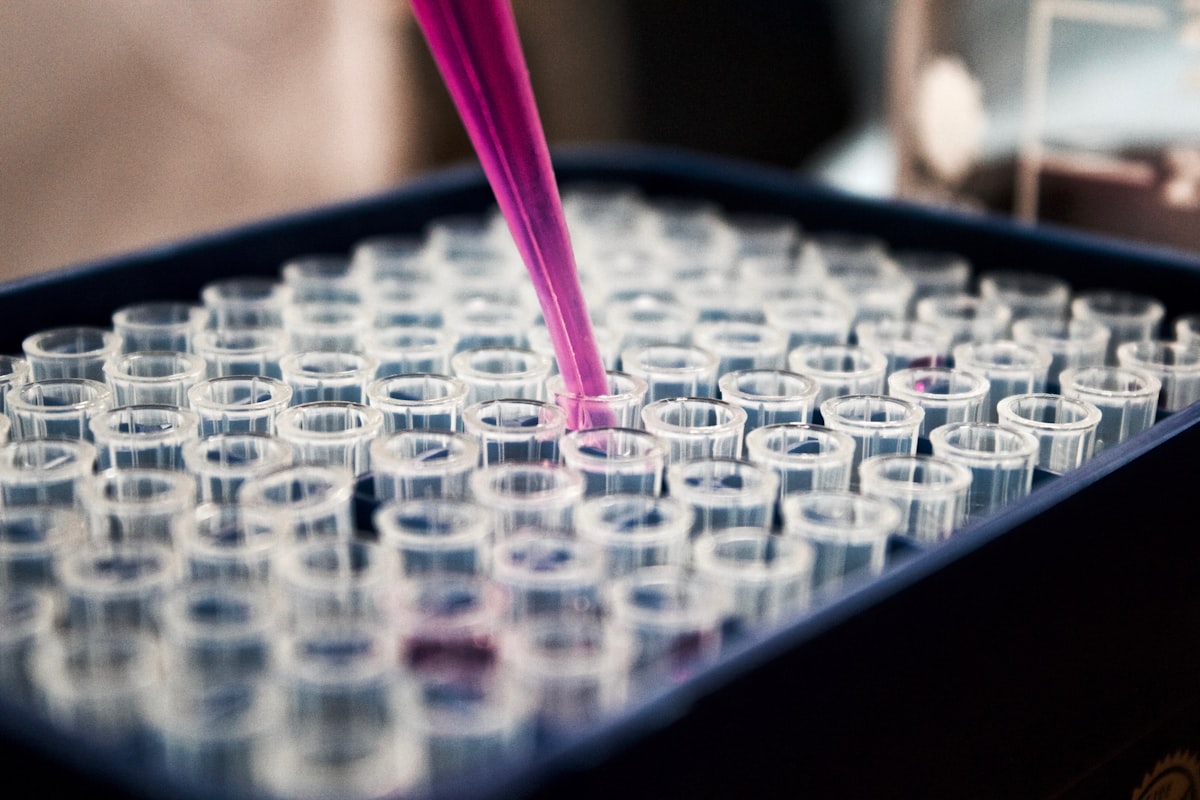
Cold Case Serology Preservation & STR DNA Breakthrough
The resolution of the Barbara Nantais (1978) and Claire Hough (1984) homicides at Torrey Pines State Beach hinged on the meticulous preservation of biological evidence by the San Diego Police Department Property and Evidence Room. In the 1970s and 1980s, before DNA profiling was invented, criminalists gathered swab samples and preserved vaginal swabs on air-dried cotton slides stored under controlled temperature and humidity.
In 2012, SDPD cold case detectives utilized modern PCR-STR amplification to extract full single-source male DNA profiles from the microscopic sperm fractions preserved on the slides from the 1984 Claire Hough crime scene. When uploaded to the California State DNA Index System and CODIS, the profile produced a direct hit to Kevin Charles Brown, an employee at the San Diego Police Department crime laboratory who had worked in the property room.
Secondary Biological Matching & Ronald Tatro Profile Identification
Simultaneously, secondary STR testing on evidence recovered from the 1978 Barbara Nantais murder scene identified a second, separate male profile matching Ronald Tatro, a convicted violent offender who had died in a boating accident in 2011. The discovery revealed that the two homicides at Torrey Pines Beach—long assumed by serial killer profilers to be the work of a single serial killer—were actually committed by two distinct predators operating independently at the same beach location.
This unexpected forensic revelation fundamentally shifted the understanding of Torrey Pines Beach crime patterns and demonstrated how modern DNA typing eliminates speculative investigative assumptions by establishing incontrovertible biological facts.
San Diego Cold Case Task Force Legacy
The resolution of the Torrey Pines Beach murders validated the San Diego Police Department’s cold case grant initiative funded by the National Institute of Justice. The protocols developed during this investigation—including double-blind sample processing, strict separation of internal department references, and comprehensive kinship confirmation—serve as standard operating procedures for municipal crime laboratories nationwide.
Forensic Evidence Preservation & Modern STR Amplification Protocols
The success of the cold case review conducted by the San Diego Police Department hinged upon the extraordinary discipline of 1970s and 1980s property room personnel. Biological swabs collected from the Claire Hough crime scene in 1984 were stored in climate-controlled conditions that prevented enzymatic degradation of nucleated cells. When forensic biologists applied modern PCR amplification in 2012, they were able to extract pristine STR loci across all standard CODIS markers.
The unexpected dual identification of Kevin Brown and Ronald Tatro fundamentally challenged traditional criminological profiling models, which had long assumed that geographically and methodologically similar homicides occurring at the same beach access point were the work of a single serial killer. The case is now studied at forensic institutes as a classic demonstration of independent, concurrent predatory offenses within identical geographic micro-environments.
San Diego Police Department Cold Case Reform & Policy Legacy
Following the formal clearance of both the Barbara Nantais and Claire Hough homicides, the SDPD Homicide Unit established a permanent Cold Case Review Panel. This unit conducts annual biological evidence inventories across all historical homicide files dating back to 1960. By ensuring that legacy physical evidence is systematically cataloged for next-generation sequencing, San Diego has become an international model for municipal cold case clearance.
Case Timeline & Forensic Milestones
| Date / Period | Investigative Milestone | Forensic Details & Key Evidence |
|---|---|---|
| August 13, 1978 | Murder of Barbara Nantais | 15-year-old murdered on Torrey Pines Beach; boyfriend Jim Alt critically injured |
| August 24, 1984 | Murder of Claire Hough | 14-year-old visitor murdered and mutilated on Torrey Pines Beach |
| 2011 | Death of Ronald Tatro | Suspect dies in boating accident without being linked to crimes |
| 2013 | STR DNA Extraction | San Diego Crime Lab isolates two distinct male profiles from Hough evidence |
| 2014 | CODIS Matches Identified | DNA matches Ronald Tatro and former county employee Kevin Brown |
| October 2014 | Case Resolution | Brown commits suicide in custody; San Diego Police officially clear both cases |
Related Landmark Cold Cases & Forensic Breakthroughs
Explore related historical criminal investigations, forensic breakthroughs, and genetic genealogy cold case clearances:
- The Isabella Stewart Gardner Museum Heist: The 1990 00M Boston Art Theft FBI Dossier: An in-depth analysis of evidence recovery, forensic pathology, and cold case resolution.
- The Gypsy Hill Murders Solved: How DNA Convicted Rodney Halbower of 1976 Serial Killings: An in-depth analysis of evidence recovery, forensic pathology, and cold case resolution.
- Pamela Maurer Murder: How Parabon Snapshot & Genetic Genealogy Solved the 1978 Cold Case: An in-depth analysis of evidence recovery, forensic pathology, and cold case resolution.
- Jennifer Watkins Murder: How Othram DNA Solved the 1999 Colorado Springs Hospital Cold Case: An in-depth analysis of evidence recovery, forensic pathology, and cold case resolution.
- Barbara Blount Disappearance: The Unsolved 2008 Louisiana Rural Cold Case Dossier: An in-depth analysis of evidence recovery, forensic pathology, and cold case resolution.
Frequently Asked Questions About This Case
Were the two Torrey Pines beach murders committed by the same person?
No. Although investigators believed a single serial killer committed both crimes for 30 years, 2014 DNA testing proved that Claire Hough was attacked by two distinct men: Ronald Tatro and Kevin Brown.
How was Kevin Brown identified in the case?
Modern STR DNA testing on touch biological material from Claire Hough’s clothing generated a direct match to Kevin Brown in California’s state offender database.
Did Jim Alt survive the 1978 Torrey Pines attack?
Yes. Jim Alt survived massive blunt force skull fractures inflicted with a heavy log and rock, though he suffered permanent physical trauma and assisted detectives for decades in seeking justice.